


Panel: Éanna Ní Lamhna, Richard Collins, Terry Flanagan and Niall Hatch
In addition to listening to us on RTÉ Radio 1 at 22:00 every Monday night, don't forget that you can also listen back to each of our programmes any time you like at www.rte.ie/mooney. There, you will find an extensive archive of past broadcasts, conveniently split into different topics and segments.
Tonight’s programme features news of the launch of the 2026 All-Ireland Squirrel and Pine Marten Survey, a collaboration between the National Biodiversity Data Centre the University of Galway, Ulster Wildlife and the Vincent Wildlife Trust. The aim is to gather details of sightings of Grey Squirrels, Red Squirrels and Pine Martens from "citizen scientists" across Ireland.
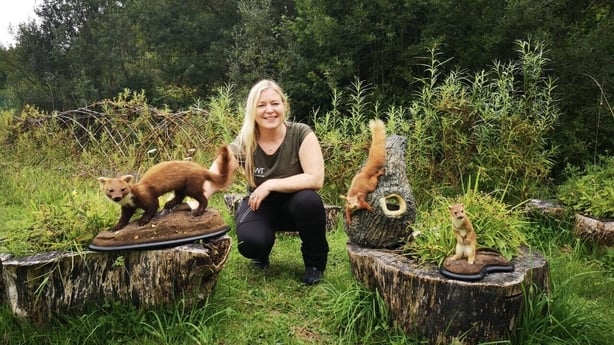
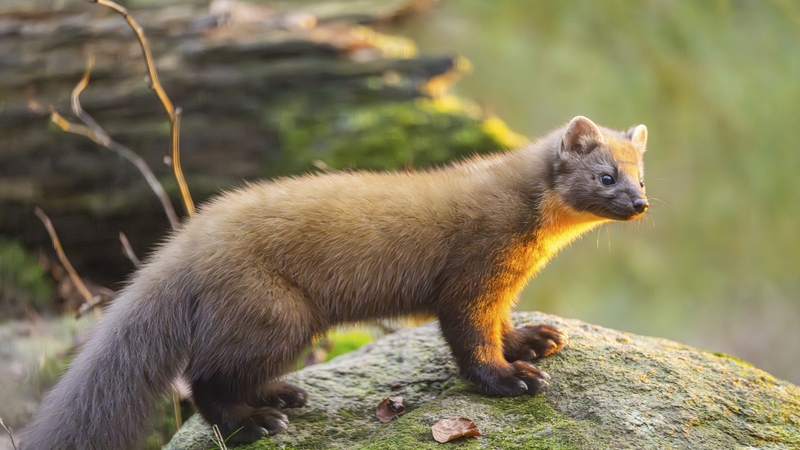
To help you to learn more about the most unfamiliar and least commonly-encountered of these three arboreal mammals – namely the Pine Marten, a reclusive and elusive member of the weasel family – our suggestion from the Mooney Goes Wild archives this week is an interview with Ruth Hanniffy, Species Project Officer with the Vincent Wildlife Trust, about the 3rd All-Ireland Pine Marten Symposium, first broadcast in March 2022.
To listen to this interview from the extensive Mooney Goes Wild archives, visit https://www.rte.ie/radio/podcasts/22078879-the-3rd-all-ireland-pine-marten-symposium/.
Grey Squirrels in Ireland: how did they get here?
Perhaps the most familiar and frequently encountered invasive alien mammal species in Ireland is the Grey Squirrel. These arboreal rodents are native to eastern North America but, following their deliberate introduction to Ireland in the early part of the 20th century, they are now widespread here, and their presence has caused many problems for our native Red Squirrel population.
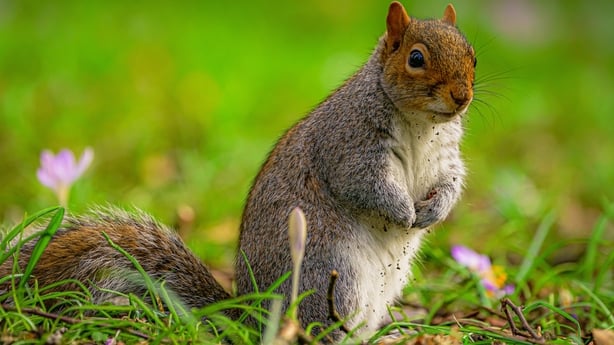
The received wisdom has long been that the ancestry of all of the Grey Squirrels currently in Ireland can be traced back to a party of a dozen that were given as a wedding gift and released in Castleforbes, Co. Longford in 1911. On tonight’s programme, however, our panellists discuss whether or not this is the whole story. Is it possible that there were also subsequent introductions, either deliberate or accidental, which supplemented the population and increased its genetic diversity.
To learn more about Grey Squirrels in Ireland, visit https://invasives.ie/app/uploads/2022/01/Grey-Squirrel.pdf.
E-mails from listeners
We love it when you, our loyal listeners, contact the programme with your feedback and questions for our experts. We receive a large volume of emails, which we do our very best to respond to, and whenever we can, we try to answer some of the most interesting or topical questions on air. On tonight’s programme, we tackle a few of the very best ones that have come into us lately.
Eddie Leonard got in touch with us all the way from Southern California with a query about his local ducks:
I’m a sporadic listener living in a milder climate. I am curious about some ducks that come to our community pool every year. I’ve noticed them the last three years: they are a pair, male and female.
Would it be the same ducks? If so how long do ducks stay together?
They fly in every evening from the north, circle a couple of times, and land in the swimming pool. They hang around for a while, preen themselves, and fly west right before it gets completely dark.
They seem to be on a schedule. Where do they go for the night?
They probably fly from the north annually. They are usually gone by March, but I have not really paid attention to notice when they leave. I was wondering where they migrate back to. Also, they drink the pool water; why do the chemicals not affect them?
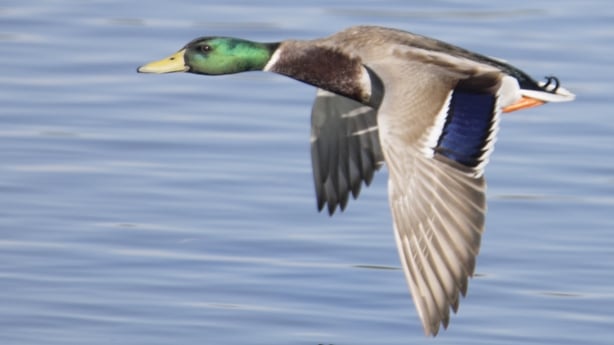
For more information about the many different species of duck which occur in North America, visit https://www.allaboutbirds.org/news/search/?q=duck.
Conor in Killashandra, Co. Cavan contacted us to tell us about a new avian arrival to his local area:
I was listening to your show tonight and was actually surprised to hear you talking about woodpeckers. It’s ironic: I was out walking with my wife yesterday morning and heard that drumming sound and I said, "That sounds like a woodpecker!"
I have been walking that area for 20 years and yesterday and that was the first time to hear it. Is this a first for a woodpecker to be so far north?
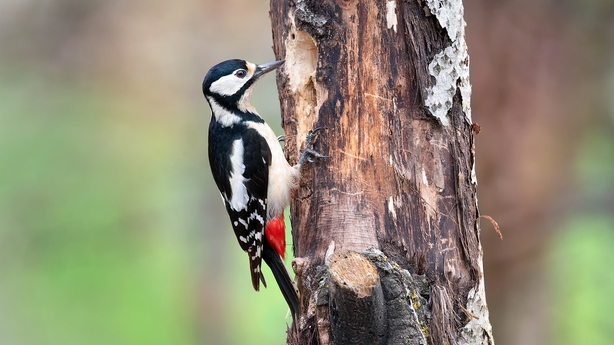
For more information about Great Spotted Woodpeckers in Ireland, visit https://birdwatchireland.ie/birds/great-spotted-woodpecker/.
Brigid from Co. Waterford was in touch with the following query:
We had some beautiful Buzzards that we used to see regularly from our kitchen window, but they suddenly disappeared. Why could that be?
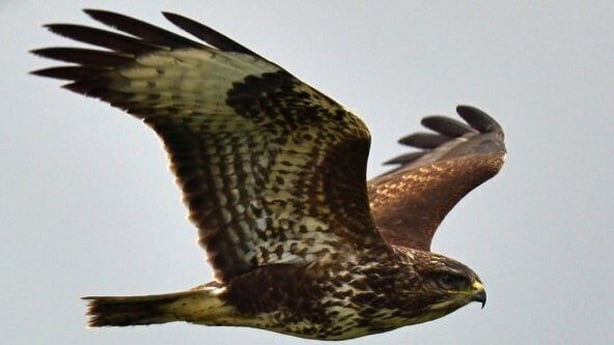
For more information about Buzzards in Ireland, visit https://birdwatchireland.ie/birds/buzzard/.
Patricia was also struck by something bird-related that we discussed on the programme recently:
I’m shocked and saddened to hear about the short lifespans of the Robins and other small birds. Is it mostly the frosty cold weather, or can you explain the main causes?
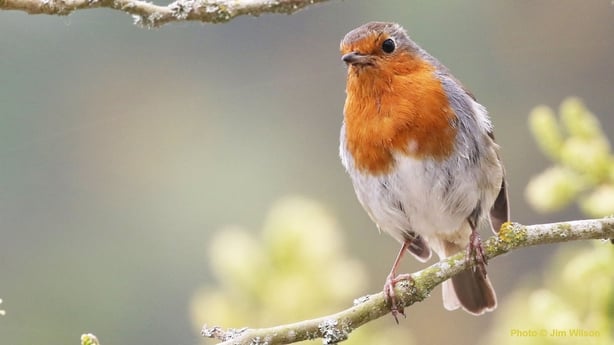
For information from BirdWatch Ireland about how long our garden birds live, visit https://birdwatchireland.ie/how-long-do-your-garden-birds-live/.
Terry goes on a wild goose chase in Co. Wicklow
Our good friend Derek Mulrooney, who is the longstanding greenkeeper at Druids Glen Hotel and Golf Resort near Newtownmountkennedy, Co. Wicklow, was in touch with us recently to let us know about a gaggle of Greylag Geese that had turned up on the golf course.
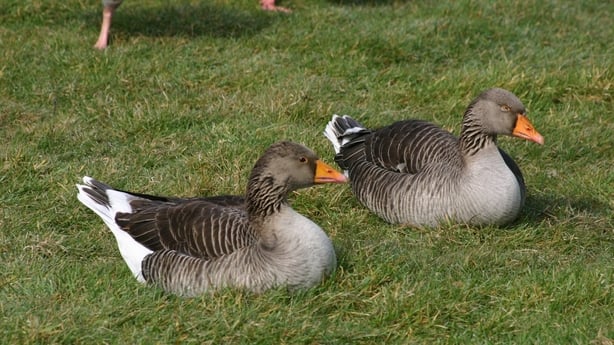
Geese had been present there on occasions in the past, when they were sometimes fed, but when the feeding stopped, the birds disappeared. However, recently food was provided for the resident ducks again and, lo and behold, geese suddenly reappeared to take advantage of it.
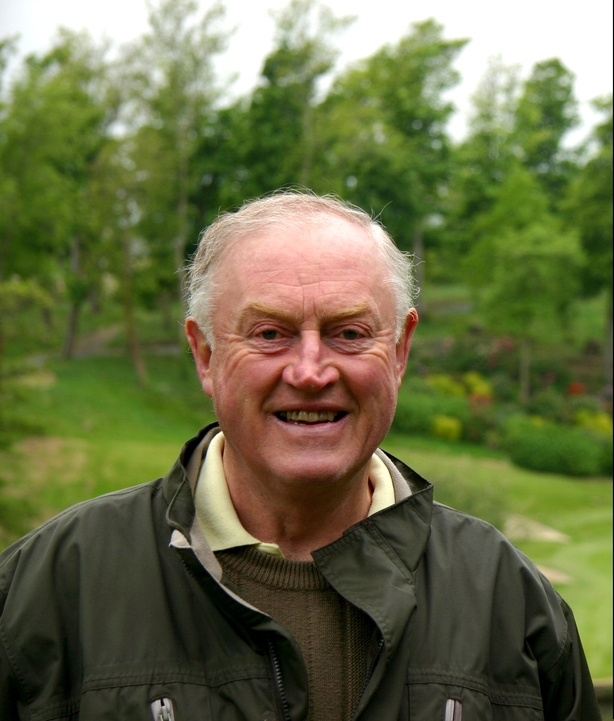
Derek is delighted to see them, but he wonders if our panellists can shed any light on whether these are birds from the original flock, or whether they are total newcomers. Also, he wonders how they learned that the food was there in the first place, as he had not seen any geese checking the course out on the off-chance that an easy meal may have reappeared. Could it be something to do with vocal communication?
Keen to get to the bottom of the mystery, we dispatched our roving reporter Terry Flanagan to Druids Glen to see the geese for himself.
For more information about Greylag Geese, visit https://birdwatchireland.ie/birds/greylag-goose/.
For more information about Druids Glen Hotel and Gold Resort, visit https://www.druidsglenresort.com/.
Keeping track of Ireland’s squirrels and Pine Martens... and you can help!
Earlier in the programme, we spoke about the arrival in 1911 of invasive alien Grey Squirrels into Ireland, which has caused several ecological problems, chief amongst them being a very negative impact on populations of our native Red Squirrels. However, as we have reported several times on the programme, in recent years the reds have begun to stage a remarkable comeback, thanks largely to the recovery and rage expansion of what was once their mortal enemy but is now their unlikely saviour: the Pine Marten.
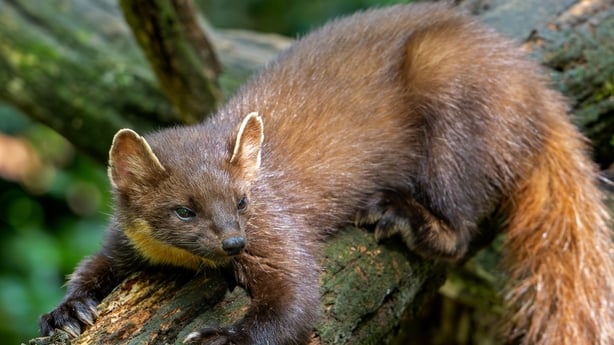
In an effort to understand exactly what is going on, the extent of the recovery and/or decline of the three species and the dynamics of the relationships between them, the National Biodiversity Data Centre has teamed up with the University of Galway, Ulster Wildlife and the Vincent Wildlife Trust to launch the 2026 All-Ireland Squirrel and Pine Marten Survey.
Members of the public are invited to become citizen scientists and help researchers and conservationists to keep track of these iconic woodland mammals. On tonight’s programme, we are joined by Colin Lawton, Ecology Lecturer at the University of Galway’s School of Natural Sciences, to find out more.
For more information about the 2026 All-Ireland Squirrel and Pine Marten Survey and to submit details of your own sightings, visit https://biodiversityireland.ie/surveys/2026-all-ireland-squirrel-and-pine-marten-survey/
Looking forward to Nature Nights Live on RTÉ Radio 1
Finally on tonight’s programme, we look forward to Nature Nights Live, which returns to RTÉ Radio 1 between 22:00 and 23:00 each night from Monday 9th to Friday 13th March. This year we are teaming up with the Tree Council of Ireland to celebrate National Tree Week.
Each night, we will share updates from events happening around the country and highlight the trees we often overlook. We will be placing a special focus on Ireland’s native trees, all of which support insects, birds and mammals, store carbon and play an essential role in keeping our ecosystems healthy.
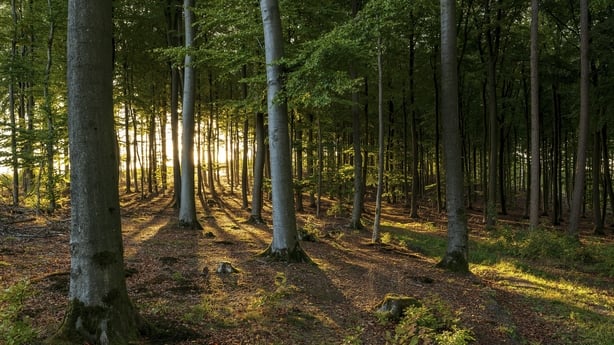
We will also hear from researchers who work after dark, as nocturnal animals begin their nightly routines, and we open the phone lines so listeners can ask questions directly, with an expert panel in studio ready to offer advice and insights. Join the Mooney Goes Wild team for Nature Nights Live, a week of stories, discoveries and the quiet power of trees.
If you have a wild creature visiting your garden at night contact us by emailing mooney@rte.ie.
For more information about National Tree Week, visit https://www.nationaltreeweek.ie/.