


Panel: Éanna Ní Lamhna, Richard Collins and Niall Hatch
Reporter: Jim Wilson
In addition to listening to us on RTÉ Radio One at 22:00 every Monday night, don't forget that you can also listen back to each of our programmes any time you like at www.rte.ie/mooney. There, you will find an extensive archive of past broadcasts, conveniently split into different topics and segments.
Tonight’s programme features a fascinating discussion about the extinction of (almost all) of the dinosaurs, that great lineage of reptiles that, until their sudden disappearance 66 million years ago, once dominated the landmasses of our planet... including the part of it that we know today as "Ireland".
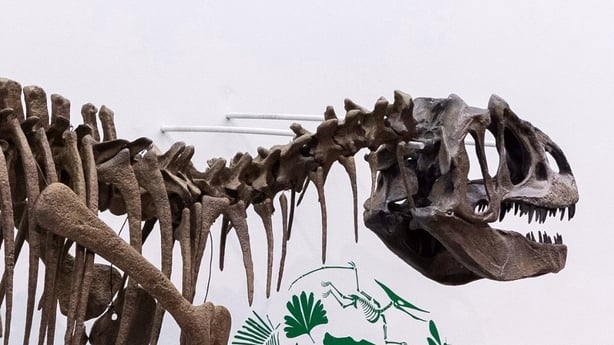
As we hear on tonight’s programme, currently there is a major exhibition about dinosaurs, including those once found in Ireland, in The Glucksman art gallery at University College Cork. Called Domain of the Dinosaurs and running until April, it was the subject of a special programme that was first broadcast in December of last year. Featuring interviews conducted at the exhibition’s launch by Terry Flanagan and Niall Hatch, it is this week’s recommended listen from the Mooney Goes Wild archives.
To listen to this special programme from the extensive Mooney Goes Wild archives, visit https://www.rte.ie/radio/radio1/mooney/2025/1228/1550720-special-domain-of-the-dinosaurs/.
Dinosaurs: what happened to them?
As Éanna begins tonight’s programme by telling us, dinosaurs are a key part of any relationship between a modern grandparent and his or her grandchildren: children are obsessed with them. Having ruled the Earth for millions of years, the vast majority of dinosaur lineages became extinct 66 million years ago... with one very notable exception, but more of that anon. By what exactly happened to them, and why did they disappear? Tune into tonight’s programme to find out!
Remarkably few dinosaur fossils have been unearthed in Ireland, despite the fact that the island that today we call home must, long ago, have hosted plenty of them. This is due, in large part, to the geological makeup of our island, which has seen the rock strata that contain the majority of fossilised dinosaur remains subsequently covered by later deposits of volcanic rock. It is really only along the coast of Co. Antrim, where sea erosion has revealed them under the overlying basalt, that the remains of dinosaurs have so far been found... and, even then, just two of them.
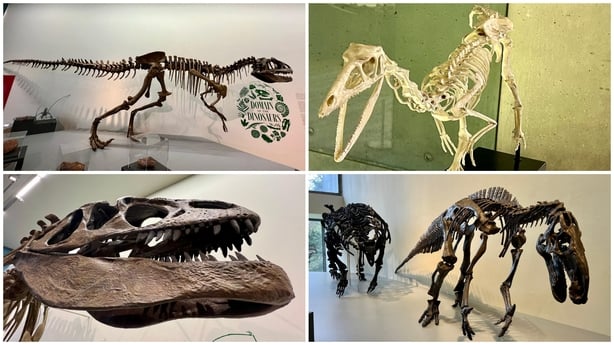
Normally housed in the Ulster Museum in Belfast, until April the only two confirmed Irish dinosaur bones ever discovered are on display at University College Cork, where they form the central part of the Domain of the Dinosaurs exhibition in The Glucksman art gallery. Catch 'em while you can!
For more information about the extinction of dinosaurs, visit https://www.nhm.ac.uk/discover/dinosaur-extinction.html.
For more information about the Domain of the Dinosaurs exhibition currently underway on the UCC campus, visit https://www.glucksman.org/exhibitions/domainofthedinosaurs.
The Collared Dove: an avian success story
While on holiday recently in Valencia, Spain, Derek noticed a species of bird that has become one of the staple performers in the Irish dawn chorus each year. The Collared Dove is a relatively recent colonist both to Iberia and to Ireland, and, in the space of just a few decades, its three-syllable "coo-ROO-roo" song has become a familiar sound across Europe and beyond.
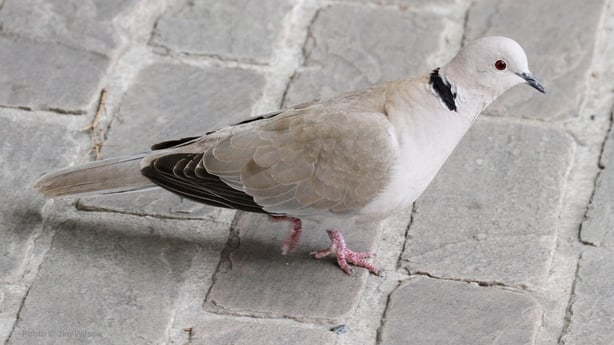
Long confined to parts of southwestern Asia and the Balkan Peninsula, the years following World War II saw a westward explosion of these attractive, long-tailed, beige members of the pigeon family across Europe, which ultimately led to them first breeding in Ireland in 1959. As we hear on tonight’s programme, within 10 years of that, the species was breeding in all 32 counties of Ireland and, so successful has their dramatic range expansion been, today they consistently feature each winter in the Top-20 in BirdWatch Ireland’s Irish Garden Bird Survey.
For more information about Collared Doves, visit https://birdwatchireland.ie/birds/collared-dove/.
For more information about BirdWatch Ireland’s Irish Garden Bird Survey, which runs until the end of February, visit https://birdwatchireland.ie/our-work/surveys-research/research-surveys/irish-garden-bird-survey/.
Dinosaurs: were they really wiped out by an asteroid?
For approx. 180 million years, those "terrible lizards", the dinosaurs, dominated our planet, until suddenly, 66 million years ago, they disappeared. It is now widely believed that the impact of a massive 10km-wide asteroid in the seas off what is now the Yucatan Peninsula of Mexico, in an incident known as the Chicxulub Impact Event, put paid to the dinosaurs, as well as to 75% of the species present on our planet at that time.
But is that the whole story? Is it possible that environmental conditions on Earth were already beginning to discriminate against the dinosaurs, thousands of years before that fateful and catastrophic asteroid crash?
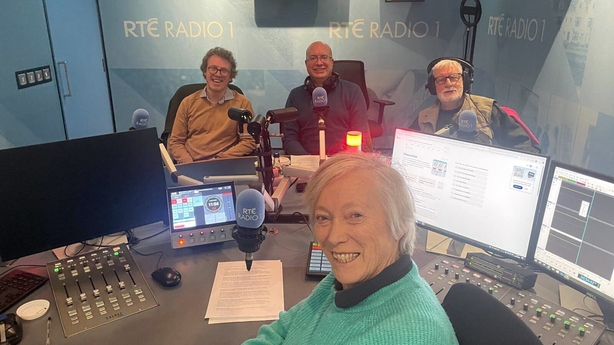
Dr. Matthias Sinnesael, Assistant Professor in the Geology Department at Trinity College Dublin, is one of the participants in a study trying better to understand the dinosaur extinction event and whether it was caused purely by the asteroid, or whether a preexisting period of extreme volcanic activity across our planet may also have played a role. He joins us in-studio on tonight’s programme to tell us more.
By the way, whether the great extinction event was caused by an asteroid, by volcanic activity or by both, we know now that it didn’t wipe out all of the dinosaurs. A few of them, sporting feathers, wings and the power of flight, have survived right through to the present day: we know them better nowadays as birds.
For more information about this landmark study on the disappearance of (most of the) dinosaurs, visit https://pubs.geoscienceworld.org/gsa/gsabulletin/article-abstract/137/3-4/1116/648842/Deep-marine-records-of-Deccan-Trap-volcanism.
Ireland’s first "living seawall" in Cobh
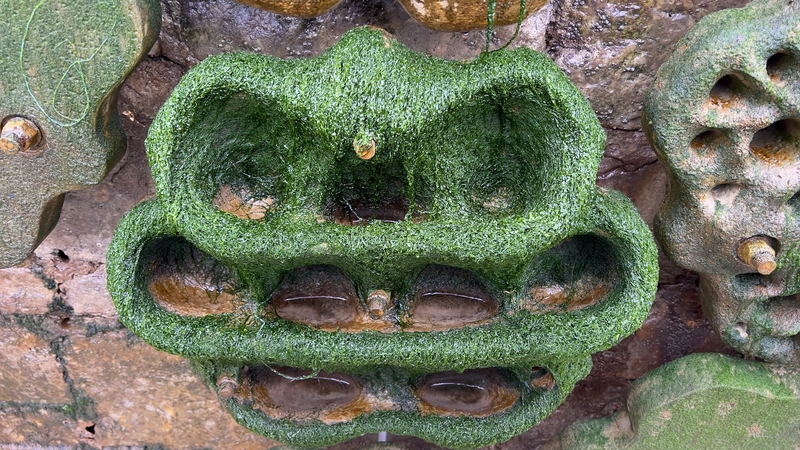
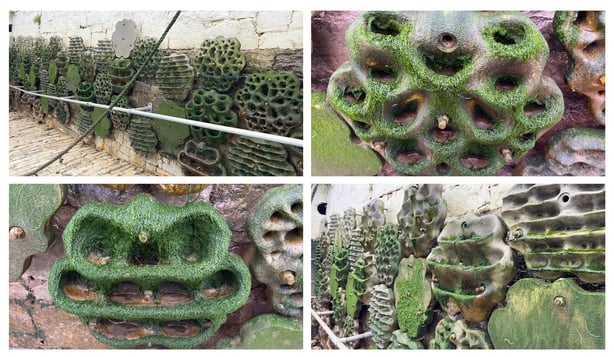
Ireland’s first-ever living seawall, part of a pioneering project designed to enhance marine biodiversity and improve water quality, has been constructed in Cobh Harbour, Co. Cork. Developed in collaboration with the University College Cork’s Sustainability Unit, Research Ireland and the Port of Cork, the living seawall at Kennedy Pier combines innovative coastal engineering with ecological design to create a structure that supports marine life, while strengthening the harbour’s quay wall.
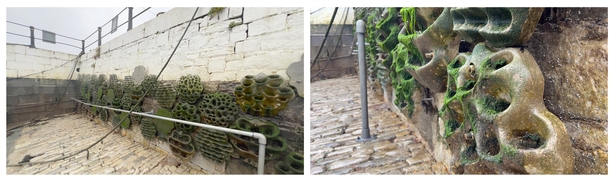
The project team retrofitted a section of the existing quay wall with a series of specially designed precast concrete panels, each featuring a unique pattern of cups, ridges, depressions and holes – all intended to provide habitat, shelter and feeding opportunities for a wide variety of marine species. When the tide goes out, the cup-shaped features retain water to form small rockpools, while panels with holes and textured surfaces offer refuge and attachment points for organisms such as crabs, sea anemones, limpets, barnacles and marine algae.
On tonight’s programme, our man in Cork, naturalist Jim Wilson, speaks to Dr. Louise Firth, Senior Lecturer in Marine Ecology at the School of Biological, Earth and Environmental Sciences in University College Cork, and a collaborating partner with the Living Seawall Project, to find out more.
For more information about the living seawall in Cobh, visit https://inlandandcoastal.com/general/irelands-first-living-sea-wall-installed-in-cobh/.
Peregrine Falcons in Cobh
The Peregrine Falcon is the fastest creature in the world, reliably clocked diving in pursuit of its prey at an utterly staggering 389 km/h! Brought to the brink of extinction in the 1950s and ‘60s by the now-outlawed pesticide DDT, over the past six decades these amazing birds of prey have staged a remarkable recovery and, thankfully, once again are doing very well, both here in Ireland and around the world.
One of the most visible and high-profile places where the species has nested in recent years is in the belfry of St. Colman’s Cathedral in Cobh, Co. Cork, which was completed in 1919 and boasts the tallest steeple in all of Ireland, clocking in at an impressive 300 feet, or 91.4 metres. This makes a perfect, secure nesting site and vantage point for the Peregrines, which successfully nested there in 2024 and where it is hoped they will nest there again this coming breeding season. On tonight’s programme, Jim Wilson tells us more.
For more information about Peregrine Falcons, visit https://birdwatchireland.ie/birds/peregrine-falcon/.
For more information about St. Colman’s Cathedral in Cobh, visit https://cobhcathedralparish.ie/.