


Panel: Niall Hatch, Eanna ni Lamhna
Reporters: Terry Flanagan and Michele Browne
In addition to listening to us on RTÉ Radio One at 22:00 every Monday night, don't forget that you can also listen back to each of our programmes any time you like at www.rte.ie/mooney. There, you will find an extensive archive of past broadcasts, conveniently split into different topics and segments.
Tonight’s programme features a report from Terry Flanagan about a listener who has been inspired by a wonderful initiative from University College Cork called The Great Irish Fossil Hunt, where people across Ireland are asked to send in their own records of fossils that they come across in everyday life.

To help you to get to know more about this wonderful citizen science project and to encourage you to take part yourself, our suggestion this week from the Mooney Goes Wild archives is a report all about The Great Irish Fossil Hunt that Terry recorded with Maria McNamara, Professor of Palaeontology at UCC, which was first broadcast in July of this year.
To listen to this report from the Mooney Goes Wild archives, visit https://www.rte.ie/radio/podcasts/22528043-take-part-in-the-great-irish-fossil-hunt/.
Only the lonely
Spare a thought for poor Derek Mooney, who finds himself is all on his own in the studio this evening. He is feeling a bit sorry for himself, which is why he opens the programme with the mournful stains of Roy Orbison’s 1961 classic Only the Lonely.
For more information about the song Only the Lonely, visit https://en.wikipedia.org/wiki/Only_the_Lonely.
Batman and Robin!
You may be aware that the bats here in Europe like to eat flying insects that are on the wing at night... but did you know that it turns out there is one species that also likes to eat birds?
That’s right: remarkably, researchers from across Europe, led by Aarhus University in Denmark, have recorded Europe's largest bat, the Greater Noctule, capturing and consuming small songbirds in mid-air. The team fitted two of the bats with tiny devices that recorded movements, acceleration, altitude and echolocation calls, revealing the species' astonishing hunting methods.
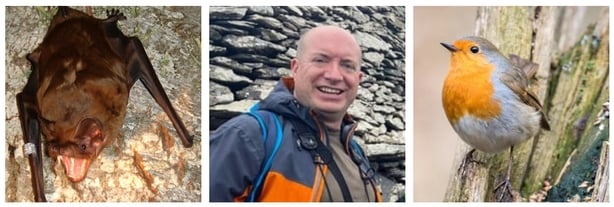
One of the bats chased an unfortunate night-flying Robin for nearly three minutes, before catching it, tearing off its wings to make it easier to carry, then eating it. Audio recordings captured distress calls from the hapless bird, followed by a gruesome 23 minutes of chewing sounds. On tonight’s programme, Niall Hatch tells us more.
For more information about the discovery that Greater Noctule bats hunt birds, visit https://www.birdguides.com/articles/mammals/noctules-hunt-and-consume-passerines-at-altitude/.
Why Robins prefer humans to their own kind
Staying with Robins for the moment, next up on tonight’s programme is Derek’s recent encounter with a succession of these charming little birds as he was walking near his home. As he strolled along, every 20 metres or so he would pass a new Robin, each one singing its heart out. What could have been going on?
As Niall explains, while most birds just sing in the spring and summer, when they are defending breeding territories, Robins are unusual, in that they defend territories – and therefore sing – in all twelve months of the year. Their "winter" song is slower and sounds more melancholic (at least to human ears) than their jauntier "summer" song, but the purpose is the same: to tell other Robins to "get off my land!"
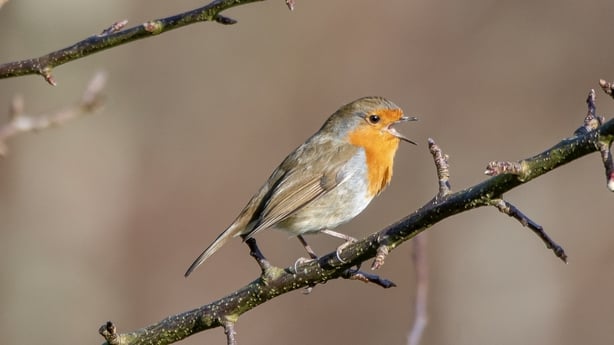
While Robins tend to shun other members of their own species, they do tend to seek humans out, as Derek discovered. It seems that they take advantage of the fact that dangerous predators (including bats!) and unwelcome competitors tend to avoid us, allowing the tamer Robins to take advantage of the protection that we unwittingly provide. And you thought it was because they liked you!
Derek was able to record the birdsong of the robin near his estate on his mobile phone, and we'd love to hear the birdsong around where YOU live! So if you're out on a walk, and hear the birds singing, we'd love you to make a short recording or voice note of the sound of the birds, and e-mail it to mooney@rte.ie.
For more information about Robins, visit https://birdwatchireland.ie/birds/robin/.
The Great Irish Fossil Hunt
Some of the oldest animal fossils on Earth occur in Ireland, including some notably rare specimens. During the summer, our roving reporter, Terry Flanagan, visited the Co. Tipperary town of Clonmel with Prof. Maria McNamara of University College Cork to see some incredible fossils in the stonework of the courthouse. Maria also told Terry about The Great Irish Fossil Hunt, where people across Ireland are asked to send details of any fossils they encounter to UCC. As she pointed out, you can find fossils pretty much everywhere, including on the way to the shops!
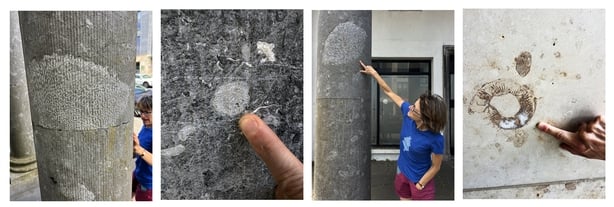
We put Maria’s challenge to you, our loyal listeners, and you didn’t let us down! Lots of you have been sending in your records of fossils that you have stumbled across in everyday life, often in the most unexpected places.
One listener who took up the challenge of finding some urban fossils was Barbara Doyle. While on her lunch break from work, she likes to go for walks around Phibsborough in Dublin, and on one of her recent strolls she came across some stunning fossils in the stonework of St. Peter’s Church. So, on a very wet day, we dispatched Terry to meet Barbara at the church so that he could see them for himself.
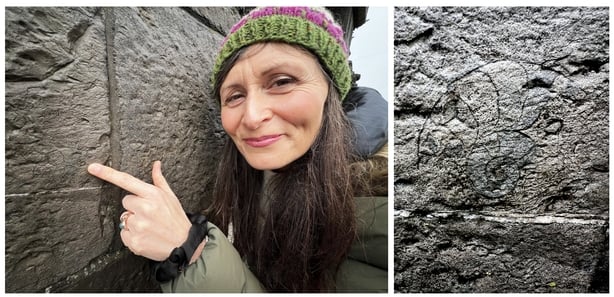
For more information about The Great Irish Fossil Hunt and to submit your own sightings, visit https://www.ucc.ie/en/fossil-heritage/thegreatirishfossilhunt/.
Ten Thousand Years Deep: The Story of Ireland's Peatlands
Over 20 years ago, nature photographer Carsten Krieger packed up his job as a nurse in Germany and moved to Ireland with his wife. His new home backed onto a bog, which led to him becoming fascinated by this amazing wildlife habitat.
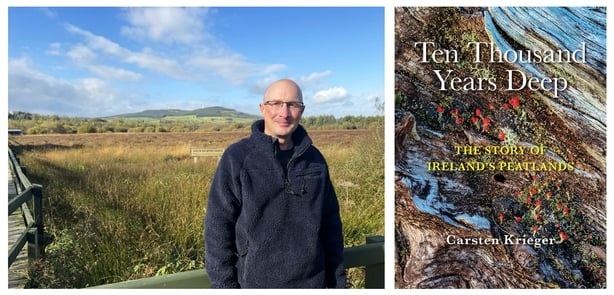
After extensive research and decades spending time in them and photographing them, Carsten has written a booked called Ten Thousand Years Deep: The Story of Ireland's Peatlands, published by O’Brien Press. A few weeks ago, our researcher Michele Browne met Carsten at Griston Bog in Co. Limerick to find out more.
For more information about Ten Thousand Years Deep: The Story of Ireland's Peatlands and to purchase your own copy, visit https://obrien.ie/ten-thousand-years-deep. The ISBN is 9781788494861 and the RRP is €24.99.
***COMPETITION TIME!***
As a special treat for our listeners, we have two copies of Carsten’s wonderful book to give away. To be in with a chance of snagging one, e-mail mooney@rte.ie with your name and address, and the answer to the following question:
What is the Irish name for Red Grouse?
It translates as "hen of heather" - visit https://birdwatchireland.ie/birds/red-grouse/ for a hint!)
Competition closes at 23:59 on Thursday, December 18th. Good luck!
Green bus shelters in Ljubljana
Recently, while Derek was in the Slovenian capital Ljubljana, recording segments for the upcoming series of television programme Back From The Brink, he came upon a very clever initiative to help boost the city’s biodiversity and improve life for its residents.
Recently, the University of Ljubljana, in cooperation with the UL Botanical Garden and Ljubljana City Council, carried out the "greening" of 56 Ljubljana Passenger Transport bus shelters across the city. They planted the roofs of the shelters with self-sustaining species, native to the local Karst limestone region, ensuring that they will be able to withstand drought, be self-sustaining and are resilient to changing conditions, all while supporting a wide array of native insects and other creatures.

While in Slovenia, Derek took the opportunity to chat to one of the leaders of the project, Dr. Blanka Ravnjak, about this fantastic initiative.
For more information about Ljubljana’s green bus shelter scheme, visit https://www.uni-lj.si/en/news/2025-10-02-the-university-of-ljubljana-and-the-city-of-ljubljana-join-forces-to-green-bus-shelters.
Weir-y seals!
Two weeks ago, we spoke on the programme about a Grey Seal that had been spotted swimming up the River Liffey in Dublin. This prompted listener Barry McCarthy to send us the following e-mail:
I listened with interest to your segment on seals in the Liffey. Your listener noted he had seen the animal above the weir in Islandbridge, but Éanna seemed to think the weir would be a limit for the seal. I lived by the weir for several years and often saw seals fishing below, and once or twice witnessed them hauling out and flopping up the weir to the upper river. You'll find some video evidence attached with my kids commentary as we watched with delight!
Éanna pops into the studio once again on tonight’s programme to discuss Barry’s observations and the degree to which seals are able to move about on land. She also gives us her position in the ongoing debate about Christmas trees: real or artificial – which is better for the environment?
For more information about Grey Seals, visit https://www.sealrescueireland.org/seal-facts/grey-seal-quick-facts/.