


Panel: Richard Collins, Éanna Ní Lamhna and Niall Hatch
Reporters: Terry Flanagan and Jim Wilson
In addition to listening to us on RTÉ Radio One at 22:00 every Monday night, don't forget that you can also listen back to each of our programmes any time you like at www.rte.ie/mooney. There, you will find an extensive archive of past broadcasts, conveniently split into different topics and segments.
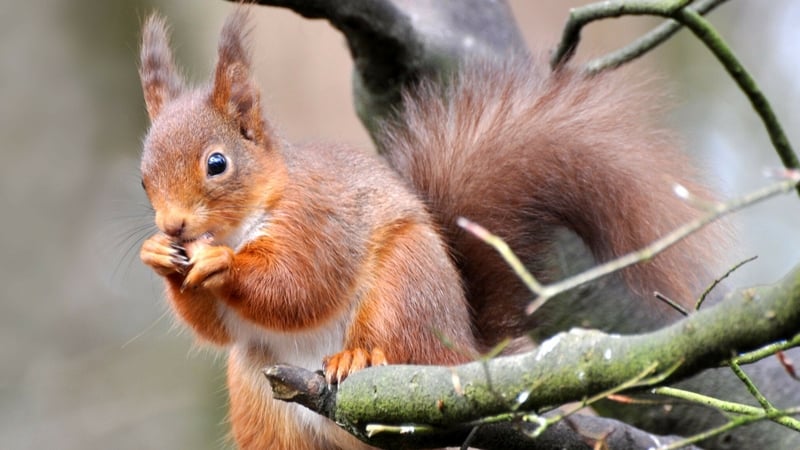
Tonight’s programme features a segment about an unfortunate Red Squirrel in Co. Wicklow that has lost its tail. These adorable rodents are amongst Ireland’s best-loved native mammals, and to help you get to know them a bit better, our recommendation this week from the Mooney Goes Wild archives is a segment which was first broadcast in September 2015.
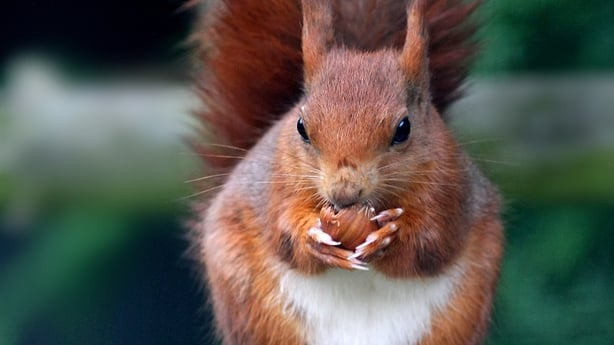
In it, Richard and Derek travel to the Slieve Gullion Forest Park in Newry, Co. Down to chat to Dr. David Tosh from Queens University and Therese Hamill from the 'Ring of Gullion and Cooley Red Squirrel Group’, to discuss how the native Red Squirrel population has been making a comeback, thanks to help from an unexpected source: its traditional archenemy, the Pine Marten.
To listen to this segment from the Mooney Goes Wild archives, visit https://www.rte.ie/radio/radio1/clips/20841442/.
Wildlife along Dublin’s River Dodder
We absolutely love to hear from our listeners here at Mooney Goes Wild, be it via letter, email, social media or voice-note. It was this latter method that listener Des McLoughlin (who, incidentally, used to work with none other than our own Richard Collins) used to get it touch with us to pose two questions.
Firstly, Des told us that, while walking along the River Dodder recently, he managed to photograph a Grey Heron and a Cormorant in close proximity to each other. The Cormorant was holding out its wings while standing bolt upright, flapping them back and forth . . . but why?
As we hear on tonight’s programme, Cormorants are well known for this behaviour. Unlike most other waterbirds, such as swans and ducks, which have fully waterproof feathers, members of the cormorant family have feathers that absorb water. This helps them to dive rapidly below the surface, as their feathers become waterlogged, expelling any air bubbles that might increase their buoyancy. However, this means that, unlike other birds, they literally need to hang their wings out to dry afterwards, to allow them to fly properly. This is what the Cormorant that Des spotted was doing.
Des’ second query concerned a family of Mute Swans that he has been observing in Bushy Park. Originally, the family party consisted of mum (the pen), dad (the cob) and four cygnets. Eventually, the cob departed, along with three of the youngsters, but the pen and one of her cygnets are still present, which struck Des as unusual. What could be the reason for this?
For more information about Cormorants, visit https://birdwatchireland.ie/birds/cormorant/.
For more information about Mute Swans, visit https://birdwatchireland.ie/birds/mute-swan/.
A seal in the River Liffey?
We also received an email from listeners Michael and Sinéad Judd, who were walking recently along Dublin’s River Liffey towards Chapelizod and were astonished to see what they believe to be a seal swimming in the water. As they asked us, "It looked too big to be an otter. Could this be or was it a very big otter?"
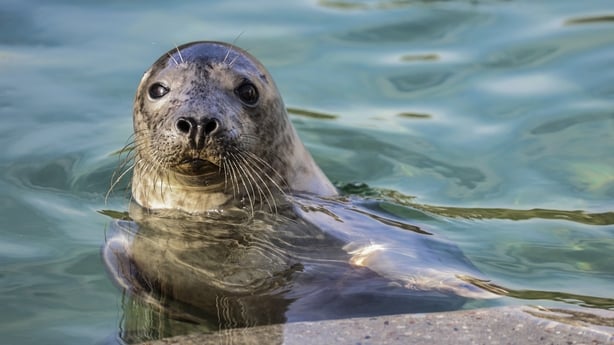
As we hear from Éanna and Richard on tonight’s programme, it’s actually not too unusual for Grey Seals to swim up the Liffey from Dublin Bay, so it seems that Michael and Sinéad were absolutely correct. Though seals are much more typically associated with the marine environment, they will happily also swim in brackish water and freshwater, especially in the tidal zone of large rivers.
For more information about Grey Seals, visit https://www.sealrescueireland.org/seal-facts/grey-seal-quick-facts/.
Red Squirrel without a tail
Our next query is accompanied by a video, taken by Senan and Quinn while they were walking near scenic Lough Dan in Co. Wicklow. It shows an unfortunate Red Squirrel that has somehow completely lost its tail, usually the most striking feature of a squirrel. What might have happened to it, they ask, and will the poor creature survive?
As our panellists explain, the culprit in this case is almost certainly a predator that managed to grab the squirrel by its tail, which presumably broke off as the animal made its panicked escape. It may perhaps have been a large bird of prey, such as a Buzzard, though it is more likely to have been the Red Squirrel’s traditional arch-nemesis, the Pine Marten.
As for whether or not the squirrel will survive without its tail, it’s hard to say for certain. It is certainly at a disadvantage when leaping from branch to branch in the treetops, as squirrel’s tails play a key role in helping them to balance and also allow them to jump further, acting almost as a rudimentary wing that keeps them aloft slightly longer. The Lough Dan area is wonderful habitat for squirrels, however, being full of food and shelter, so hopefully it will manage to cope.
For more information about Red Squirrels, visit https://www.vincentwildlife.ie/species/red-squirrel.
Harper’s Island Wetlands Nature Reserve livestream
Winter is an exciting season for birdwatchers across Ireland, not least because it sees a huge influx of migrant waterfowl and waders that flock to wetland habitats in their thousands. We would encourage you to visit some wetlands over the coming weeks to see these visitors for yourself. However, we realise that time can be an issue, that travel can be a hassle and that weather conditions aren't always favourable.
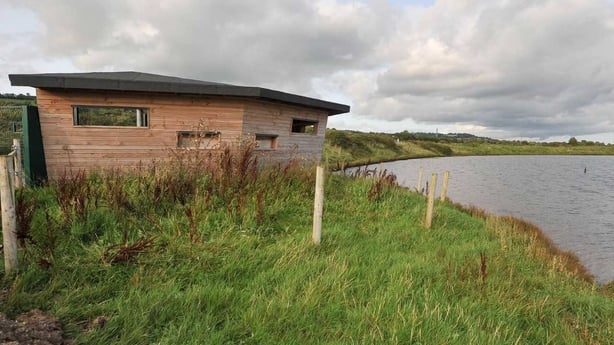
If, regardless of these obstacles, you would still like to watch the comings and goings of wetland birds, BirdWatch Ireland's Cork Branch has got you covered. They are streaming a live video feed from Harper's Island Wetlands Nature Reserve near Glounthaune, Co. Cork. This fantastic reserve is owned and managed by Cork County Council in partnership with BirdWatch Ireland, Glounthaune Community (Glounthaune Community Association/Tidy Towns/Men’s Shed) and the National Parks and Wildlife Service, and thanks to the livestream you can enjoy watching its rich birdlife whenever and wherever you like.
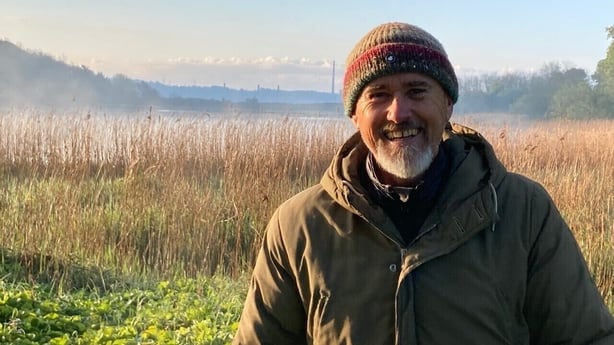
On tonight’s programme, our man in Cork and a person who was instrumental in setting up both the reserve and the livestream, Jim Wilson, tells us more.
To view the 24-hour livestream from Harper's Island Wetlands Nature Reserve, visit https://www.youtube.com/watch?v=BpW9fu1l7oI.
BirdWatch Ireland’s Irish Garden Bird Survey starts today
Today, Monday 1st December, marks the start of this winter’s Irish Garden Bird Survey. Of all of the ornithological surveys carried out by conservation charity BirdWatch Ireland, it is far and away the most popular. Several thousand households participate in this thirteen-week bird count each winter, making it Ireland’s largest nature-themed "citizen science" project.
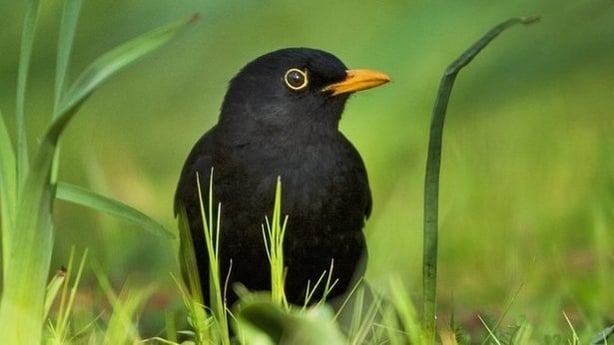
This winter’s survey season – its 37th – kicks off today, Monday 1st December, and will run until the end of February 2026. Over the course of those three months, participants are asked to answer a few simple questions about their gardens, then make careful note of the different bird species that visit each week, along with the highest number of each seen at any one time.
As Niall Hatch - wearing his hat as Head of Communications and Development with BirdWatch Ireland – tells us on tonight’s programme, it's a great way to learn more about the birds that come to your home, and the data that Mooney Goes Wild listeners send to BirdWatch Ireland is invaluable in allowing them to keep track of the fortunes and movements of our feathered friends. What's more, it's great fun and is a particularly nice activity for families to do together. We should warn you, however, that it can become very addictive!
For more information about the Irish Garden Bird Survey and to take part, visit https://birdwatchireland.ie/our-work/surveys-research/research-surveys/irish-garden-bird-survey/.
Red Squirrel without a tail, part 2
Now that he has joined us in the studio, Niall is keen to revisit our earlier discussion about the tailless Red Squirrel from Lough Dan; in addition to being a keen birder, he is also a huge squirrel enthusiast. He points out that the plight of this particular Red Squirrel is extremely similar to that of the protagonist in Beatrix Potter’s classic 1903 illustrated children’s book, The Tale of Squirrel Nutkin. At the conclusion of that cautionary tale, as a result of a series of ill-advised pranks, poor Nutkin loses his tail while escaping from the clutches of an owl. At least he survives and lives to fight another day, so there may well be hope for his modern-day Wicklow counterpart.
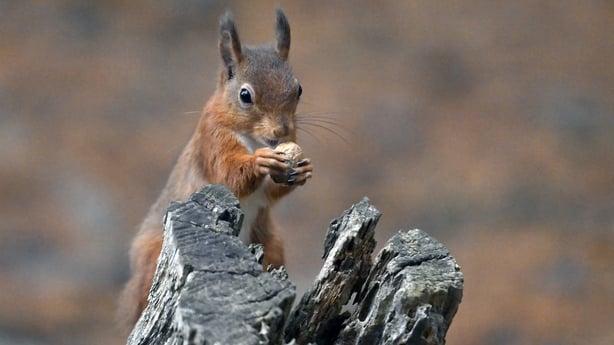
To read the The Tale of Squirrel Nutkin in full online, visit https://www.gutenberg.org/files/14872/14872-h/14872-h.htm.
Feeding Hooded Crows
We recently received an e-mail from a listener called Mary O’Reilly, recounting her interesting experience of feeding birds. Every Saturday morning, Mary heads to St. Anne’s Park in Dublin, where she buys a coffee and then rambles through the park with her dog.
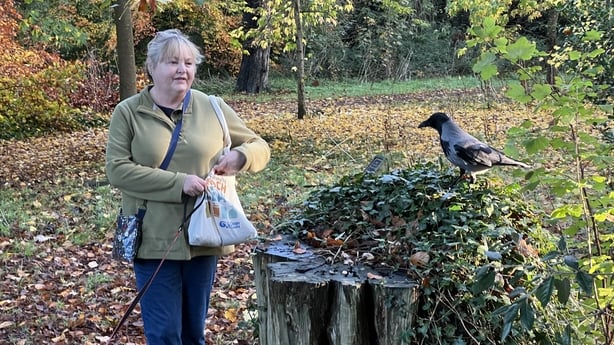
(photo by Terry Flanagan)
Recently, Mary noticed that she was being followed by some birds, so she decided to throw out some food for them. Week by week, the number of birds grew, until it was well into double figures. But these weren’t your standard bird food recipients, like Blackbirds or Robins. No, they were much larger birds: Hooded Crows. For tonight’s programme, we dispatched our roving reporter, Terry Flanagan, to investigate.
For more information about Hooded Crows, visit https://birdwatchireland.ie/birds/hooded-crow/.
The Unnatural History of Animals: Tales from a Zoological Museum
Regular listeners to the programme will know that we are big fans of natural history books here at Mooney Goes Wild. Next week, we will have our traditional programme recommending new titles as Christmas gifts, so be sure to tune in to find the perfect present for the nature-lover in your life.
We have decided to start early this year, however. On tonight’s programme, Richard Collins chats to the author of what just may be his favourite book of the year. The Unnatural History of Animals: Tales from a Zoological Museum by Dr Martyn Linnie, curator of Trinity College Dublin’s Zoological Museum, brings to life the many tales of the museum’s history and that of its permanent residents.
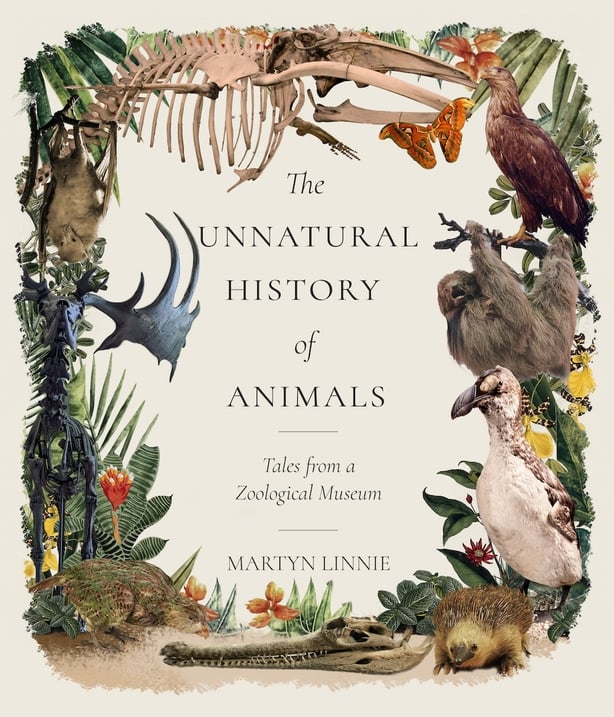
Beautifully written and illustrated, it visits the lost world of dinosaurs, ancient beasts and events that changed our world, while travelling back in time through the great voyages of discovery to learn about the explorers and naturalists who forged new territories across land and sea. It also reveals how our planet, despite surviving five mass extinctions, now faces its greatest challenge of all.
For more information about The Unnatural History of Animals: Tales from a Zoological Museum, published by Red Stripe Press, visit https://www.tcd.ie/news_events/articles/2025/extraordinary-tales-of-trinitys-zoological-museum-brought-to-life-in-new-book/. The RRP is €24.99, the ISBN is 9781786052025 and further details can be found at https://www.redstripepress.com/the-unnatural-history-of-animals/.