


To listen to RTÉ.ie's radio and podcast services, you will need to disable any ad blocking extensions or whitelist this site.
0
00:00
00:00
Episode Notes
Panel: Niall Hatch
Reporter: Terry Flanagan
In addition to listening to us on RTÉ Radio One at 22:00 every Monday night, don't forget that you can also listen back to each of our programmes any time you like at www.rte.ie/mooney. There, you will find an extensive archive of past broadcasts, conveniently split into different topics and segments.
Tonight's programme features a report from Terry Flanagan about one of Ireland’s most instantly recognisable birds, the Magpie. With that in mind, and to help you to get to know a bit more about these supremely clever crows, our suggestion from the Mooney Goes Wild archives this week is an interview with Magpie expert Prof. Brendan Kavanagh, who also features in tonight’s report.
In this segment, which was first broadcast in August 2014, Brendan speaks to Dr. Richard Collins about whether or not Magpies are really attracted to shiny objects, as is often maintained.
To listen to this segment from the Mooney Goes Wild archives, visit https://www.rte.ie/radio/radio1/clips/20639944/
Derek feels like one of the Odd Couple
Poor Derek is feeling a bit under the weather on tonight’s programme. They say that the average person catches between 2 and 4 colds a year, and today it’s Derek’s turn, hence his slightly sultry voice. As he says himself, he feels a bit like Felix Unger from the 1970s US sitcom The Odd Couple, a character who perpetually (and loudly) suffered from sinus trouble. Well, we have always said that he’s a bit odd!
For more information about The Odd Couple, visit https://en.wikipedia.org/wiki/The_Odd_Couple_(1970_TV_series)
Parakeets in Rome
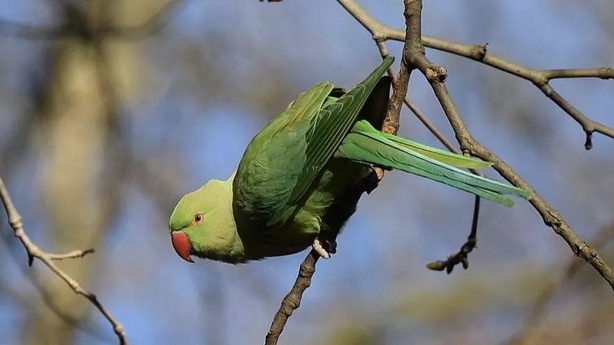
Speaking of odd couples, Niall was recently in Italy – in the Eternal City of Rome, no less – for reasons that will shortly become apparent. While he was there, he met up with our former RTÉ colleague Colm Flynn, who is now Vatican Correspondent for EWTN, the largest religious broadcaster in the world. The pair were strolling along Viale Giulio Cesare, about 10 minutes from the Vatican City, when loud, raucous sounds descended from the heavens: the calls of parakeets flying into the trees to roost for the night.
There are actually two different species of parakeet which, although not native, now make their homes in Rome and can be found there in abundance, descendants of pet birds that either escaped or were deliberately released. One is the Ring-necked Parakeet (also known as the Rose-ringed Parakeet), a species native to parts of Asia and Africa. The other is the Monk Parakeet, which has its natural range in the southern half of South America. As we hear from Colm and Niall on tonight’s programme, both are bright green, long-tailed and exceptionally noisy (the parakeets, that is, not the two gentlemen).
For more information about Ring-necked Parakeets and issues that they might be causing here in Ireland, visit https://birdwatchireland.ie/calling-for-sightings-of-the-invasive-ring-necked-parakeet/
For more information about Monk Parakeets, visit https://www.allaboutbirds.org/guide/Monk_Parakeet/
For more information about Colm Flynn and his work, visit https://colmflynn.com/about
Looking forward to Pope Leo’s Elephant
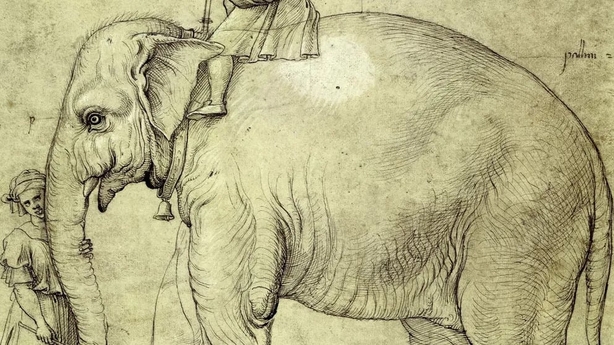
The reason that Niall was in Rome and speaking to Colm in the first place was to record segments for a special documentary that will be the next programme in our Nature on One series, to be broadcast on RTÉ Radio One on Christmas Day. Called Pope Leo’s Elephant, it will tell the story of an extraordinary diplomatic gift that, in 1514, was sent to Pope Leo X by King Manuel I of Portugal: a magnificent Asian Elephant named Hanno, the first of its species ever seen in Rome.
The elephant’s arrival in in The Vatican was a momentous event, impressing on awed spectators the vast reach of Portugal’s territory and its growing influence on the world stage. Hanno became a beloved figure in the Eternal City, drawing crowds and even appearing in public ceremonies, including papal processions.
In this special programme, Derek Mooney and Niall Hatch will dig deeper into Hanno’s story, search for hidden artistic references to this beloved elephant in Rome and beyond and speak with the Indian screenwriter who has plans to make a movie about Hanno’s adventures.
For more information about our Nature on One documentary series, visit https://www.rte.ie/radio/radio1/nature-on-one/
BirdWatch Ireland’s Irish Garden Bird Survey starts today
Of all of the ornithological surveys carried out by conservation charity BirdWatch Ireland, its annual Irish Garden Bird Survey is far and away the most popular. Several thousand households participate in this thirteen-week bird count each winter, making it Ireland’s largest nature-themed "citizen science" project.
Today, Monday 25th November, marks the start of the survey’s 36th consecutive season, which will run until the end of February 2025. Over the course of those three months, participants are asked to answer a few simple questions about their gardens, then make careful note of the different bird species that visit each week, along with the highest number of each seen at any one time.
It's a great way to learn more about the birds that come to your home, and the data that Mooney Goes Wild listeners send to BirdWatch Ireland is invaluable in allowing them to keep track of the fortunes and movements of our feathered friends. What's more, it's great fun and is a particularly nice activity for families to do together. We should warn you, however, that it can become very addictive!
For more information about the Irish Garden Bird Survey and to take part, visit https://birdwatchireland.ie/our-work/surveys-research/research-surveys/irish-garden-bird-survey/
Magpies nesting in November?
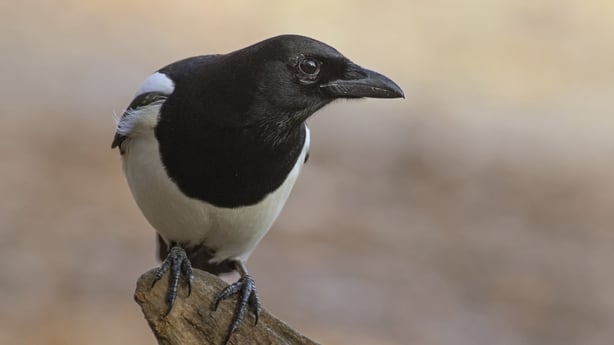
We recently received a very interesting email from one of our loyal listeners, Conor Cunnane. Conor lives in Co. Kildare, close to the Curragh, and he’s noticed that Magpies are nesting in his garden.
Well, there’s nothing odd about that, you might say. After all, Magpies are common birds that nest in tall garden trees throughout the country. However, this Magpie pair began building their nest at the end of October and have continued to add to it right through November. When you consider that these long-tailed, black-and-white members of the crow family don’t normally lay eggs until around late March, we thought that Conor’s observations were rather unusual.
What else to do but dispatch our roving reporter Terry Flanagan to visit Conor in Co. Kildare to check his Magpies out? But Terry didn’t travel alone; he brought Prof. Brendan Kavanagh, who did his PhD on Magpies . . . if anyone knows about these canny corvids, it’s Brendan!
For more information about Magpies, visit https://birdwatchireland.ie/birds/magpie/
Slender-billed Curlew declared extinct
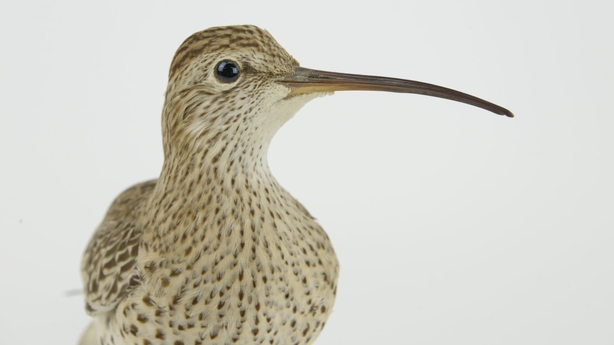
In a very sad development, a once-abundant species has formally been declared extinct, just the second European bird known to have suffered this fate. A highly migratory member of the wader family, the Slender-billed Curlew was a close relative of the Eurasian Curlew that we know and love here in Ireland, a species that is itself experiencing sharp declines, as we have reported many times on the programme.
Despite its former seasonal abundance around the Mediterranean Sea during migration, the main breeding grounds of the Slender-billed Curlew were never discovered . . . and presumably now never will be. It is believed that widespread agricultural expansion and habitat conversion, and to a lesser extent hunting, were the driving factors behind the species’ rapid and irreversible decline. The last confirmed sighting was of a single individual at Merja Zerga, Morocco in 1995.
A study conducted by scientists from the RSPB, BirdLife International, Naturalis Biodiversity Center and the British Natural History Museum used objective statistical analysis of threats to the species and a database of records, including museum specimens and sightings, to assess the likelihood of extinction. The analysis has revealed that there is a 99.6% chance that the bird no longer exists: in reality, therefore, all reasonable hope is lost.
For more information about the extinction of the Slender-billed Curlew, visit https://birdwatchireland.ie/extinction-of-slender-billed-curlew-must-be-a-wake-up-call/
On the search for Cottonweed, one of Ireland’s most critically endangered plants
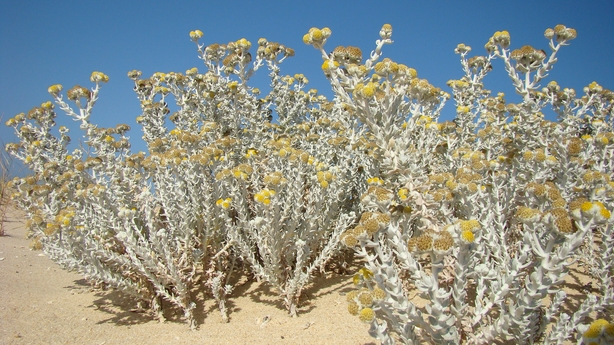
Back in October, our former Researcher Michele Browne, who has recently moved over to join our colleagues on the Drivetime team, took a trip south to Our Lady’s Island in Co. Wexford, where for tonight’s programme she met up with some of the people who have been instrumental in saving one of Ireland’s most critically endangered plant species.
The diminutive Cottonweed is one of our rarest plants, with perhaps fewer than 50 individuals remaining along the sand and shingle of our southeast coast. To find out more, Michele speaks to Edel Maher, who recalls first seeing the plant in 1994, when she was Head of Propagation in the nurseries of the National Botanic Gardens, and to Noeleen Smyth, Assistant Professor of Environmental Horticulture at University College Dublin.
For more information about Cottonweed in Ireland, visit https://www.wildflowersofireland.net/plant_detail.php?id_flower=72