


To listen to RTÉ.ie's radio and podcast services, you will need to disable any ad blocking extensions or whitelist this site.
0
00:00
00:00
Episode Notes
Panel: Éanna Ní Lamhna, Richard Collins, Terry Flanagan & Niall Hatch
In addition to listening to us on RTÉ Radio One at 22:00 every Monday night, don't forget that you can also listen back to each of our programmes any time you like at https://rte.ie/mooney. There, you will find an extensive archive of past broadcasts, conveniently split into different topics and segments.
On tonight’s programme, our biologist and roving reporter Terry Flanagan talks about Ireland’s most colourful crow, the Jay, and its close relationship with the oak tree. In an effort to help you get to know these remarkable birds a bit better, therefore, our recommendation of the week from the Mooney Goes Wild archives is a documentary all about this fascinating and highly intelligent species, which was first broadcast in November 2004 and updated in January 2016.
To listen to this programme from the Mooney Goes Wild archives, visit
https://rte.ie/radio/radio1/mooney/2016/0117/760770-mooney-goes-wild-sunday-january-17th-2016/
You’re winding me up: how birds cope with winter storms
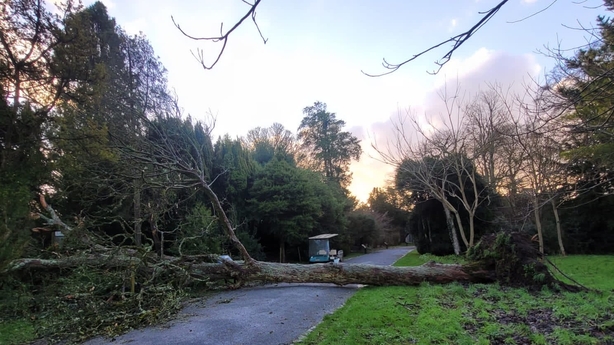
The weather here in Ireland has been pretty turbulent of late, to put it mildly, with stormy conditions wreaking havoc on our coastal areas, our powerlines and our trees. It stands to reason that it must also pose significant problems for birds, which are so dependent on their power of flight and which find cold winter conditions tough enough as it is.
As we explore on tonight’s programme, some species of birds deal with high winds better than others, with those that feed mainly on insects and those that must spend the winter at sea generally finding it hardest.
Many birds have evolved to construct nests that are remarkably good at withstanding the gustiest conditions, as this video that Derek shot during last week’s stormy weather shows.
Thankfully, the vast majority of Ireland’s birds are not nesting at this time of year, so at least the recent inclement conditions won’t have hindered their attempts at reproduction. It’s just a few traditionally early-nesters, such as Ravens, Collared Doves and Crossbills, that may unfortunately have been adversely affected in this regard.
For more information about what storms mean for seabirds in particular, visit
https://birdwatchireland.ie/what-storms-mean-for-seabirds/
Jays and acorns: a never-ending natural cycle
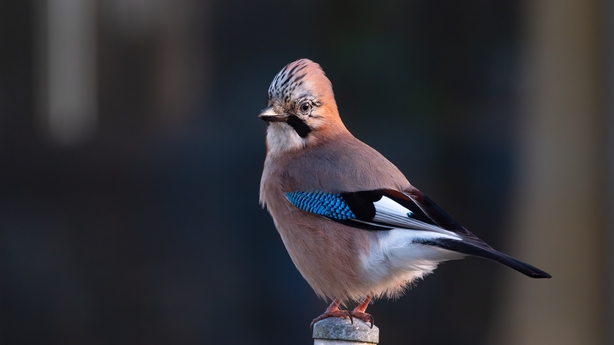
The Jay is a member of the crow family, though you might not know that to look at it. With a brownish-pink body, raised head feathers and flashes of stunning metallic blue on each wing, it looks more like an escaped tropical cagebird or a child’s drawing than a bird one would expect to see in Ireland.
Yet see Jays here you can; indeed, they are relatively common and widespread, though generally much more secretive than their fellow Irish members of the crow family. They have a strong attraction to oak trees, and for good reason: while these canny corvids enjoy a wide diet, their favourite food of all is acorns.
As we here on tonight’s programme, this bird’s key strategy for coping with food shortages due to bad winter weather conditions is to plan ahead. Each autumn, Ireland’s Jays collect and bury vast quantities of acorns, making a careful mental note of the secret location of each one. Then, when hunger strikes, they have an easy and nutritious source of food ready and waiting.
However, sometimes they forget the location of an acorn or two, and some unlucky Jays may fall foul of a predator or disease during the long winter months, before they can return to their caches. Many of those unclaimed acorns will go on to germinate, then spring to life as young oak trees . . . ensuring an ongoing supply of acorns for future generations of Jays, and in turn guaranteed seed-dispersers for future generations of oak trees.
For more information about Jays, visit
https://birdwatchireland.ie/birds/jay/
I warned you not to eat me!
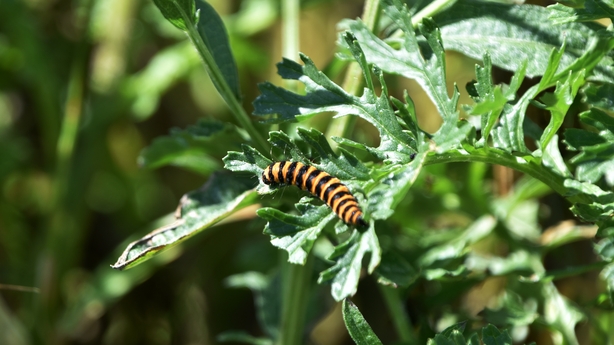
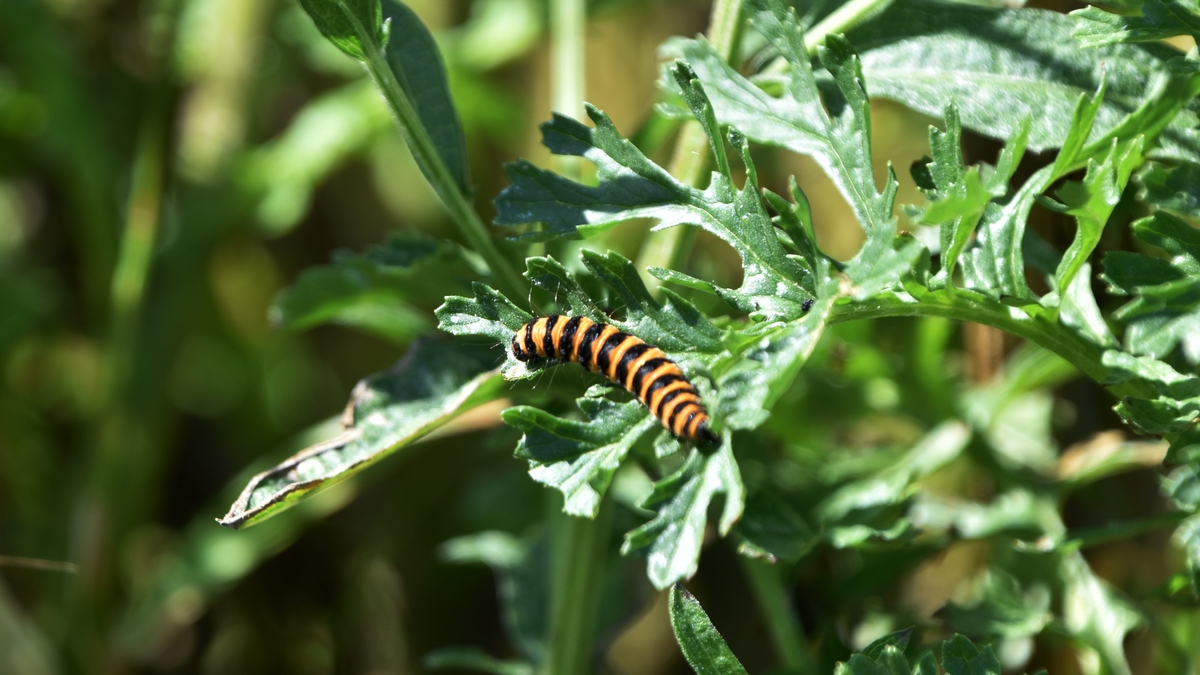
Later in the programme we will be taking a look at edible insects, but before that we talk about some insects that are most definitely a recipe for an upset stomach . . . or worse. It’s well known that many poisonous and/or venomous insect species sport eye-catching and highly contrasting colours. Think, for example, of the vivid yellow-and-black bands of a wasp (which can inject venom), the orange-and-black stripes of the Cinnabar Moth caterpillar (which has accumulated toxins in its body from the food it eats) or the black-spotted scarlet carapace of many species of ladybird (which taste horrendous).
These creatures are all very easy to spot, and that’s the point. Rather than go down the route of camouflage to hide, as so many small creatures do, these invertebrates positively shout their presence from the rooftops. Their highly visible and recognisable colour patterns give birds, mammals and other potential predators a stark warning: "If you eat me, you will regret it!"
As we discuss on tonight’s programme, most creatures either know instinctively or learn very early in life to give these show-offs a wide berth. That includes us humans: just think of your own reaction if a wasp suddenly appears in front of your face, even if you cannot see its painful sting.
However, chances are that you may well react in exactly the same way to, for example, a harmless hoverfly, which cannot hurt you in any way and which would make a fine meal for a bird, yet which wears yellow-and-black stripes. A phenomenon called convergent evolution has led these insects to develop wasp "fancy-dress", through the process of natural selection. Though they pose no threat, they provoke the same response as a wasp or bee, meaning that they most often survive any close run-ins with predators too afraid to take the risk.
For more information about this intriguing form of false advertising, visit
https://lemonbayconservancy.org/true-or-false-how-insects-fool-birds/
Nature Notes from the Mooney archive
We often tell you, our loyal listeners, to visit our website, https://rte.ie/mooney, for details about the topics we discuss on the programme. Indeed, if you are reading this now, you have done just that! Over the years, this has grown into a very significant natural history resource, not least through the articles known as Nature Notes that we used regularly to feature on our page.
If you think that you might enjoy reading over these natural history knowledge nuggets, you will be pleased to hear that we have compiled them into a handy location on our website. Simply go to https://rte.ie/b/1427964 and browse our extensive archives.
To whet your appetite, on tonight’s programme we revisit three of these Nature Notes with the people who wrote them, all of whom will be very familiar to regular Mooney Goes Wild listeners.
Waiter, waiter, there’s NO fly in my soup!
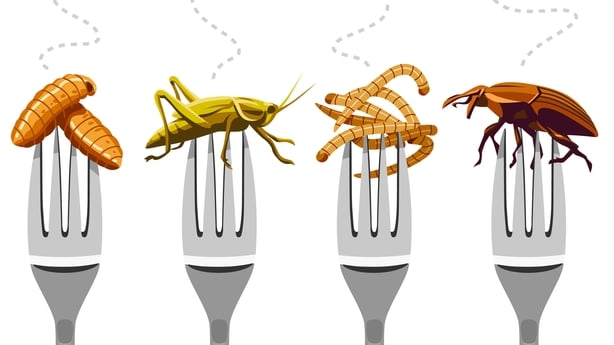
The first of these Nature Notes is a piece about why it makes sense for insects to form a key part of our diets, written by Terry Flanagan. Packed with protein, high in nutrients and present in great abundance – the combined weight of all insects on Earth is more than 70 greater than the weight of all humans! – these creepy-crawlies can be grown simply and easily, using far, far fewer natural resources than the meat and other protein sources which typically feature in Western diets.
To date, over 2,000 species of insect have been identified as being perfectly edible by humans, and given that there are over 1 million insect species known to science, surely that number would be set to climb dramatically with further research. But, as Terry explains on tonight’s programme, it’s very, very hard for most people to overcome the "ick" factor.
Insects such as Crickets and Grasshoppers are routinely eaten in South East Asia, including in Thailand, where our own Niall Hatch has tried them. Not merely tried them, as he tells us, but actually liked them.
·Hibernation: the Big Sleep and other strategies
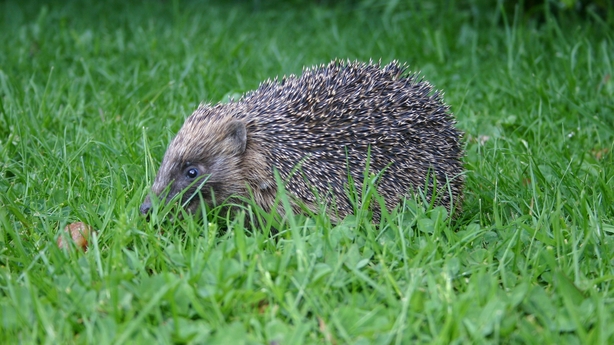
Earlier on the programme, we spoke about strategies for coping with harsh winter weather. Surely the most effective strategy of all must be to hunker down and sleep right through it, slowing your metabolism right down to reduce your need for energy and oxygen. This strategy is called hibernation, a topic that Éanna Ní Lamhna wrote about for us. On tonight’s programme, she tells us about the comparatively few Irish species that hibernate and the adaptations that allow them to do so. She also takes the opportunity to remind us once again that, contrary to popular belief, our squirrels categorically DO NOT hibernate!
Berries, birds and bribes
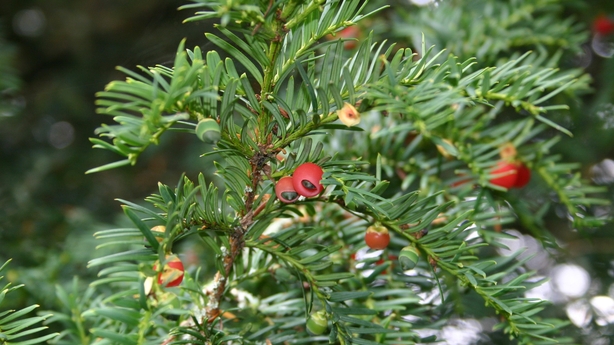
Berries are an essential source of nutrition for a great many birds during the long, cold, dark winter months. Some species, such as thrushes, Starlings and Waxwings, have evolved special strategies to exploit this nutritious food supply, being special digestive systems to process them as quickly as possible, refined eyesight to judge the peak moment of ripeness or biological processes to secrete toxins contained in the fruit.
The berry-bearing plants benefit too, of course, essentially bribing the birds to eat their fruits and disperse their offspring. Bird lack teeth, so the seeds contained in the berries will pass undamaged through their digestive systems . . . emerging unscathed from the other end, wrapped in a nice package of nitrogen-rich fertiliser.
Richard Collins penned our original Nature Note on the subject of birds and berries and, as he tells us on tonight’s programme, it’s a subject that continues to fascinate him.
To read Richard’s Nature Note on birds and berries, visit [INSERT URL HERE: I CAN’T FIND IT]
Marymount Hospital
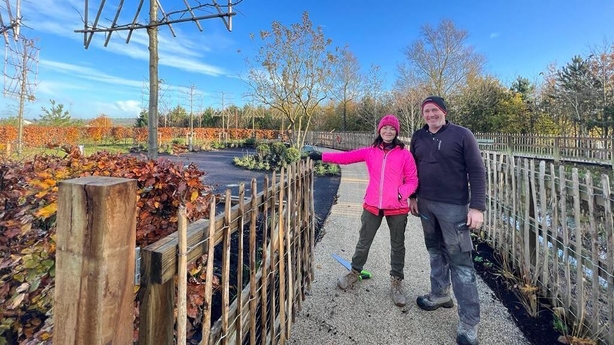
For tonight’s programme, our Researcher Michèle Browne travelled to Marymount University Hospital and Hospice in Cork to see an innovative programme where wildlife in is playing a key role in enhancing the well-being of patients, including those in the end-stages of life. She speaks to some of the staff, the patients and their families about what nature means to them and how a connection with the natural world can literally mean the world.
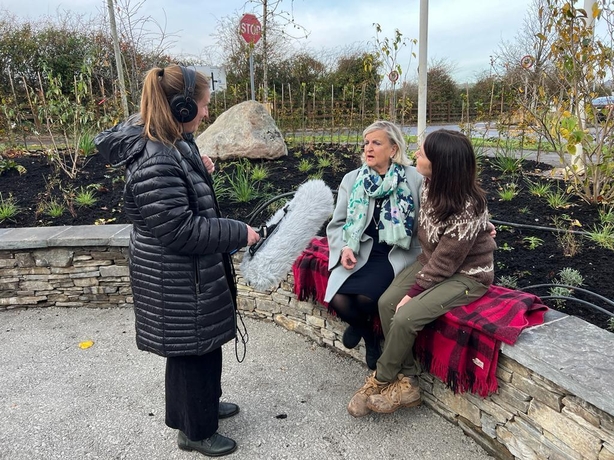
Valerie Keating Bond, garden designer
Michèle also speaks to Adam Hunt from Urquhart and Hunt Landscape Design & Ecological
Restoration and his partner the garden designer Valerie Keating Bond, who were asked by the Charity Friends of Leukemia to develop the garden on the hospice grounds to become a sanctuary of peace for those undergoing the labour of dying and all those tending to them on their final journeys.
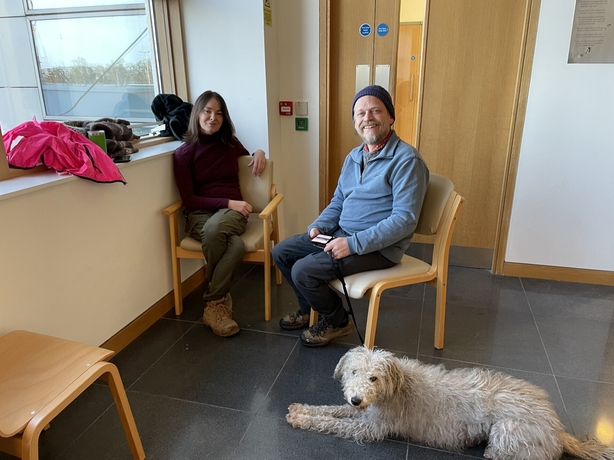
For more information about Marymount University Hospital and Hospice, visit