


To listen to RTÉ.ie's radio and podcast services, you will need to disable any ad blocking extensions or whitelist this site.
0
00:00
00:00
Episode Notes
Panel: Éanna Ní Lamhna, Richard Collins, Jim Wilson & Niall Hatch
In addition to listening to us on RTÉ Radio One at 22:00 every Monday night, don't forget that you can also listen back to each of our programmes any time you like at https://rte.ie/mooney. There, you will find an extensive archive of past broadcasts, conveniently split into different topics and segments.
In tonight’s programme, we feature a segment about the octopus, surely one of the most fascinating and misunderstood creatures in all of the natural world. In an effort to help you to get to know these intriguing and highly intelligent marine molluscs better, our suggestion from the extensive Mooney Goes Wild archives this week is an interview with Prof Louise Allcock of NUI Galway, as it was called at the time (now University of Galway).
Louise has been studying these mysterious sea animals for more than 25 years. In this segment, which was first broadcast in November 2018, she tells us about a book she co-authored all about them, along with their close cousins, the squid and the cuttlefish.
To listen back to this segment from the Mooney Goes Wild archives, visit
https://rte.ie/radio/radio1/clips/21458769/
Good news about landmark wildlife gardening book

Our old friend, UK-based wildlife campaigner, naturalist and author (not to mention founder of International Dawn Chorus Day) Chris Baines happened to be in Malahide, Co. Dublin over the weekend. Derek took the opportunity to catch up with him and to hear first-hand some good news about his acclaimed book RHS Companion to Wildlife Gardening (which is an updated edition of his 1985 publication How to Make a Wildlife Garden): it has just been shortlisted for the Practical Gardening Book of the Year Award.
Incorporating the latest research, featuring updated best practice and addressing a multitude of controversial conservation issues, RHS Companion to Wildlife Gardening is a celebration of the rich variety of wild plants and animals that can bring a beautiful garden to life. Needless to say, we highly recommend it.
Sincere congratulations to Chris from all of us here at Mooney Goes Wild.
For more information about the RHS Companion to Wildlife Gardening, visit
https://quarto.com/books/9780711281288/rhs-companion-to-wildlife-gardening
Helping to get wildlife on the right track
Éanna recently had the pleasure of speaking to a group of Iarnród Éireann workers about the abundance of wildlife that is to be found along Ireland’s railway network. Off-limits to disturbance and often sheltered on both sides by rich vegetation, these transport conduits can act as valuable wildlife corridors, allowing flora and fauna to spread In relative peace and safety.
Always looking for any good excuse to play some great Irish music, on tonight’s programme, in celebration of this story, we play the fantastic song Paddy on the Railway, sung by the legendary Luke Kelly and The Dubliners.
What octopuses can teach us about ourselves
A Netflix documentary has been raising awareness of and public interest in one of the most fascinating and mysterious groups in the animal kingdom. Octopuses(or is it octopi, or perhaps something else altogether?: more of that anon) are the subject of My Octopus Teacher, a programme that has been shedding new light on the remarkable intelligence and adaptability of these eight-tentacled marine molluscs.
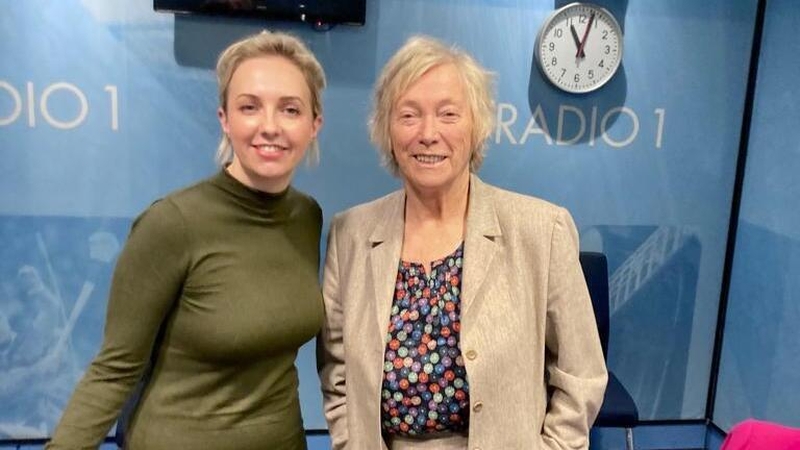
Neuroscientist Dr Amy Courtney, originally from Dublin and now working at the MRC Laboratory of Molecular Biology in Cambridge, England, admits herself that she has become obsessed with octopuses. Her interest in brain structures and behaviours has led her to studying these surprisingly smart cephalopods, whose intelligence evolved completely independently to that of us humans and our fellow vertebrates.
On tonight's programme, Amy chats to Éanna and Richard about these amazing aquatic animals and to share some of the most fascinating facts about them. Did you know, for example, that it could be said that octopuses have nine brains: a central one and then a separate one for each "arm"? Or, that they can change colour, inject venom and solve puzzles? There is certainly a lot more to them than meets the eye.
On the subject of octopuses, Niall shares an observation of his own with us, from a time when he was snorkelling off a beach in the French Caribbean island of Guadeloupe. He spotted what appeared to be a harmless sandy-grey flatfish swimming lazily through the water, rippling its fins to propel it along. As it approached a crab atop a dark rock, suddenly the "fish" utterly transformed, its "tail" morphing into eight tentacles which lurched forward to engulf the hapless crustacean. The body of the "fish" then inflated, almost as if by magic, to become that of an octopus, which then changed colour to match the tone of the rock on which it devoured its prey. The crab never knew what hit it.
There is a lot of debate over the correct plural of the word "octopus". Which do you prefer?
a) Lots of them
b)Octopuses
c) Octopi
There is a strong argument for all three of them, to be honest, though possibly an even stronger one for another word entirely. The word "octopuses" pluralises the name on the basis of it being a regular English word – which, of course, it is – while "octopi" treats it as a word of Latin origin. However, while "octo" does indeed come from the Latin word for "eight", "pus" is not Latin in origin, rather it is an Ancient Greek word meaning "foot". If Greek pluralisation rules are followed, therefore, the correct plural would be "octopodes".
For more information about Dr Amy Courtney and her research, visit
https://twitter.com/amycourtneyy
For more information about octopuses/octopi/octopodes, visit
https://nationalgeographic.com/animals/invertebrates/facts/octopus-facts
Headbanging woodpeckers damaging electricity pylons

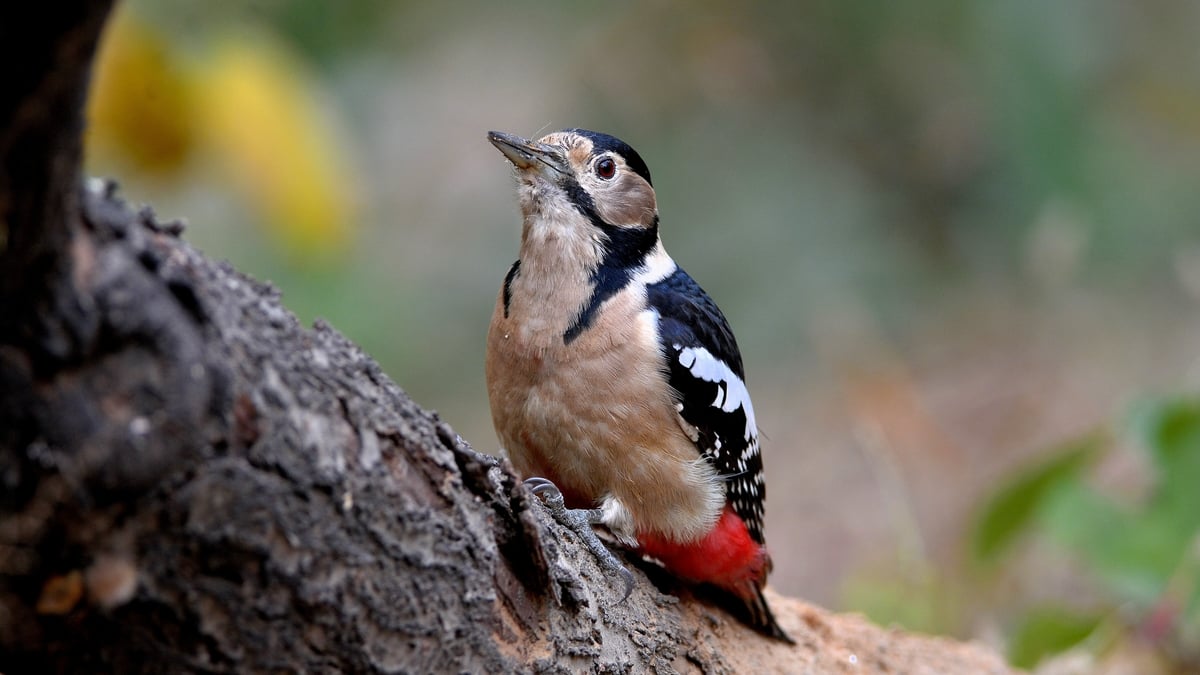
There has been quite a bit of discussion in the media over the past week or so about a new phenomenon, at least here in Ireland, that has been causing headaches for our national electricity infrastructure company. According to ESB Networks, woodpecker-damaged electricity poles have emerged as an issue in parts of Ireland's electricity network, particularly in the southeast of the country.
The culprits are Great Spotted Woodpeckers, recent colonists to Ireland which we just so happen to have discussed on last week’s programme (as part of a segment on BirdWatch Ireland’s Irish Garden Bird Survey, which you can listen back to at https://www.rte.ie/radio/radio1/clips/22326123/) and which were also the subject of a documentary we broadcast in May of last year (listen back at https://rte.ie/radio/radio1/clips/22092203/).
These distinctive black-and-white birds, common across Britain and continental Europe but previously absent from the island of Ireland, began to colonise here in around 2005, thanks to two separate influxes from across the Irish Sea, one from Wales and one from Scotland.
Woodpeckers are well known for excavating nesting cavities in wooden electricity poles, which presumably appear to them to be nice, straight, dead tree trunks . . . which, when you think about it, is exactly what they are. These cavities weaken the poles, which are then more likely to snap during high winds and stormy weather.
Electricity companies around the world have long needed to learn to cope with the destructive behaviour of woodpeckers, ever since the very first wooden electricity pylons were installed, but until now it has never been a problem in Ireland. On tonight’s programme, we discuss this novel issue, the ways in which it might be tackled and how Irish authorities can learn lessons about how to cope with woodpeckers from their counterparts in other countries.
For more information about woodpeckers damaging electricity poles in Ireland, visit
https://rte.ie/news/ireland/2023/1128/1418883-woodpecker-ireland/
For more information about Great Spotted Woodpeckers in Ireland, visit
https://birdwatchireland.ie/birds/great-spotted-woodpecker/
Harper’s Island Wetlands in Co. Cork: well worth a visit this winter
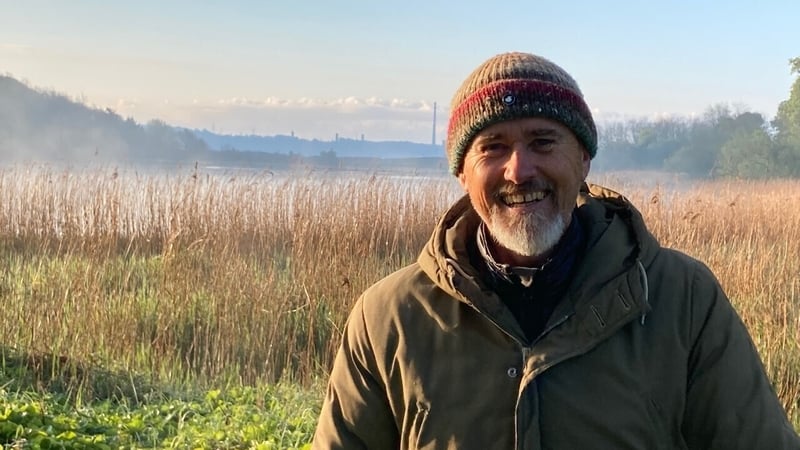
Author, ornithologist and proud Corkonian Jim Wilson has often spoken on Mooney Goes Wildabout one of the birdwatching locations that is closest to his heart: the wonderful Harper’s Island Wetlands nature reserve near Glounthaune, just on the outskirts of Cork City. This natural jewel. which is owned and managed by Cork County Council in partnership with BirdWatch Ireland, Glounthaune Community (Glounthaune Community Association/Tidy Towns/Men’s Shed), and the National Parks and Wildlife Service, is home to large numbers of wintering birds, including internationally important numbers of Black-tailed Godwits, which visit from their breeding grounds in Iceland.
On tonight’s programme, Jim joins us from Harper’s Island itself and fills us in on the wildlife that can currently be found there and how to experience and enjoy it at close quarters. Next week, we will be broadcasting our annual Christmas gift ideas programme, and one of Jim’s suggestions for a Christmas present for yourself, your friends and your family is to take a trip to Harper’s Island over the festive period to see its wonderful wildlife.
For more information about Harper’s Island Wetlands and to plan your free visit, see
https://birdwatchcork.com/about-harpers/
Birds that never fail to turn heads: all about owls

Jim isn’t alone at Harper’s Island; he is joined by Dr Alan McCarthy, Barn Owl Research Officer with conservation charity BirdWatch Ireland and expert in all things strigiform (i.e., relating to owls: perhaps that might come in handy during those family games of Scrabble over the festive season).
Prompted by the great reaction we had to our report two weeks ago in which Terry Flanagan and Eric Dempsey spoke about the current influx of Short-eared Owls, on tonight’s programme Jim and Alan discuss these beautiful and elusive predators, along with their equally enigmatic cousin, the Barn Owl.
For more information about Short-eared Owls in Ireland, visit https://birdwatchireland.ie/birds/short-eared-owl/
For more information about Barn Owls in Ireland, visit https://birdwatchireland.ie/birds/barn-owl/
Next week: what to give – and what NOT to give – for Christmas
Be sure to tune in to Mooney Goes Wild next week for our panellists’ suggestions of Christmas gifts for the nature-lovers in your life. If you are stuck when it comes to thinking of presents for your nearest and dearest, or even just for that tricky colleague you have been lumbered with in the office Secret Santa, rest assured that we’ve got you covered.
We will also be joined by vet Andrew Byrne who will tell us what gifts NOT to give at Christmas . . . essentially, any living, breathing ones.
To listen back to last year’s Mooney Goes Wild Christmas gift special, visit
https://rte.ie/radio/radio1/clips/22188008/