


To listen to RTÉ.ie's radio and podcast services, you will need to disable any ad blocking extensions or whitelist this site.

0
00:00
00:00
Episode Notes
Panel: Éanna Ní Lamhna & Richard CollinsReporter: Terry Flanagan
In addition to listening to us on RTÉ Radio One at 22:00 every Monday night, don't forget that you can also listen back to each of our programmes any time you like at https://rte.ie/mooney. There, you will find an extensive archive of past broadcasts, conveniently split into different topics and segments.
Tonight’s programme features a special report from Biologist and Roving Reporter Terry Flanagan about the herd of Old Irish Goats that has taken up residence on Dublin’s Howth Head. Our suggestion from the Mooney Goes Wild archives this week, therefore, is another of Terry’s reports about these remarkable animals, first broadcast back in April of this year. In it, Terry speaks to Fingal County Council’s goat-herder Melissa Jeuken and to Sinead Keane of the Old Irish Goat Society about the crucial role Howth’s goats are playing in the effort to prevent potentially devastating wildfire outbreaks.
To listen back to this clip from the Mooney Goes Wild archives, visit
https://rte.ie/radio/radio1/clips/22236491/
Timeo Danaos et dona ferentes (I fear Greeks bearing gifts)
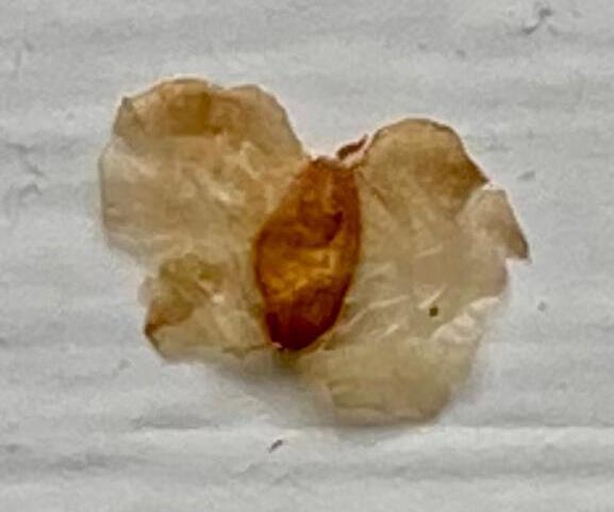
Or, in this case, Derek fears Éanna bearing gifts . . . but just what has she brought into the studio with her? Well, it’s the answer to a query that has been puzzling Derek in recent days. He noticed a large number of winged objects coming in his windows at home, and feared that he might have an infestation of insects on his hands.
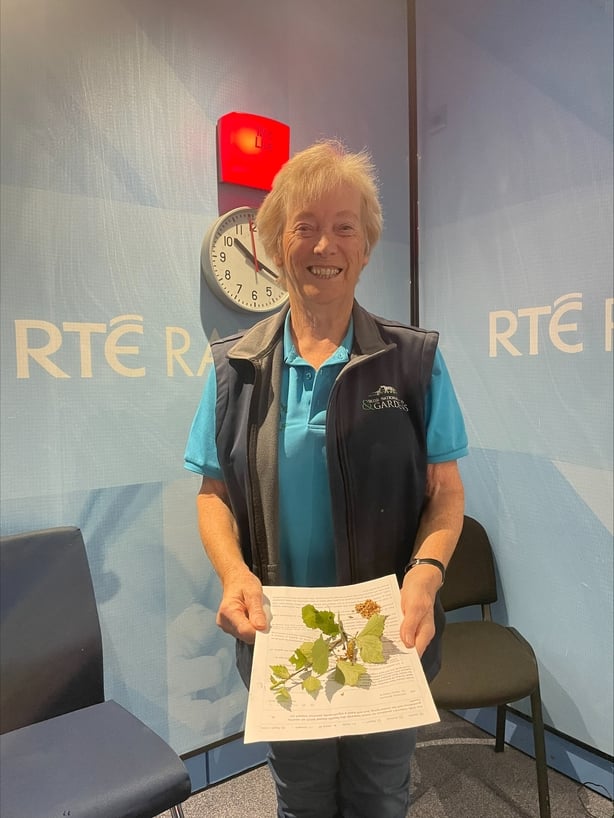
Derek need not have worried. Éanna’s gift has cleared up the mystery: she brought him some birch seeds. This is the time of year when these small seeds are produced in vast numbers in the hanging catkins of birch trees and are then dispersed far and wide by the wind. It is important that the seeds are spread as far as possible from the parent tree, so evolution has equipped them with a sort of wing-like fringe that catches the breeze and lets them be carried through the air.
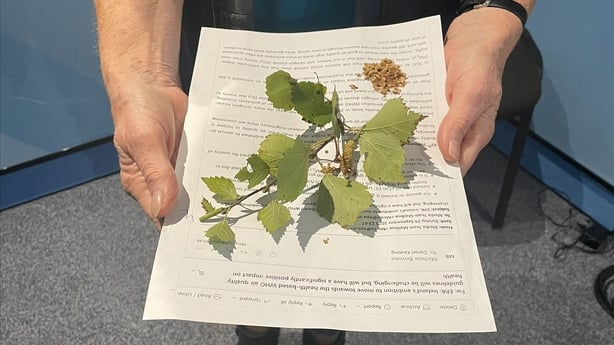
The birch is sometimes known as the "lady of the forest", on account of its elegant appearance, and its pale, peeling, paper-like bark make it one of the easiest Irish trees to identify. Superbly flexible, yet impressively strong, it has also long been a symbol of strength and power, and even, as Richard informs us on tonight’s programme, of fascism.
For more information about Ireland’s two native species of birch tree, visit
https://treecouncil.ie/native-irish-tree-item/birch-(silver)
EPA report on Ireland’s air quality

On 25th September, the Environmental Protection Agency (EPA) published the latest iteration of its annual air quality report. Entitled Air Quality in Ireland 2022, it reveals that, while air quality in Ireland is generally good and compares favourably with many of our European neighbours, there are concerning localised issues which lead to poor air quality.
The report contains four main findings, namely:
·Air quality in Ireland is generally good; however, there are concerning localised issues.
·Ireland met all of its EU legal requirements in 2022, but it failed to meet the more stringent health-based air quality guidelines set out by the World Health Organisation.
·It is estimated that there are approximately 1,300 premature deaths in Ireland each year due to poor air quality resulting from fine particulate matter.
·The choices we make in how we heat our homes and how we travel directly impact the quality of the air we breathe.
On tonight’s programme, we discuss the report and its conclusions, as well as the problem of air pollution in Ireland. In particular, Éanna fills us in on her time working on this very issue with An Foras Forbatha when she first moved to Dublin many years ago, when she noticed that surfaces were covered in soot and there were no lichens to be seen in the city. Thankfully this is no longer the case, so it’s clear that some big improvements have been made in recent decades. As the EPA report shows, however, we still have some way to go.
To read the EPA’s Air Quality in Ireland 2022 report, visit
https://epa.ie/publications/monitoring--assessment/air/air-quality-in-ireland-2022.php
Éanna ploughs her own furrow to promote farming for nature
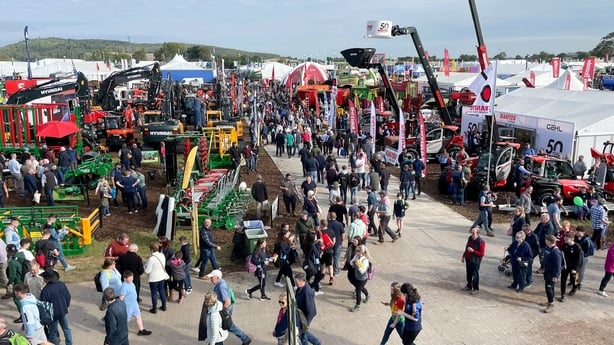
Mooney Goes Wild is extremely proud of its long-standing relationship with Irish farming communities. Last week saw what for many people across Ireland is the height of the agricultural and social calendar: the National Ploughing Championships, which this year were held in Ratheniska, Co. Laois.
Éanna was there on the Teagasc stand, to promote the measures that farmers and landowners can take to help nature. In particular, there were two key recommendations that she and Teagasc had in order to maximise the benefits to biodiversity: plant more hedgerows and look after the Barn Owls.
For tonight’s programme, Éanna spoke firstly to members of the Teagasc team about the value of hedgerows, and particularly native hedgerow plants, to a whole range of wild creatures, including mammals, birds and pollinating insects. Our hedges are home to a stunning array of wildlife, and a healthy nationwide hedgerow network is crucial when it comes to tackling the current biodiversity crisis.
Éanna learnt how reducing, and ideally completely eliminating, the use of rat poisons on farms can help native Barn Owl populations to recover. Studies by BirdWatch Ireland have revealed that a shocking 80% of Ireland’s Barn Owls have rodenticides in their systems; not necessarily enough to kill them in every case, but enough to weaken them and reduce their fitness and, therefore, their chances of survival and ability to care for their chicks.
As we hear, providing special nesting boxes for Barn Owls is another proven way both to boost their numbers and to benefit farmers: after all, the Barn Owl is the most effective rodenticide of all.
For an article about the benefits of hedgerows to birds, written by Catherine Keena of Teagasc and our very own Niall Hatch, visit
https://teagasc.ie/news--events/daily/environment/why-birds-need-hedges.php
For details of measures you can take to help Barn Owls, visit
Terry gets stuck in a rut on Howth Head
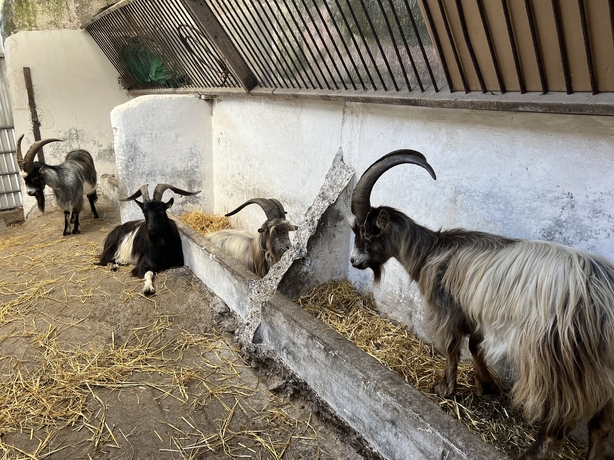
Two years ago, a herd of Old Irish Goats was introduced onto Howth Head by Fingal County Council in an effort to prevent potentially devastating wildfire outbreaks. Back in April, we dispatched Biologist and Roving Reporter Terry Flanagan to see first-hand how the goats were helping to control the gorse and bracken as part of a three-year project, and he was most impressed.
The goats’ rutting season is now underway, so last week Terry returned to Howth Head to catch up with Sinead Keane of the Old Irish Goat Society, to see how the project was progressing and to learn a little bit about the rut itself.
For more information about Howth’s herd of Old Irish Goats, visit
https://fingal.ie/news/old-irish-goats-return-howth-head-after-century-long-wait
"You’re going to need a bigger boat"
That’s one of the most famous movie quotes of all time, and there are no prizes for knowing that it comes from Steven Spielberg’s 1975 film Jaws. That film, of course, concerned a blood-thirsty Great White Shark that had developed a taste for human flesh, and it’s safe to say that it was not exactly great PR for these predatory fish. Indeed, it is thought that the film has played a major and enduring factor in generating and sustaining fear around sharks.
But Sharks are terribly misunderstood creatures that play a vital role in ocean ecosystems; indeed, they are among the most fascinating and compelling of all creatures on earth. Whether on film, in an aquarium or in the wild we find them as mesmerizing as they are formidable. When we think of one, we probably imagine a toothy Great White – like the one in Jaws – or an imposing Tiger Shark, but fearsome tales distract us from a complex story which goes back some 450 million years, and has seen sharks survive five mass extinctions.
Have you ever wondered what sharks looked like early on in their long evolutionary history? What makes them such effective and efficient predators? What would our oceans be like without them?
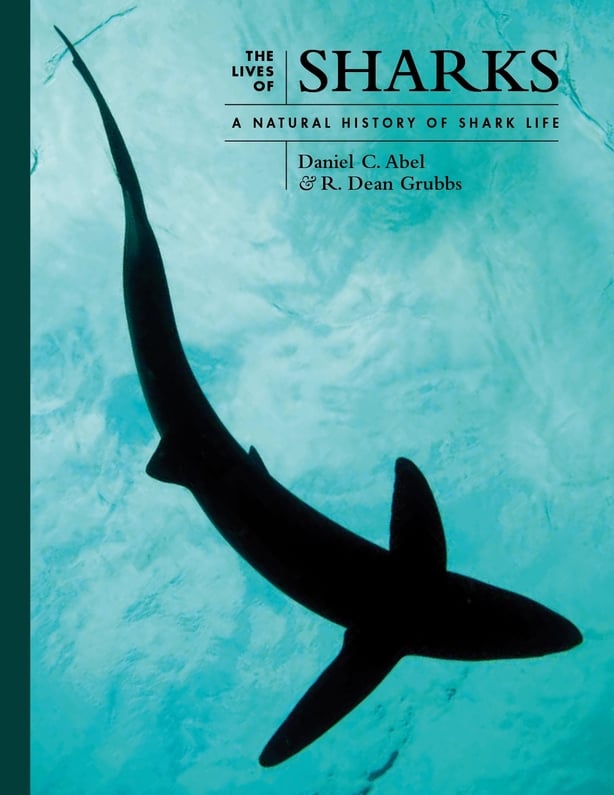
These questions, and many more besides, are explored in a new book called The Lives of Sharks: A Natural History of Shark Life, published by Princeton University Press. It examines shark physiology, anatomy, behaviour, ecology and evolution, as well as conservation and the impact of human activity on shark populations.
Daniel C. Abel is a co-author of this impressive new publication, and also a Professor of Marine Science at Coastal Carolina University. For tonight’s programme, he spoke to Richard Collins from Pawley Island, South Carolina, where he is based, about these incredible fish and the inspirations behind the book.
For more information about The Lives of Sharks: A Natural History of Shark Life, by Daniel C. Abel and R. Dean Grubbs, visit
https://press.princeton.edu/books/hardcover/9780691244310/the-lives-of-sharks
Farewell to John Bela Reilly
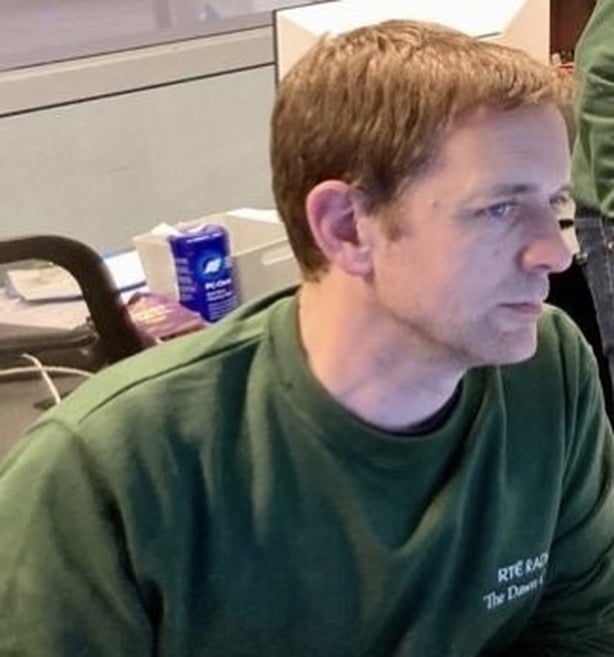
We would like to extend a massive thank-you to the programme’s researcher John Bela Reilly. After almost a decade of excellent work as a key part of the Mooney Goes Wild team, John is moving on to Liveline, where he will be helping the great Irish public to "talk to Joe". John has had a massive impact on the programme and will be greatly missed by us all. We are sure that all of our listeners will join us in wishing him every success in his new role here at RTÉ Radio One.