


To listen to RTÉ.ie's radio and podcast services, you will need to disable any ad blocking extensions or whitelist this site.
0
00:00
00:00
Episode Notes
Last Thursday, 27th October, was a very special day indeed for all of us here at Mooney Goes Wild and RTÉ. In recognition and appreciation of his outstanding efforts in the field of natural history broadcasting, both in Ireland and beyond, Derek Mooney was presented with an Honorary Doctoral Degree in Science by University College Cork.
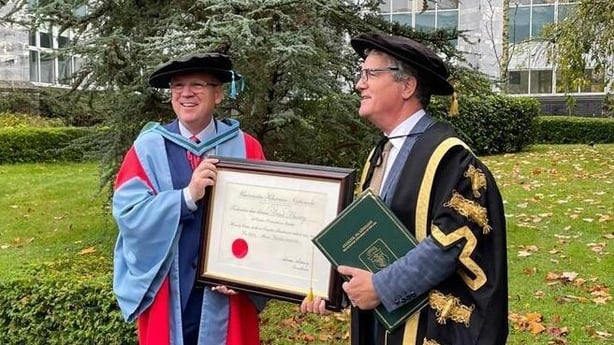
In delivering the citation at the honorary conferring ceremony, Prof. Emer Rogan of UCC's School of Biological, Earth and Environmental Sciences highlighted the numerous international awards won by Derek and his team, and how the trail-blazing Mooney Goes Wild celebrated 27 years on air last May.
Derek said he was delighted to accept the honour "both personally and on behalf of the Mooney Goes Wild team of Éanna Ní Lamhna, Richard Collins, Terry Flanagan and Niall Hatch, along with the contributors, listeners and viewers, without whom there would be no need for nature programmes."
He continued, "I also want to acknowledge all of the scientists who have contributed their knowledge so willingly and who have helped us better understand the natural world. Their generosity in sharing their time, their expertise and their passion is remarkable."
President of UCC, not to mention stalwart contributor to Mooney Goes Wild, Prof. John O’Halloran said, "Derek Mooney is the voice of nature and wildlife in Ireland. He has been a powerful voice for wildlife and wildlife researchers and citizen scientists who contribute to data collection on our birds, butterflies, bees and plants across the nation, and has inspired generations of wildlife biologists."
"He is an incredible professional seeking excellence in not just science, but in broadcast quality, and probably one of the best listeners I have ever encountered. UCC Is proud to honour him today for his extraordinary contribution to nature and wildlife."
Read more about Dr. Derek Mooney’s big day at https://www.rte.ie/lifestyle/living/2022/1028/1331934-derek-mooney-presented-with-ucc-honorary-doctorate/
Mooney Goes Wild celebrates Nature Nights on RTÉ Radio One
This week, each weeknight between 22:00 and 23:00, RTÉ Radio One is celebrating Ireland’s nocturnal wildlife through a special series of programmes called Nature Nights. You will be pleased to know that Mooney Goes Wild is front and centre in this celebration. After all, it’s the longest running wildlife-themed magazine radio programme in the world, currently celebrating its 27th year on air.
Barn Owl documentary (22:00 on Monday 31st October)
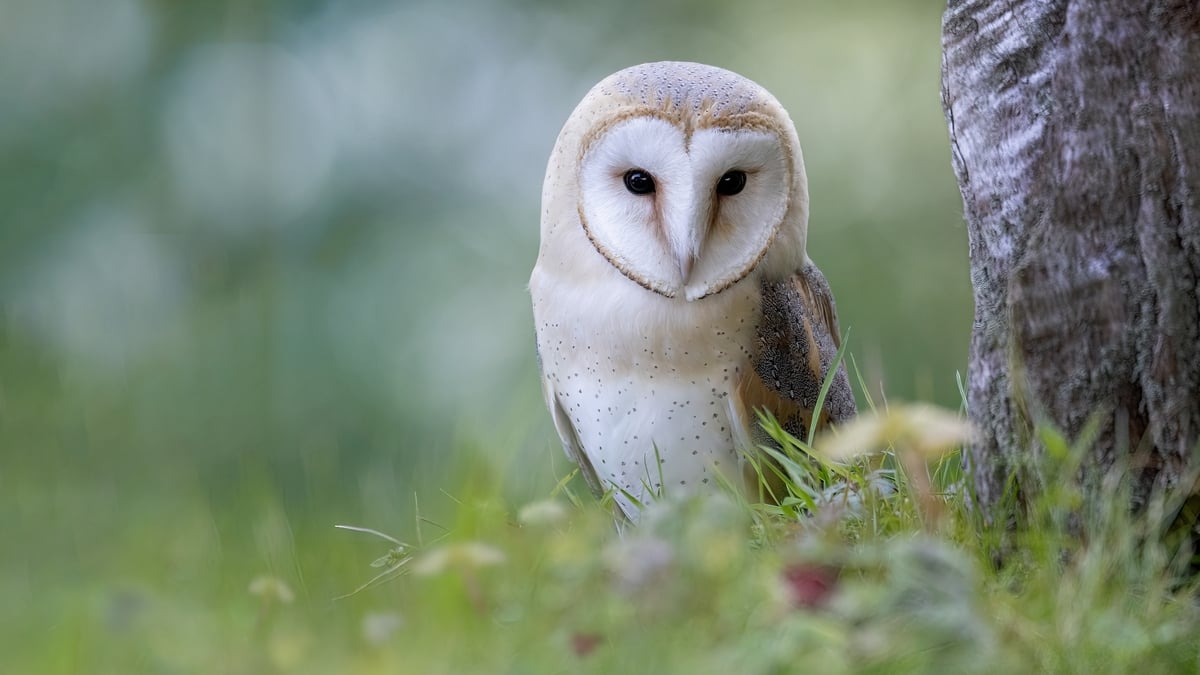
We have a real treat lined up for you to kick off the week, in the form of a Mooney Goes Wild special all about one of the most beloved and iconic night-time creatures of all: the Barn Owl. Biologist and roving reporter Terry Flanagan goes in search of this gorgeous bird of prey, long a staple of Irish myths and legends, as well as of RTÉ television each Friday night, thanks to its starring role in the title sequence of The Late Late Show. Terry will talk to some of the people trying to conserve and protect these amazing birds.
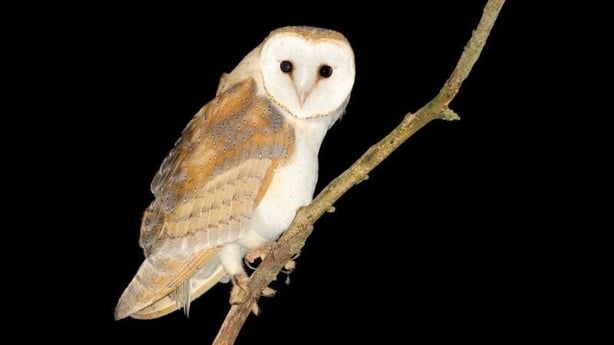
Barn Owls boast an astonishing range of adaptations which have made them perhaps the ultimate nocturnal hunters. Ornithologist Eric Dempsey explores these 'owl superpowers’ for us, from their ability to rotate their heads through 270 degrees and their almost supernaturally sharp hearing to their needle-sharp talons and silent flight capabilities.
As for the role that the Barn Owl has played in Irish heritage, who better to help us get to grips with this than Éanna Ní Lamhna? The ghostly, ethereal flight, the pale, almost human-like faces and the blood-curdling shrieks of these night-time hunters are believed to have given rise to tales of the infamous banshee, for example, and there are many deeply held beliefs and superstitions about these remarkable birds.
There is also the common perception of the "wise old owl", which dates right back to Ancient Greek mythology and is prevalent in cultures across the globe. Dr. Richard Collins will tell us more about the supposed intelligence of owls. Are they really as smart as we like to think? (Spoiler alert: no, apparently they are amongst the least intelligent of all birds!)
Despite the great affection that we hold for them, in recent years Ireland’s Barn Owls have been having a tough time of it. A severe shortage of suitable nesting sites and the reduced availability of small mammals to eat, coupled with the serious problem of rodenticide poisoning, have taken a toll on their numbers. Niall Hatch will delve into the population and distribution statistics for us, as well as bring us up to speed on exactly how these beautiful creatures are doing both at home and abroad. After all, the Barn Owl is one of the most widespread animal species on the planet.
Irish Barn Owls may have been struggling, but, as we will hear on this programme, thankfully hands-on conservation measures are starting to bear fruit, with people like BirdWatch Ireland’s Raptor Conservation Officer John Lusby leading the way in the provision of nest boxes and tackling the spectre of poisons and other hazards.
We also hear from Kilkenny farmer Nicky Murphy, who no longer uses rodenticide on his land because the Barn Owls are eating the troublesome rats and mice for him. What’s more, we pay a visit to a sculptor who has created a giant representation of a Barn Owl that is now on display in Tuam, Co. Galway, and we take a look at the special structures that Transport Infrastructure Ireland has been installing to reduce the number of owls killed on our roads.
For more information about the ecology and conservation of Barn Owls in Ireland, visit https://birdwatchireland.ie/publications/barn-owls-in-ireland-info-on-ecology-and-their-conservation/
To download Golden Wings a special free e-book for children all about Irish Barn Owls and produced by BirdWatch Ireland, visit https://birdwatchireland.ie/golden-wings/
The Nocturnal Life of Plants (Creatures of the Night – 22:35 on Tuesday 1st November)
We know that many animals prefer to venture out at night, but did you know that there are also plenty of plants that only really spring into action under cover of darkness? Relying on pollinators such as moths and bats, there are even some flowers that bloom solely at night: a true wealth of botanical wonder that goes unnoticed by most of us. Éanna Ní Lamhna talks to Dr. Matthew Jebb, Director of the National Botanic Gardens in Glasnevin, all about the nocturnal life of plants.
For more information about the National Botanic Gardens, visit https://botanicgardens.ie/
Urban Foxes (Creatures of the Night – 22:35 on Wednesday 2nd November)
Many nocturnal mammals have evolved exceptional powers of hearing and smell, depending far less on eyesight than diurnal creatures such as we humans. A case in point is the Red Fox, a common creature all across Ireland, yet one that can be hard to spot . . . unless you happen to live in a city. Somehow, many have become accustomed to urban life, with some even dwelling right in the heart of our capital and thriving side-by-side with people. For this Nature Nights segment, Niall Hatch travelled to the bustling grounds of Trinity College Dublin, long home to generations of these wild canines, to speak to the university’s Environmental Services Coordinator, David Hackett, and to Dave Wall of the National Biodiversity Data Centre about the secret life of the urban fox.
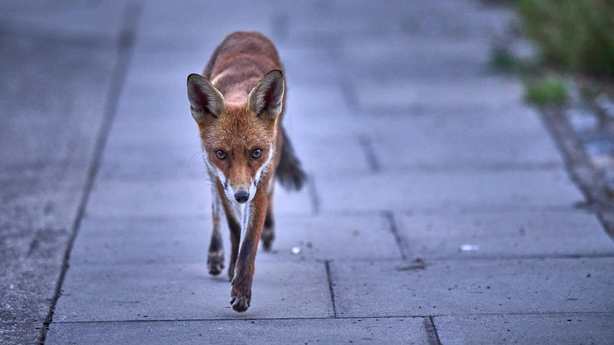
For more information about Irish foxes, visit https://botanicgardens.ie/
Night Sky (Creatures of the Night – 22:35 on Thursday 3rd November)
Our ancestors were highly accustomed to spending significant portions of their lives in darkness. Like most creatures on the planet, we evolved physical, mental and behavioural changes triggered by the setting and the rising of the sun. These circadian rhythms, as they are called, consist of natural processes that respond to predictable patterns of light and dark. In our modern world, however, over-exposure to light at night has become something of a problem, both for us and for our fellow animals. Dr. Richard Collins speaks to Etta Dannemann, founder of Visit Dark Skies, about the fundamental importance of our relationship with the night sky.
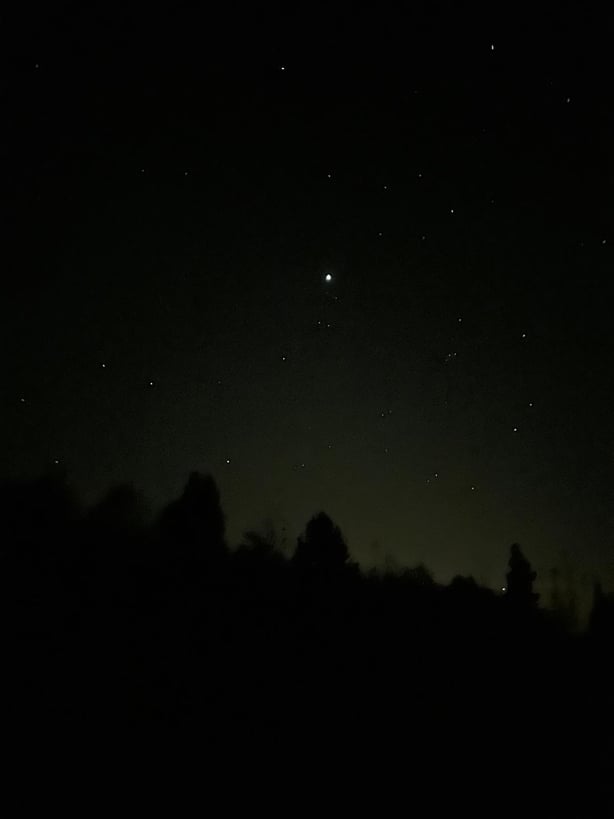
For more information about Visit Dark Skies, see https://www.visitdarkskies.com/
More about Nature Nights on RTÉ Radio One
For more information about the above contributions from the Mooney Goes Wild team and the rest of RTÉ’s fantastic Nature Nights line-up, visit https://www.rte.ie/radio/radio1/info/2022/1017/1329664-about-nature-nights-on-rte-radio-1/