


To listen to RTÉ.ie's radio and podcast services, you will need to disable any ad blocking extensions or whitelist this site.
0
00:00
00:00
Episode Notes
Panel: Richard Collins, Éanna ní Lámhna,Terry Flanagan & Niall Hatch
Don't forget that for the summer months Mooney Goes Wild will be coming to you live at 19:00 each Sunday evening on RTÉ Radio One. Be sure to tune in each week as Derek Mooney and his team of expert panellists bring you the latest nature-themed news and wildlife discoveries in their weekly celebration of all things wild.
You will also have a chance to listen to another helping of Mooney Goes Wild in our usual slot of 22:00 on Monday nights, as well as any time you like at rte.ie/mooney
Wildfires: the burning issue
We have spoken a lot on this programme in recent years about the effects of climate change, which are becoming ever more apparent and ever more disruptive. One of the most immediately obvious consequences of the changes that we humans have wrought on our planet’s weather systems has been the increased impact of wildfires. As summers have become hotter and drier, so the risk of fires taking hold in forests, bogs and grasslands has increased.
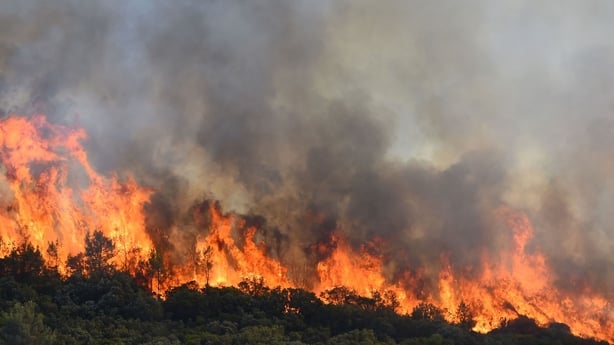
Tense, ominous reports about householders fleeing out-of-control infernos, as fire-crews risk life and limb to battle them, have become staples of news bulletins. This summer alone, thousands of people were forced to flee enormous blazes in France, Spain and Portugal, as the abundance of dry tinder and high winds conspired to create ideal conditions for one of nature’s most destructive phenomena.
For more on this, please see https://www.rte.ie/news/world/2022/0716/1310541-wildfires-europe/
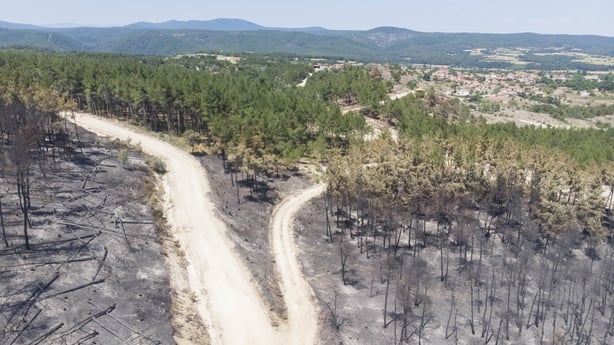
Greece, too, has been especially hard hit this year, in a pattern that now seems to be becoming the norm for what was already one of Europe’s hottest and fire-prone countries. Last week marked the one-year anniversary of the most notorious recent wildfire outbreaks there, which sadly saw several people killed and injured and caused widespread damage to property and wildlife habitat, at a time when temperatures soared to a barely survivable 47 degrees Celsius.
See https://www.rte.ie/news/world/2022/0724/1311964-europe-wildfires/
The situation is now so serious that tourists are choosing to stay away from several regions of Greece. So worried are the authorities over the loss of tourism income that they have now even introduced a system of 'grants’ for holidaymakers willing to take the risk of visiting.
The problem goes yet further. Wildfires are raging out of control across vast swathes of Siberia, devastating some of the largest continuous expanses of forest in the world and threatening endangered plants and animals, not to mention local communities. Smoke from these fires has even reached California, worsening the air quality on the Pacific coast of the USA.
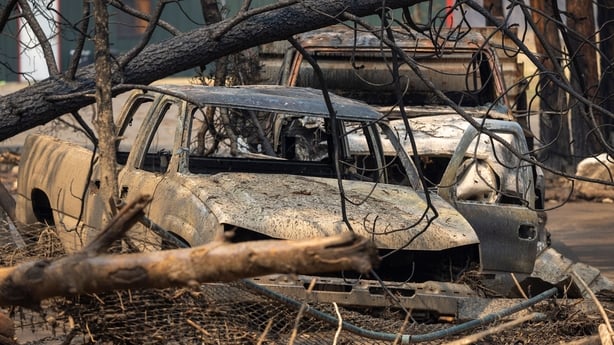
Speaking of California, it has been extremely concerning to witness that state’s own problems with wildfires in recent times. At the time of going to air, a massive wildfire continues to burn out of control there, devastating property and causing mass evacuations around the town of Klamath River, close to the California-Oregon border. Tragically, several people have lost their lives there, and thousands remain under evacuation orders. Elsewhere in the United States, wildfires are currently threatening communities in the states of Montana, Idaho and Nebraska.
For more, please see https://www.rte.ie/news/2022/0724/1311905-us-wildfires/
Not just a foreign problem
Wildfires are not just a problem for other parts of the world, of course. Here in Ireland, they are increasingly becoming a very unwelcome fact of life for many communities, as abnormally dry woodland and peatland conditions combine with human carelessness and even deliberate malice.
For the inescapable fact is, we humans are responsible for these fires, in several ways. We have driven the changes to our climate that have increased their frequency and impact. We have impaired the ability of our natural ecosystems to temper and control their rage. And, we also have the very unfortunate tendency of starting them in the first place: the vast majority of Irish wildfires are started by people, either accidentally or on purpose.
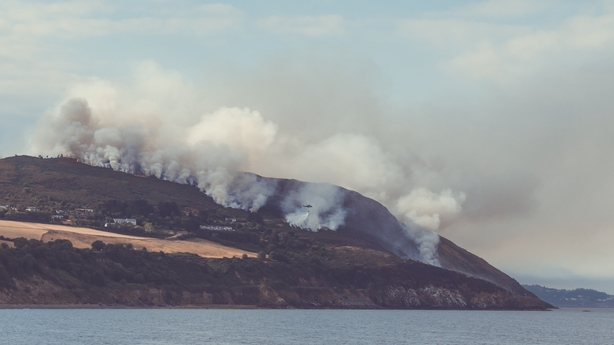
Recently, for example, we have witnessed the destruction by fire of large sections of Killarney National Park, home to perhaps the most precious native woodland on our island. The recent blaze on Killiney Hill in south Co. Dublin, which generated so much media attention, showed that wildfires are not confined to remote areas of wilderness: even the leafy suburbs of our capital city are now at risk.
For more information about the recent wildfires in south Co. Dublin, visit https://www.rte.ie/news/dublin/2022/0726/1312234-dublin-wildfires/
Wildfires have a key role to play in nature . . . but not at this level of frequency and scale
Wildfires are nothing new, and they have been a fact of life on our planet long, long before we humans ever came on the scene. They form part of a natural process that has played out for hundreds of millions of years, and they are not necessarily always bad or unwelcome. Indeed, certain crucial ecosystems rely on wildfires for their survival, as the flames provide both space and fertile soil for plant communities to prosper and, in turn, for the animals that depend on these plants to thrive. Occasional wildfires can be of benefit, and can even form part of essential conservation strategies.
The problem is, wildfires are no longer ‘occasional’ in an ever-growing number of places: they have become the norm. They are also hitting closer to human habitation than ever before, with life and property coming under increasing risk.
At a time when our planet’s climate appears to be spiralling out of control, wildfires are also making a bad situation worse. It’s a vicious circle. As thousands of square kilometres of forests and grasslands go up in smoke, so huge quantities of carbon dioxide and other greenhouse gases are released into the atmosphere. The fires also destroy the trees and other plants that play such a crucial role in recapturing these gases. More fires mean fewer trees, mean even more fires, mean even fewer trees.
For more information about the vicious climate-wildfire cycle, visit https://blog.ucsusa.org/carly-phillips/the-vicious-climate-wildfire-cycle/
Something’s ‘goat’ to give: trialling innovative wildfire prevention measures in Howth
It's clear that novel solutions are required if we are to attempt to bring this problem under control. One way of doing this is to prevent the tinder which fuels the wildfire outbreaks from accumulating in the first place. In the absence of the once-widespread grazing animals that used to roam our landscape and perform this service, a more hands-on approach to nature is required.
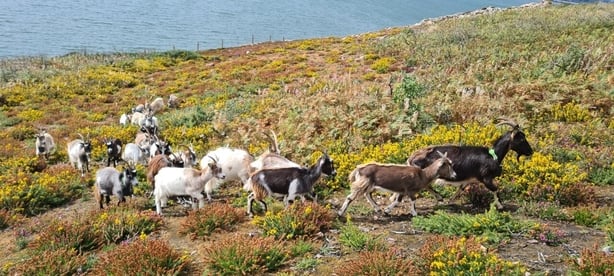
One such approach is being trialled on Dublin’s Howth Head, where a herd of goats has been tasked with removing fuel from the fire. During the week, our roving reporter Terry Flanagan went to Howth to have a look for himself, and while he was there, he spoke with Hans Visser, Biodiversity Officer with Fingal County Council, and Melissa Jeuken, the council’s official goat-herder.
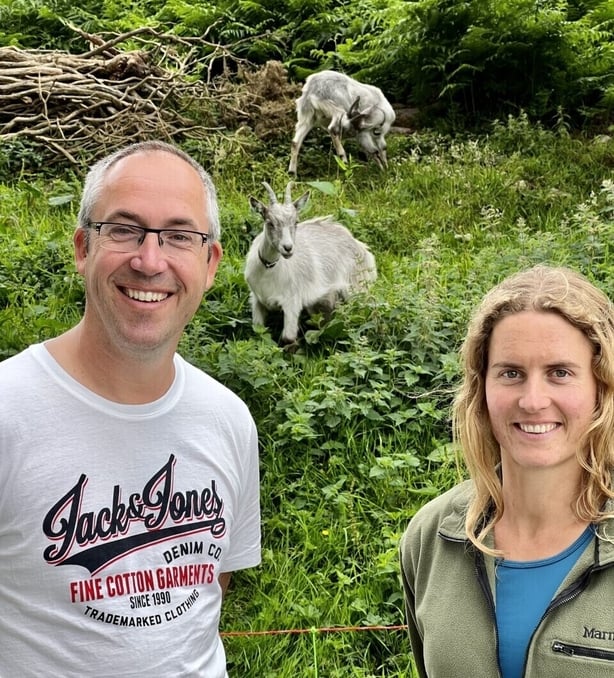
For more details of the return of wild goats to Howth Head and the role they play in reducing wildfires, visit https://www.fingal.ie/news/old-irish-goats-return-howth-head-after-century-long-wait
Fire prevention and management: we all have a role to play
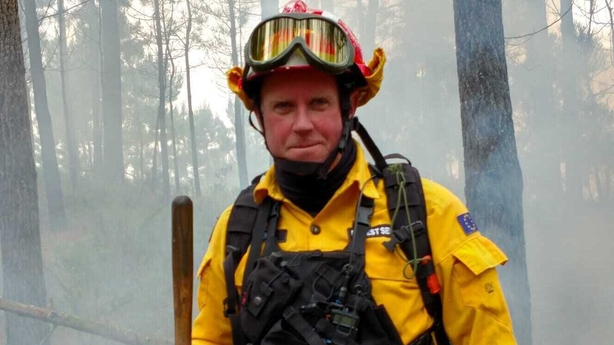
As Hans points out in Terry’s report, ongoing maintenance and vigilance seem to be the key. But as the risk posed by wildfires here in Ireland becomes ever more pronounced, the scale of the problem can seem daunting. Ciaran Nugent is a Regional Forestry Inspector with the Department of Agriculture, Food and the Marine, and he joins us on tonight’s show to explain more about the damage being done by Irish wildfires, the measures being taken both to control and to prevent them and the steps that we can all take to help.
For the latest advice from the Department of Agriculture, Food and the Marine on fire management, visit https://www.gov.ie/en/publication/01773-fire-management/
Wildfires and mass extinction: should we be worried?
So powerful a force are wildfires, it’s fair to say that life on Earth has in many respects been shaped by them. There have been five major mass extinction events in the history of our planet. The so-called ‘End-Permian Event’, which occurred around 250 million years ago, was the worst one to date. During it, at least 80 percent of marine species and 60 percent of land species were wiped out, and it took several million years for ecosystems to recover.
Researchers at University College Cork and the Swedish Museum of Natural History investigating these destructive prehistoric episodes have discovered a sharp spike in wildfire activity from this most devastating of mass extinctions. They have found clear evidence of rapid greenhouse gas emissions from volcanoes, which led to extreme warming through climate change and therefore to the widespread drying of vegetation. This, in turn, fuelled enormous wildfires across vast regions, making the planet ever more hostile to life.
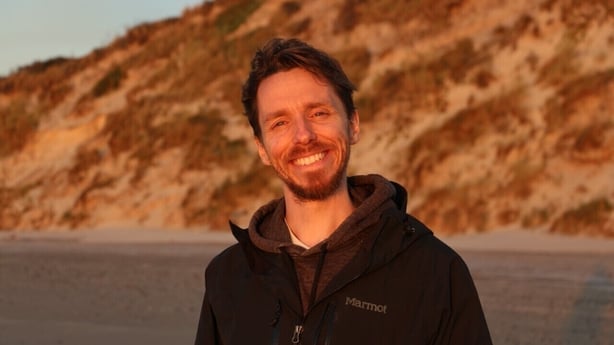
History repeats itself, as they say. Now, some 250 million years later, might the increase in wildfires we are seeing indicate that we are on a similar path to mass extinction? Dr. Chris Mays is a lecturer in Palaeontology at University College Cork and lead author of the study, and he joins us on tonight’s programme to tell us more.
For more information on the UCC study and how tackling wildfires could be key to avoiding another mass extinction event, visit https://www.irishexaminer.com/news/munster/arid-40906628.html