


To listen to RTÉ.ie's radio and podcast services, you will need to disable any ad blocking extensions or whitelist this site.
0
00:00
00:00
Episode Notes
Panel: Richard Collins, Éanna Ní Lamhna, Niall Hatch, Terry Flanagan & Ken Whelan
Love is in the air! Not merely for us humans, you understand, but for plants and animals across the natural world. With the first signs of spring, thoughts and instincts turn towards romance and, ultimately, the propagation of the species. For tonight's St. Valentine’s Day special edition of Mooney Goes Wild, we thought it would be nice to check in with our panellists to see what particular species’ love-lives most inspire and/or scandalise them.
Éanna: spiders
With most spider species, the female is definitely in the driving seat when it comes to romance . . . though that may not be the right word for it. We have all heard about female spiders eating their hapless mates after copulation; the ultimate femme fatales. This makes a certain evolutionary sense, however: once the male has done his job of fertilising her eggs, the only remaining use he has to the female is as a source of protein and other nutrients which will help her to form and lay them. Even in death, the male is helping to ensure the survival of his offspring. As Éanna tells us, there is certainly a lot more to the sex lives of spiders than meets the eye.
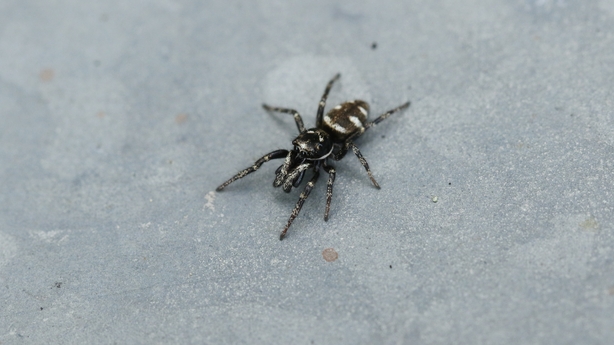
For more information about spiders in Ireland, visit https://maps.biodiversityireland.ie/Dataset/96
Richard: Red Fox
The Red Fox is a common and widespread species across Ireland. The best time to get a true picture of just how common these small wild dogs are in the country is between December and February, when their blood-curdling screams and screeches ring out after dark. These are the infamous mating calls of these wily animals, their human-like quality likely having inspired the myth of the banshee. Fox mating is a curious business, and it can take quite some time: without being too indelicate, the penis of the male often becomes stuck inside the female, locking them together for up to half an hour.
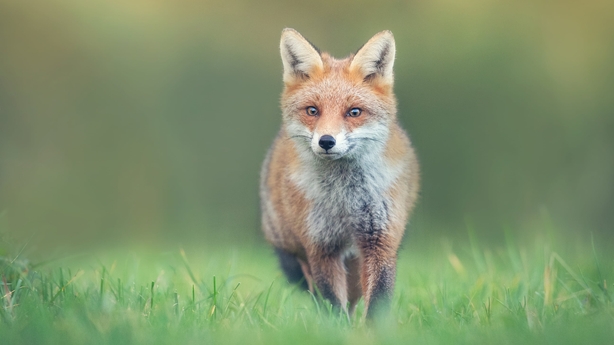
For more information about Red Foxes, visit https://www.vincentwildlife.ie/species/fox
Niall: Dunnock
The Dunnock, also known as the Hedge Sparrow, is a common and widespread bird across Ireland. Indeed, it is one of our most common garden birds, though its drab grey-brown plumage and skulking, retiring behaviour mean that it often goes unnoticed and unremarked-upon. Many people assume that it must lead a boring life: how wrong they are! It’s always the quiet ones that you need to watch out for.
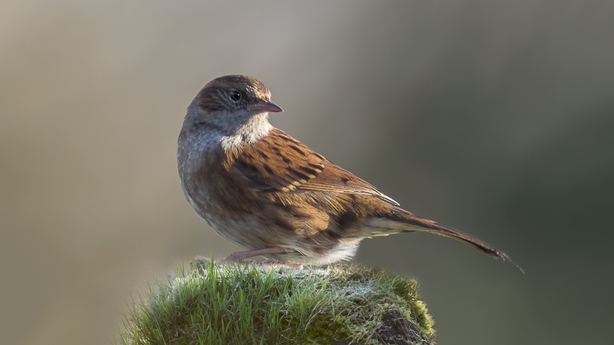
The seemingly humble Dunnock is famous amongst ornithologists for its extremely racy sex life. Multiple males and females may mate together in different combinations, and polygamy and extra-marital affairs are the norm. What’s more, Dunnock copulation takes a mere one-tenth of a second, and at the height of the breeding season individuals will mate more than 100 times a day! All of this takes place right under our noses, in gardens all over Ireland.
For more information about Dunnocks, visit https://birdwatchireland.ie/birds/dunnock
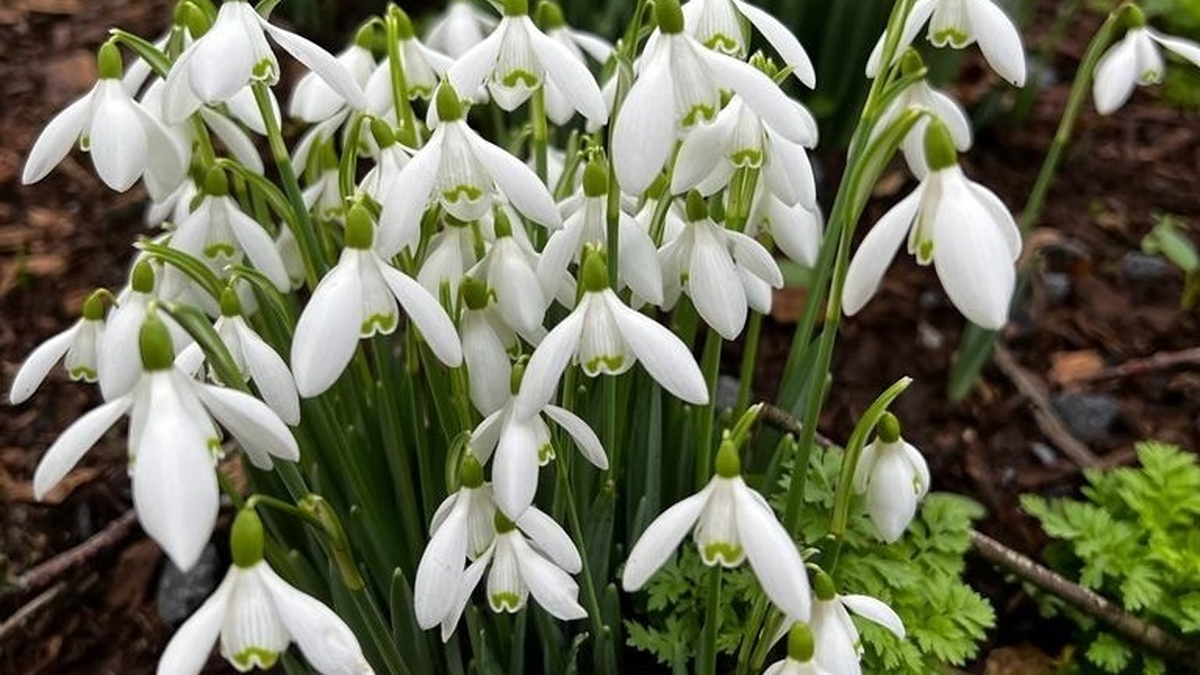
Terry: snowdrops
Altamont Gardens, sometimes referred to as "The Jewel in Ireland’s Gardening Crown" and "The Most Romantic Garden in Ireland" is a 100 acre house and gardens in Co. Carlow. Up until 2014 it was owned and managed by the Corona North, and her father before her. The family then handed over the estate to the Office of Public Works, which has been managing it since.
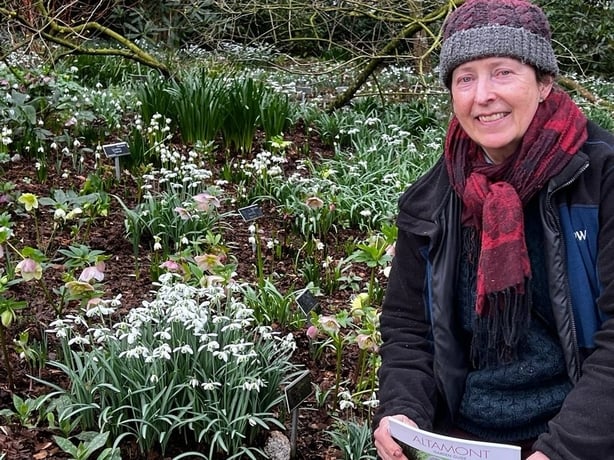
One of Corona’s favourite plants was the snowdrop, and she travelled far and wide collecting different varieties which she planted in the gardens. February is Snowdrop Month in Altamont, and during this month thousands of visitors will visit to see these blooms. Many of these visitors are couples and many a proposal will take place: there is something irresistibly romantic about the snowdrop. After all, it is the first flower of the year, and in some countries, such as Denmark, lovers will send snowdrops, rather than roses, to their significant others as a symbol of their desire and fidelity.
For our St. Valentine’s Day special, Terry travelled to the gardens to speak to Pauline Dowling of the OPW to find out more about the snowdrops, the romance of February and the growing popularity of Altamont for wedding photographs.
For more information about Altamont Gardens and to arrange your free visit, see https://heritageireland.ie/places-to-visit/altamont-gardens/
Ken: Sea Lamprey
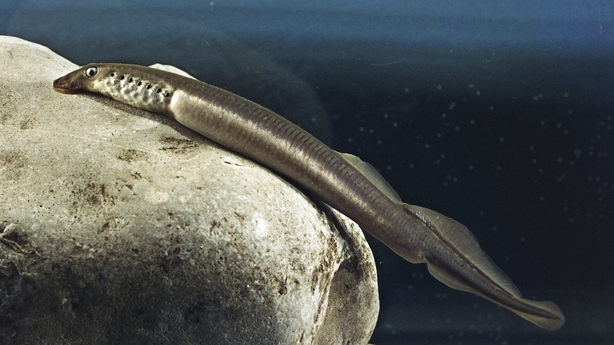
As Ken tells us on tonight’s programme, you could not imagine a less romantic-looking creature than the Sea Lamprey, a tubular parasitic fish with a circular, tooth-laden mouth that latches on to other fish to suck their blood. Amongst the most primitive of all vertebrate species, Sea Lampreys nonetheless have a surprisingly complex mating system. They only mate once in their lifetimes and then die, but they certainly go out with a bang. Writhing masses of these eel-like creatures swarm together, discharging eggs and sperm in a huge orgy-like mating frenzy. Each female produces between 30,000 and 100,000 eggs, and the males jostle frantically for position to fertilise them. Such a spectacle inevitably attracts predators, keen to avail of some of the bounty. Nonetheless, through sheer force of numbers, the species manages to survive.
For more information about Sea Lampreys, visit https://www.fisheriesireland.ie/species/sea-lamprey-petromyzon-marinus
Eye on Nature photography competition
Don’t forget that this year’s RTÉ Eye on Nature wildlife photography competition is now open for entries. A collaboration between Mooney Goes Wild on RTÉ Radio One and the Today show on RTÉ One television, in conjunction with the National Botanic Gardens at Glasnevin and the Office of Public Works, this is a celebration of the very best that Irish nature and Ireland’s photographers have to offer.
The competition is open to everyone aged 18 years and older. Please note that only one entry per person will be accepted. Photographs entered into the competition must have been taken on the island of Ireland (including off its coast and on its offshore islands) between 1st January 2021 and 12 noon on 4th March 2022, which is also the closing date for entries.
Please note that it is vital that no animal or habitat has been disturbed for the purposes of taking your photograph, and the welfare of the subject(s) of your photograph is paramount. It’s also worth bearing in mind that an animal that is reacting to the presence of a photographer is not behaving in a natural way, so the resulting photos suffer.
For more information about entering our Eye on Nature photographic competition and for a full set of terms and conditions, visit https://www.rte.ie/eyeonnature