


To listen to RTÉ.ie's radio and podcast services, you will need to disable any ad blocking extensions or whitelist this site.
0
00:00
00:00
Episode Notes
On a very special edition of Mooney Goes Wild, tonight we bring you a selection of our favourite clips from some of the programmes that we broadcast earlier in the year: our very own "best of 2021" compilation, if you will.
Have we missed your favourite segment of the past year? If so, please let us know by emailing us at mooney@rte.ie. Don't forget, you can also use that email address to send us your questions and observations about all aspects of the natural world, so don’t be shy: we’d love to hear from you.
There are no flies on Derek . . . though there is one on his front door
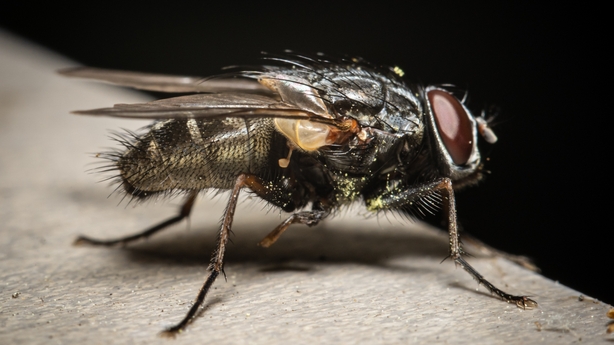
Back in May, Derek noticed something peculiar on the front door of his house in Dublin. Each morning when he opened it, a fly was sitting on it, which struck him as rather odd . . . so odd, in fact, that he decided to ask our Mooney Goes Wild panel about it. What was it doing, and why was this particular door so attractive to this particular fly? It turns out that the orientation of the house may have had something to do with it, and it certainly prompted a fascinating discussion.
For more information on the Housefly, the species of fly most likely to be found in (or on) an Irish house, visit wikipedia.org/wiki/Housefly
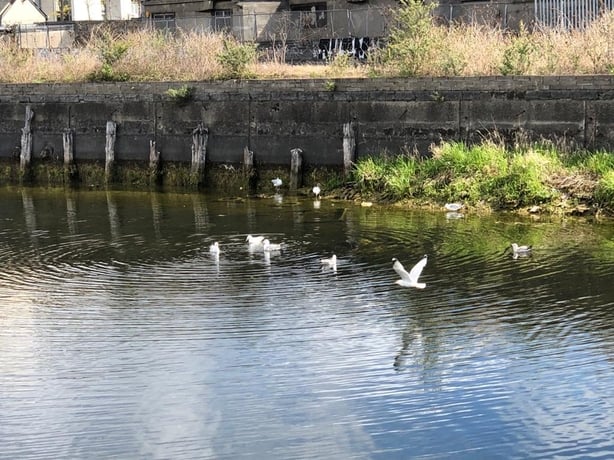
Gulls at Spencer Dock
Gulls form a diverse and varied group of birds, which sadly have been getting rather a lot of bad press of late. Changes in the behaviour of some species, such as the Herring Gull, have been noted, with increasing numbers now nesting on urban rooftops and also scavenging for food on city streets. Many other species of gull, however, give humans a wide berth, and there is more to them than meets the eye. Back in May, our roving reporter Terry Flanagan paid a visit to Spencer Dock in Dublin to see how many different kinds of gull were present, as well as to learn more about their behaviour.
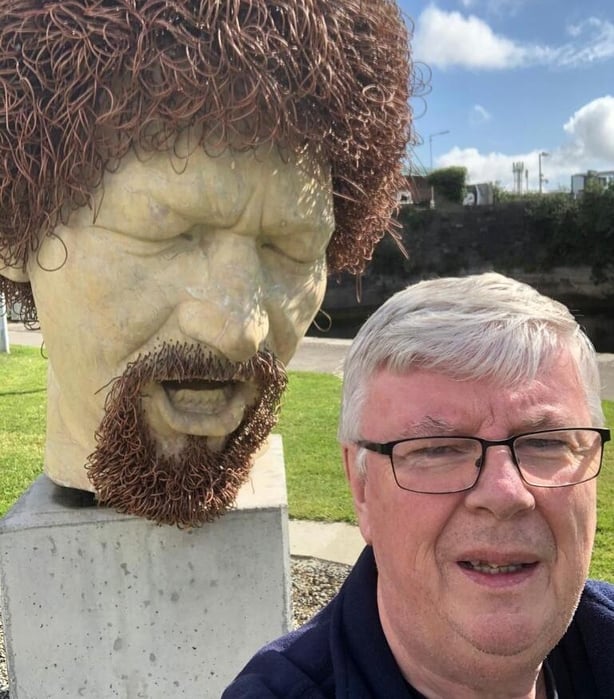
Terry and Luke
By the way, try not to call them "seagulls"! While many species of gull do indeed show a strong preference for coastal areas, and others for the open ocean, it’s perfectly normal for several species regularly to be found well away from the sea. Both Black-headed Gulls and Herring Gulls are often seen well inland, for example, and have been known for generations for 'following the plough’ to get worms, and Common Gulls and Lesser Back-backed Gulls will fly right across Ireland before and after their nesting seasons.
Two gulls preening at Spencer Dock in Dublin
For more information on the phenomenon of urban gulls, visit birdwatchireland.ie/urban-gulls-birdwatch-irelands-view-from-the-roof-tops
Cloacal Kiss
If you have ever witnessed a pair of birds mating, you will have seen that, while the courtship beforehand may be both elaborate and protracted, the actual act of copulation itself is surprisingly brief. In most species it lasts just a few seconds or so, and is almost a case of ‘blink and you’ll miss it’.
Unlike the vast majority of mammals, birds, as well as reptiles and amphibians, have a single orifice that is used for excretion and reproduction, known as the cloaca. This derives, rather bluntly, from the Latin word for a drain or sewer. When most birds copulate, the male usually quickly mounts the female’s back, and she twists her body so that his cloaca comes into contact with hers. This brief ‘cloacal kiss’ is all that is required for the male to transfer his sperm to the female. On tonight’s programme, we revisit a fascinating discussion all about this unusual mating mechanism.
For more information on the cloaca and its functions, visit wikipedia.org/wiki/Cloaca
Going all lovey-dovey!
Doves have long been revered as symbols of peace and love and are held in high regard by many, but some people take their affection for these birds to a whole new level. Back at the start of August, we spoke to Joe Freeley from Ballyhaunis, Co. Mayo, who breeds, rears and trains doves for weddings, funerals, anniversaries, birthday parties and even divorce parties!
Could tiny Zebrafish hold the key to curing blindness?
Zebrafish are very small, black-and-white-striped fish, native to Asia and commonly kept as pets in aquaria around the world. They might not seem terribly special or interesting, but they possess a superpower that should make them the envy of most other creatures on the planet. If their organs become damaged, Zebrafish can spontaneously regenerate the affected body parts, making them as good as new again.
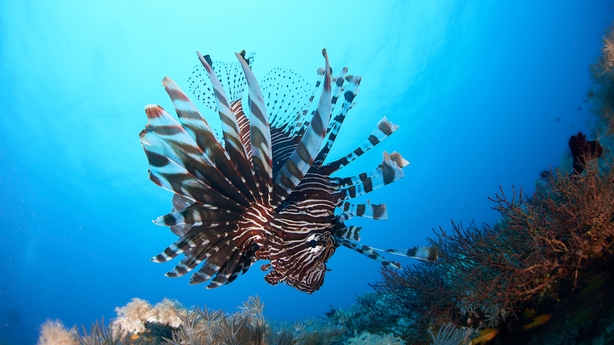
In particular, scientists have noted that, if the retina of a Zebrafish’s eye becomes damaged, rendering the creature blind, within 2.5 weeks it can replace the damaged retinal cells and restore its eyesight. Retinal degradation is one of the leading causes of blindness in humans, and the cells that make up our retinas are remarkably similar to those of Zebrafish. Could research into exactly how these tiny fish are able to restore their sight allow scientists to reverse blindness in humans? Our resident expert in all things fishy, Dr. Ken Whelan, delves deeper into the story for us.
Ken also talks to us about the Sailfish, the fastest fish in the ocean, and his own ‘up close and personal’ encounter with one of these magnificent creatures, which are named for the huge sail-like fin on their backs.
For more information on how the humble Zebrafish may hold the key to curing blindness in humans, visit smithsonianmag.com/innovation/could-tiny-zebrafish-teach-us- cure-blindness
For more information on Sailfish, visit nationalgeographic.com/animals/fish/facts/sailfish