


To listen to RTÉ.ie's radio and podcast services, you will need to disable any ad blocking extensions or whitelist this site.
0
00:00
00:00
Episode Notes
Panel: Éanna Ní Lamhna & Terry Flanagan
Basking Sharks go a-courtin' off the Co. Clare coast
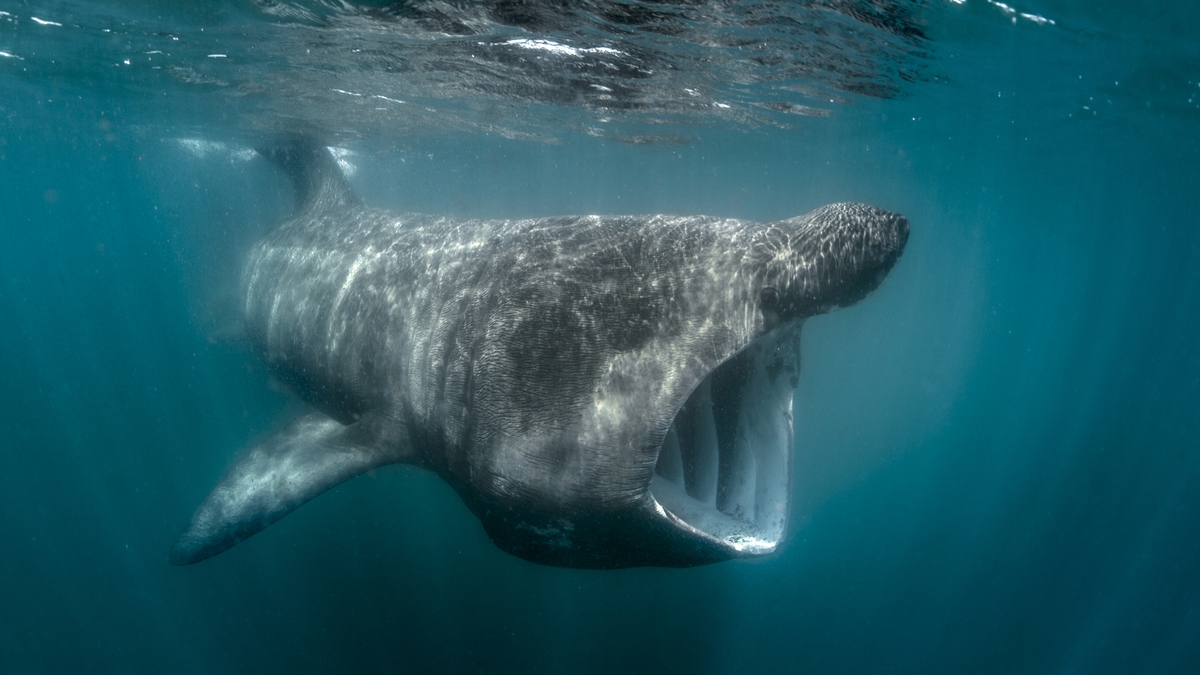
The Basking Shark is the largest fish in Irish waters, and the second-largest on the whole planet. Researchers have recently recorded hundreds of these behemoths swimming together in circles in the open Atlantic waters off Loop Head, Co. Clare. Little is known about this species’ mating habits, but it appears that this is courtship behaviour, something that has not often been observed before.
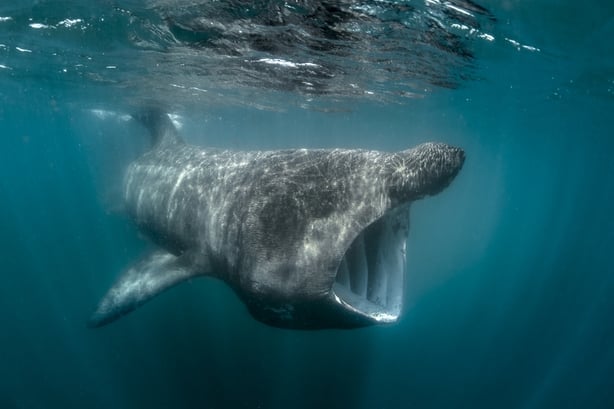
Basking shark (Cetorhinus maximus), underwater view, Baltimore, Cork Photo - Getty
On this evening’s programme we are joined by Dr. Simon Berrow of the Irish Basking Shark Group, who fills us in on this fascinating behaviour, and explains just why it is so remarkable to observe the sharks’ mating activity and how Irish waters are of vital international importance for this globally endangered species.
For more information about the Irish Basking Shark Group and efforts to study and protect these enormous fish, visit baskingshark.ie
Driven batty
Listener Annette Lanigan from Co. Kilkenny was in touch with the programme to ask for advice about bats that she had discovered living in her house. Terry Flanagan recently paid a visit to watch Annette’s bats emerging at dusk, and discovered that she had a maternity, or nursery, roost of these remarkable creatures in her attic.
On tonight’s programme, Terry brings us a special report all about these flying mammals, which are fully protected under Irish law, dispels some common myths about them and explains why we have nothing whatsoever to fear from them . . . and indeed should be very grateful to have them around our homes.
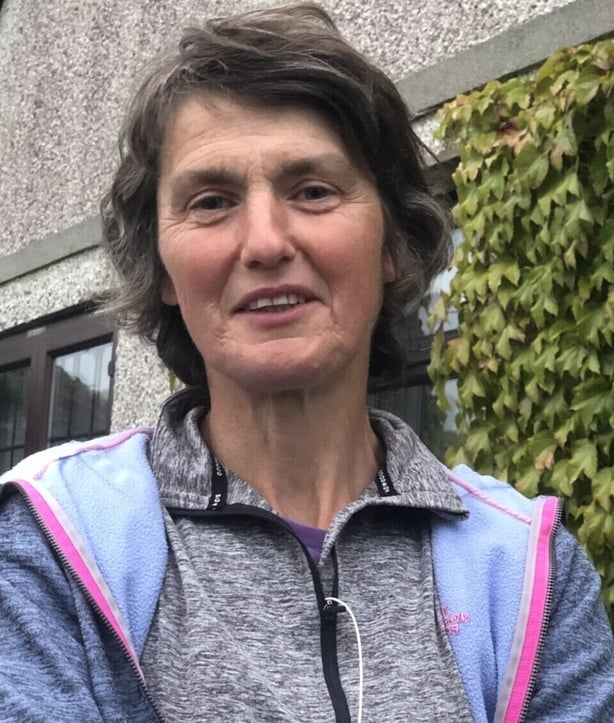
Annette Lanigan - Photo Terry Flanagan
Bat facts
There are 10 species of bats in Ireland, with the appropriately named Common Pipistrelle being the most common.
Bats & people have been sharing buildings for centuries. Even so, bats will only enter human living spaces by accident, and have no interest in actually coming into contact with people. Please rest assured that they will not become tangled in your hair, nor will they drink your blood!
All bats have been protected under Irish law since 1976, when the Wildlife Act came into force. It is against the law for anyone to remove or disturb them, unless a licence has been granted by the National Parks and Wildlife Service.
Irish bats typically become active in late spring or early summer. As the days and nights grow warmer, they fly out to forage for insects for progressively longer periods each night. In early summer, groups of female bats will gather together in a suitable nursery/maternity roost.
The females give birth around June or July. Each mother gives birth to a single baby, known as a pup, and can identify it both by smell and by sound.
A mother bat rarely carries her pup with her when she is flying outside the roost, unless she happens to be moving from one roost to another. The young become independent around six to seven weeks after birth.
The females usually leave their maternity roosts in September and avail of late-summer insects to build up a store of body fat to help them survive the winter, when they go into hibernation.
Even our smallest bats, the three pipistrelle species, which could fit on the end of your thumb, often consume up to 3,000 insects in one night. This means that they are very beneficial creatures to have around.
For more information about Ireland’s bats and for advice about bat roosts, visit the website of Bat Conservation Ireland at batconservationireland.org
The hunting season has begun, but is it time to rethink some of the species on the permitted quarry list?
Each year, 1st September marks the beginning of the hunting season in Ireland, when licenced hunters are permitted to shoot certain species of wild bird and mammal. Under the Open Seasons Order, on that date 17 bird species become fair game, with the season for four additional species opening in November. 17 of these species are native to Ireland, and four – namely the Pheasant, the Red-legged Partridge, the Canada Goose and the Ruddy Duck, have been introduced by man.
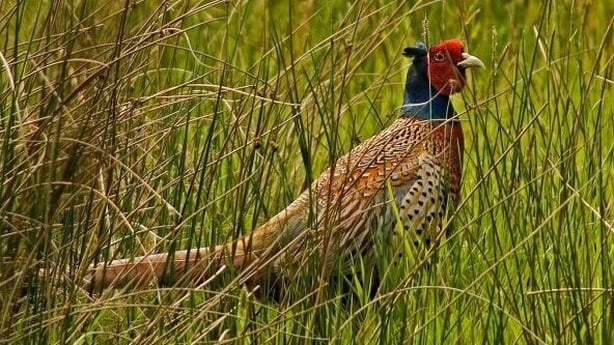
A pheasant in long grass - Photo Kevin Murphy - Birdwatch Ireland
Recent serious declines in many wild bird populations have led to calls by conservation groups for the shooting list to be revised, with fears that hunting of some species is no longer sustainable and could contribute further to their declines, and even their ultimate extinction. On this evening’s programme, wearing his BirdWatch Ireland hat, Niall Hatch explains that, of the 17 native Irish bird species covered by the Open Seasons Order, 14 are considered to be seriously threatened in this country, two are under-researched and only one, the Woodpigeon, is currently considered completely secure at a national level.
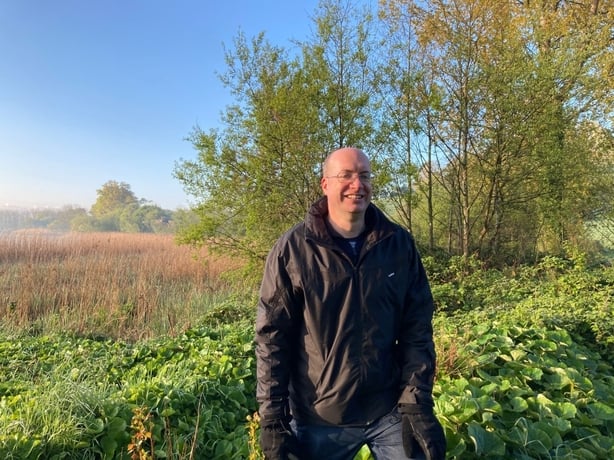
Niall Hatch - Photo Derek Mooney
Niall also stresses that hunters are in no way responsible for the declines suffered by these species, with pressures such as agricultural intensification, habitat loss, climate change, pollution and disturbance being the culprits. However, now that their population levels are so low, hunters, though operating fully in compliance with the law, may nonetheless inadvertently be having an impact on their recovery. Has the time come for the Irish Government to review the list of huntable species?
For more information about the current Open Seasons Order and the list of species that can legally be hunted in Ireland, visit npws.ie/legislation/irish-law/open-seasons-order
For a full list of the bird species which are of conservation concern in Ireland, visit birdwatchireland.ie/birds-of-conservation-concern-in-ireland
Bumblebees’ last supper
We recently received a fascinating photo from a Co. Louth listener, showing an unfortunate Red-tailed Bumblebee that appears to have died on a Southern Globe Thistle in his garden. Was it inadvertently impaled on the plant's spines, drunk on fermented nectar or poisoned by garden chemicals?
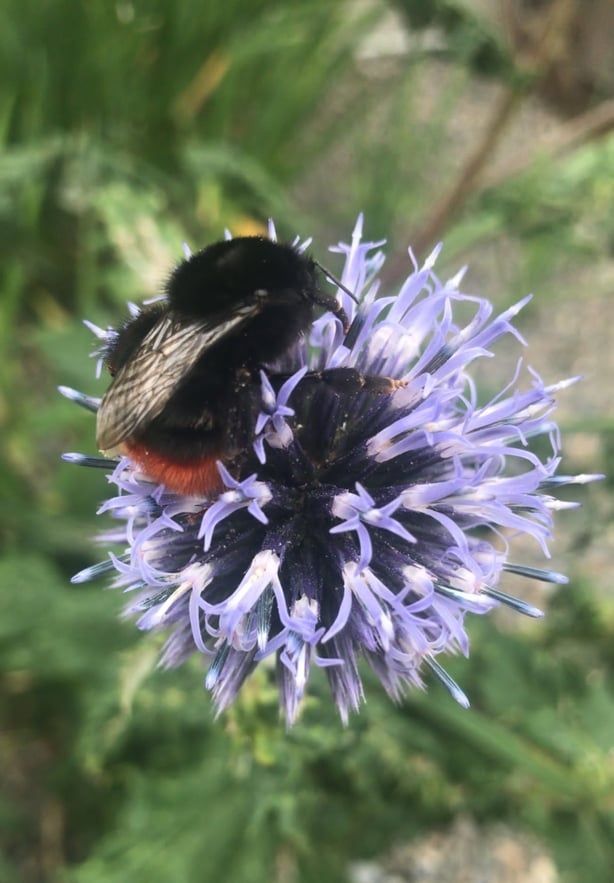
Well, as Éanna and Niall discuss, it’s actually due to something else . . . something that happens at this time every year: the natural die-off of worker bees as we head into autumn. They live fast and die young, and in this case the thistle nectar was this poor insect’s last supper.