


"Love," Shakespeare wrote, "looks not with the eyes, but with the mind." If Professor Colin Doherty has his way, love will also look with a stethoscope.
Prof Doherty is the Head of the School of Medicine at Trinity College, Dublin, and he told Katie Hannon and Colm Ó Mongáin on Drivetime how he wants students to be assessed on their ability to show love:
"Most doctors listening to this show would be saying, 'Yeah, sure, we were taught things like compassion and empathy in medical school, and what's the difference? Why is love an important differentiator?’ And I would encapsulate what we’re trying to define as love as being something much more encompassing than just empathy."
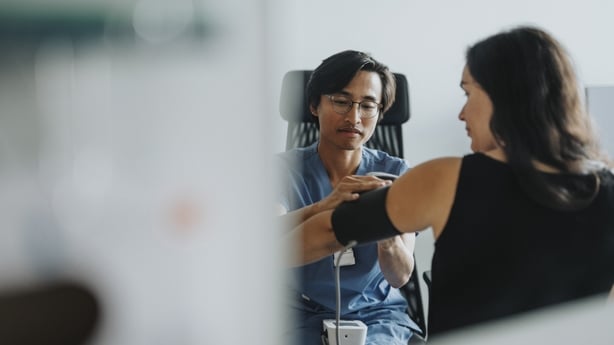
Prof Doherty defines empathy as the capacity to understand another person’s experience and compassion as an emotional response to suffering, coupled with the desire to help somebody else.
The new curriculum that’s being introduced in Trinity wants students to go beyond empathy and compassion:
"We’re actually talking about embracing the vulnerablility, the self-respect, the mutual regard that the doctor and the patient have together. This kind of intensely human relationship. It’s much more holistic, and it’s time to reaffirm this as a central notion of medical training."
Why now? In this "increasingly dehumanised world" we're living in, with its "fearsome technology," Prof Doherty insists it’s time for all of us – but particularly medical students – to stand up and be counted:
"We have to make a stand now and talk about the deep feeling connection that we expect from our doctors. It’s the only thing that’s going to save us in the future."
Colm had a question about how students are taught under this new curriculum – does the teaching involve principles and ethics, or do prospective doctors, who may not feel it, have to try to mimic it?
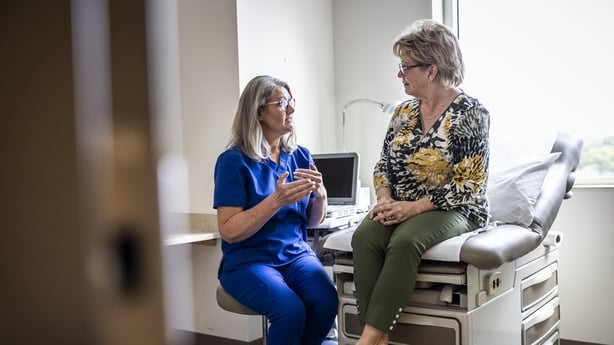
Prof Doherty says that many people working in healthcare have a vocation to help people, and a big aspect of the new curriculum is allowing people to "express their humanity":
"It’s not about having to teach first principles of what it means to love. I’m saying that even though I also expect – and this goes right back to the famous philosophical teachings of Thomas Aquinas that compassion and love can be taught."
It comes down, Prof Doherty says, allowing people to express their humanity. But students have to be assessed, so how do you mark love? Because if it’s in the curriculum, it has to be assessed. And it’s done in a similar fashion to how compassion and empathy have been assessed:
"We do this by assessing their reflective practice, so a lot of things they do in medical school now require reflective practice. They write about their experiences of being with patients, with their families, with their colleagues. And they know that we are looking for them to express this kind of deeper notion of the connection and putting within their reflective writing their own vulnerability, their own – how these things affect them as human beings."
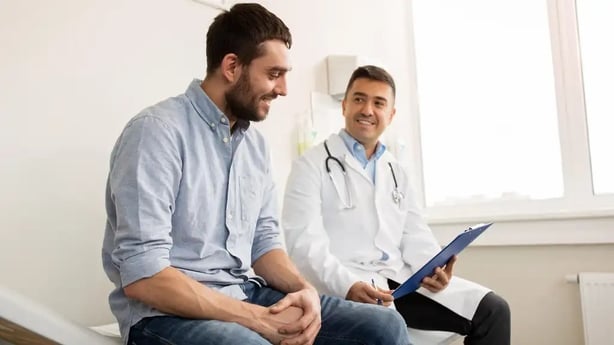
Can the system, Colm wants to know, allow doctors to express their emotional intelligence this way? That’s a challenge for sure, Prof Doherty says:
"To a certain extent, some of this reaffirmation of the importance of this is to make the health system understand that this is what we can expect. The biggest block, if I was looking at the health system today, the biggest block to the expression of this is time. There’s a huge pressure from the health system to get through waiting lists, to get through the work, to see people quickly."
But while Trinity’s curriculum is new, Prof Doherty insists, the notion of love and medicine is not, and despite the extraordinary advances in medical technology, people do sometimes suspect that something is missing – a deep human connection that's been there for a long time:
"It goes way back to indigenous healer and healed concepts. There’s always been the healer and the healed and that deep motivation that imbues the relationship, going – that's ancient, this is ancient, this is not stuff that’s been around like a hundred years."
The test of the new curriculum will be when the freshly-minted doctors graduate and start treating patients. We must hope that they, as the bard put it, "comfort like sunshine after rain."
You can hear the full conversation by tapping or clicking above.