


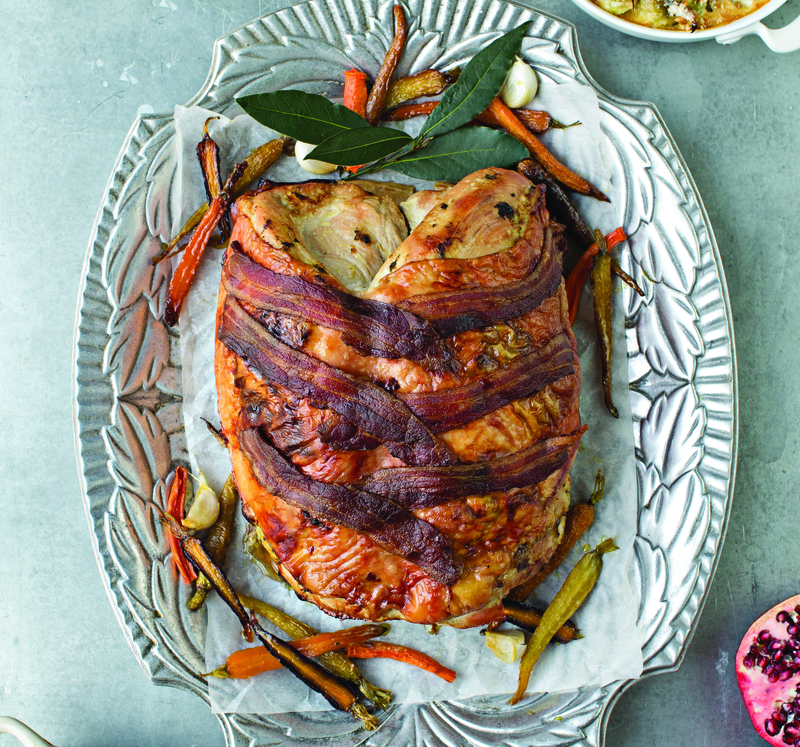
Buttermilk Brined Roast Crown of Turkey with Lemon and Tarragon
A great alternative to roasting a large bird, the crown is the turkey breasts and wing joints with the legs removed. From feedback this is the most popular recipe I've ever done, as the buttermilk brine ensures that the flesh stays wonderfully succulent.
SERVES 6–8
- 1 x 1.8–2kg (4–4½lb) turkey crown, off the bone
- 75g (3oz) butter, softened
- 1 garlic clove, crushed
- finely grated rind of 1 lemon
- 1 tbsp chopped fresh flat-leaf parsley
- 2 tsp chopped fresh tarragon
- 4 rindless smoked bacon rashers
For the buttermilk brine: - 2 litres (3½ pints) buttermilk
- 2 lemons, thinly sliced
- 1 garlic bulb, separated into cloves and sliced
- 15g (½oz) fresh tarragon sprigs, roughly bruised
- 3 tbsp sea salt or kosher salt
- 2 tsp freshly ground black pepper
1 Mix together all the ingredients for the buttermilk brine in a turkey bag, then add the turkey crown. Tie up the bag securely and put in the salad drawer at the bottom of the
fridge – up to two days is best, but brine for at least 24 hours.
2 Preheat the oven to 190°C (375°F/gas mark 5).
3 Cream the butter until soft, then beat in the garlic, lemon rind and herbs. Remove the crown from the brine and drain off any excess liquid, then pat the skin dry with kitchen paper.
Gently loosen the neck flap away from the breast and pack the flavoured butter right under the skin (this is best done using gloves on your hands). Rub the butter into the flesh, then re-cover with the skin and secure with a small skewer or sew with fine twine. Cover the top of the turkey crown with the rashers.
4 Put the prepared turkey crown in the oven and calculate your cooking time: 20 minutes per 450g (1lb) plus 20 minutes. This will cook much quicker than a whole turkey, so make sure to baste it
often. You can cover it with foil if it’s browning too quickly. When cooked, cover with foil to rest and keep warm. Drain away the cooking juices to make the gravy.
5 To serve, carve the turkey crown into slices and arrange on warmed plates with a selection of your favourite accompaniments.
Ham with Sticky Apricot & Ginger Glaze
This ham is a firm favourite in our house over the festive season, whether served hot or cold. It can be cooked and left in the fridge for up to a week, making it extremely handy.
SERVES 10–12
- 5.25kg (11½lb) leg of gammon, on the bone
- 4 celery sticks, roughly chopped
- 2 onions, sliced 5cm (2in) piece of fresh ginger, sliced
- 1 small bunch of fresh thyme
- 1 tbsp black peppercorns
- 4 whole cloves
- 2 star anise 1.5 litres (2½ pints) dry cider
- 1 tsp ground ginger
For the glaze: - 175g (6oz) good-quality apricot jam or conserve
- 100g (4oz) light brown sugar juice of 1 lemon
- 4 star anise
- 4 pieces of preserved stem ginger, cut into small matchstick-sized strips
1 Soak the gammon in cold water for at least 6 hours (or overnight is best), then drain.
2 Preheat the oven to 120°C (250°F/gas mark ½). Use a large deep roasting tin with a rack that’s big enough to hold the ham. Put the celery, onions, fresh ginger, thyme, peppercorns, cloves and star anise in the tin and pour over the cider, then put the rack on top. Sit the ham on the rack and cover with a large tent of foil, sealing it well. Put on the hob over a high heat and bring to the boil. Simmer for 15 minutes, then transfer to the oven. Cook for 12 hours or overnight – you can now leave it for one or two days before finishing the recipe. Alternatively, leave to rest and cool down for at least 30 minutes.
3 Raise the oven temperature to 180°C (350°F/gas mark 4).
4 Now make the glaze. Put the apricot jam or conserve in a small pan with the brown sugar, lemon juice and star anise. Heat gently until the sugar has dissolved, then add the stem ginger and simmer for 3–4 minutes, until reduced to a thick glaze, stirring to ensure it doesn’t catch at the bottom.
5 Carefully peel away the skin on the ham, leaving the layer of white fat intact. Using a sharp knife, score the fat diagonally into a diamond pattern, being careful not to cut into the meat. Put into a clean roasting tin and rub with the ground ginger, then brush the glaze on top. Roast in the oven for about 45 minutes, until golden and sticky. Transfer to a platter and leave to rest for 15–20 minutes. Carve slices from the ham and use as required, warm or cold.
Apricot & Sage Stuffing Balls
This stuffing is very versatile and can also be cooked inside the bird or in a separate buttered dish so it becomes very crisp. It’s really good with turkey, goose or even chicken. These can be made two or three days in advance and kept in the fridge until needed.
MAKES 9
- 75g (3oz) butter, plus extra for greasing
- 1 large onion, diced
- 1 tbsp chopped fresh sage
- 175g (6oz) fresh white breadcrumbs
- 100g (4oz) dried apricots, finely chopped
- finely grated rind of 1 small orange
- 1 tbsp chopped fresh flat-leaf parsley
- sea salt and freshly ground black pepper
1 Melt the butter in a frying pan set over a medium heat, then add the onion and sage and cook for a few minutes, until the onion has softened but not coloured. Put the breadcrumbs in a bowl and tip in the onion mixture, then mix well to combine and season to taste. Fold in the apricots, orange rind and parsley. Roll into nine balls and either arrange around the bird or place in a small buttered roasting tin.
2 When ready to cook, preheat the oven to 180°C (350°F/gas mark 4).
3 Cook the stuffing balls in the oven for about 20 minutes, until cooked through and golden brown. Serve immediately in a warmed dish.