


To listen to RTÉ.ie's radio and podcast services, you will need to disable any ad blocking extensions or whitelist this site.
0
00:00
00:00
Story Notes
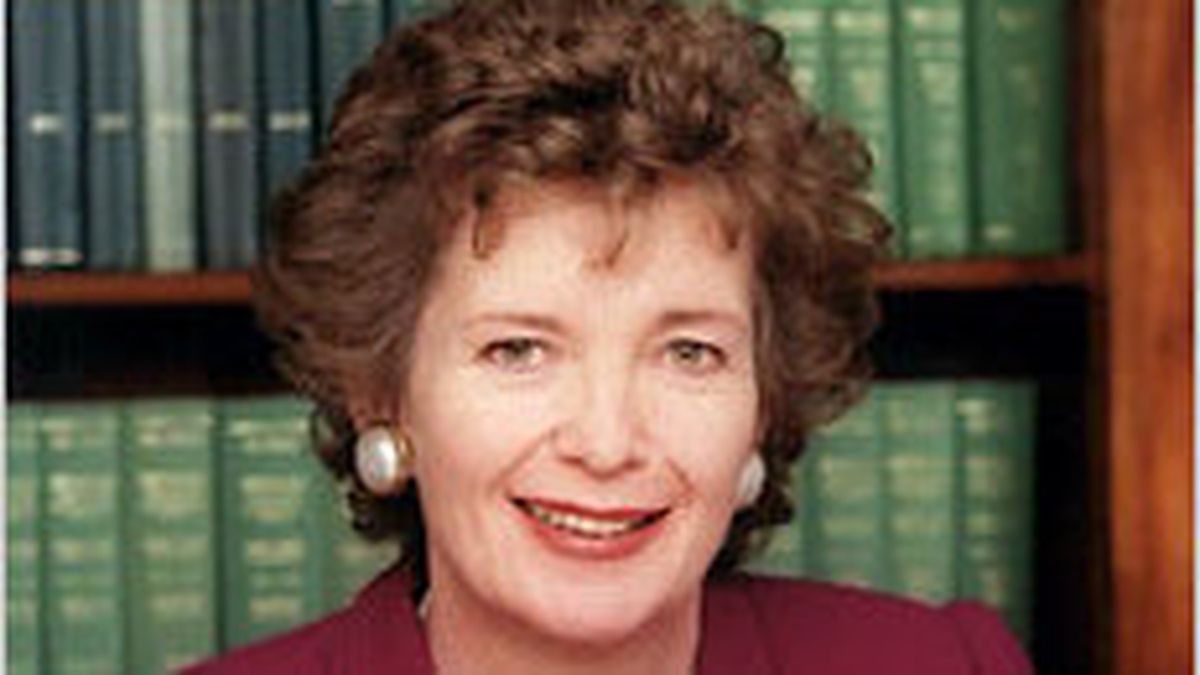
Born on 21 May, 1944, in Ballina, County Mayo, Mary Therese Winifred Robinson is a barrister by profession and was appointed Reid Professor of Criminal Law in Trinity College Dublin when she was 25 years of age. With her husband, Nicholas (married 1970) she founded the Irish Centre for European Law in 1988.
Elected as a representative of the University of Dublin, she was a member of Seanad Éireann (Upper House of Parliament) 1969 -89.
She served on the following parliamentary committees:
Joint Committee on EC Secondary Legislation 1973 – 89 and Chairman of its Social Affairs Sub-Committee 1977 – 87, Chairman of its Legal Affairs Committee 1987 – 89; Joint Committee on Marital Breakdown 1983 – 85. She was a member of Dublin City Council 1979 – 83.
Mary Robinson served as the seventh president of Ireland, becoming the first woman to hold this office. She defeated Fianna Fáil's Brian Lenihan and Fione Gael's Austin Currie in the 1990 presidential election, becoming the first Independent candidate nominated by the Labour Party, the Worker's Party and Independent Senators. She was the first elected President in the office's history not to have had the support of Fianna Fáil.
She resigned from the office of President on 12 September, 1997, to take up appointment as United Nations High Commissioner for Human Rights.
She is widely regarded as a transformative figure for Ireland, and for the Irish presidency, revitalising and liberalising a previously conservative, low-profile political office.
Contributors include Mary Robinson, Declan Geraghty, Aine Kilcullen, Adrian and Dr. Aubrey Bourke, Dick Spring, Senator David Norris, Bride Rosney, Senator Shane Ross and Fergus Finlay.
Produced by Ronan O’Donoghue
Presented by Rodney Rice
First broadcast December 2nd 1990
'Documentary on One - The home of Irish radio documentaries - The largest library of documentary podcasts available anywhere. We tell stories in sound, mostly Irish stories, with each documentary telling its own story'