


To listen to RTÉ.ie's radio and podcast services, you will need to disable any ad blocking extensions or whitelist this site.
0
00:00
00:00
Story Notes
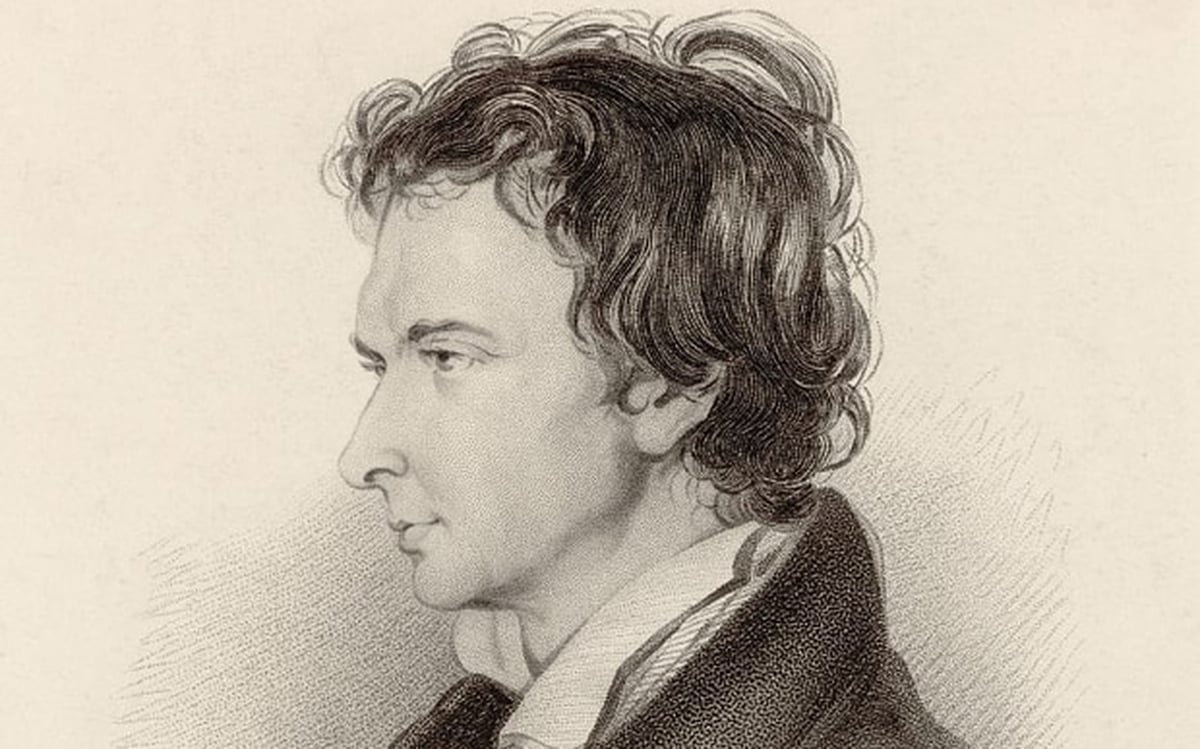
William Hazlitt, (1778 - 1830) was an English writer best known for his humanistic essays. Lacking conscious artistry or literary pretention, his writing is noted for the brilliant intellect it reveals.
Hazlitt’s childhood was spent in Ireland and North America, where his father, a Unitarian preacher, supported the American rebels.
Considered one of the greatest literary critics and essayists, he was also a painter, philosopher and social commentator. He's recognised as the best art critic of the Romantic period.
Hazlitt was a political liberal and wrote expressive defenses of the ideas of the French Revolution. His father was a sympathiser of the American struggle for independence and Hazlitt inherited liberal views from his father. Even though he was not entirely devoid of political prejudices himself, he attacked the politically conservative works of the Lake Poets. He has left a vivid account of his meeting with Samuel Taylor Coleridge and how he taught Hazlitt the gospel of revolution.
His writing style was simple, colloquial and insightful without any literary pretension. His works cannot be classified into a single school of criticism. His essays followed the trend of ‘familiar’ essays, i.e. essays which used the model of common conversation to discuss matters of human experiences. The topics of William Hazlitt’s essays ranged from such specialized topics as Milton’s sonnets or Sir Joshua Reynold’s ‘Discourses’ to his fondness for old books. His literary pieces gave the readers a lens through which the compositions of his Romantic contemporaries can be seen.
The family returned to England when William was nine, settling in Shropshire. At puberty the child became somewhat sullen and unapproachable, tendencies that persisted throughout his life. He read intensively, however, laying the foundation of his learning. Having some difficulty in expressing himself either in conversation or in writing, he turned to painting and in 1802 traveled to Paris to work in the Louvre, though war between England and France compelled his return the following year. His friends, who already included Charles Lamb, William Wordsworth, and Samuel Taylor Coleridge, encouraged his ambitions as a painter; yet in 1805 he turned to metaphysics and the study of philosophy that had attracted him earlier, publishing his first book, On the Principles of Human Action. In 1808 he married Sarah Stoddart, and the couple went to live at Winterslow on Salisbury Plain, which was to become Hazlitt’s favourite retreat for thinking and writing.
Although he successfully completed several literary projects, by the end of 1811 Hazlitt was penniless. He then gave a course of lectures in philosophy in London and began reporting for the Morning Chronicle, quickly establishing himself as critic, journalist, and essayist. His collected dramatic criticism appeared as A View of the English Stage in 1818. He also contributed to a number of journals, among them Leigh Hunt’s Examiner; this association led to the publication of The Round Table, 2 vol. (1817), 52 essays of which 40 were by Hazlitt. Also in 1817 Hazlitt published his Characters of Shakespeare’s Plays, which met with immediate approval in most quarters. He had, however, become involved in a number of quarrels, often with his friends, resulting from the forcible expression of his views in the journals. At the same time, he made new friends and admirers (among them Percy Bysshe Shelley and John Keats) and consolidated his reputation as a lecturer, delivering courses On the English Poets (published 1818) and On the English Comic Writers (published 1819), as well as publishing a collection of political essays. His volume entitled Lectures on the Dramatic Literature of the Age of Elizabeth was prepared during 1819, but thereafter he devoted himself to essays for various journals, notably John Scott’s London Magazine.
Written and presented by Eoin O'Kelly.
Produced by Eoin O'Kelly Olga Buckley and Kevin Brew.
First broadcast on 2nd of July 2003
The first version of this documentary was originally broadcast on RTÉ Lyric fm
An Irish radio documentary from RTÉ Radio 1, Ireland - Documentary on One, the home of Irish radio documentaries.
Story Credits
