


A risk assessment expert has told the Noah Donohoe inquest he is "quite certain" that there was a "public safety issue" at the entrance to a culvert which the schoolboy entered.
Dr Mark Cooper told Belfast Coroner's Court that he would have been "alert" to the risk if he had visited the site before the schoolboy died in 2020.
The inquest into the death of the schoolboy, which is being heard before a jury, is in its thirteenth week.
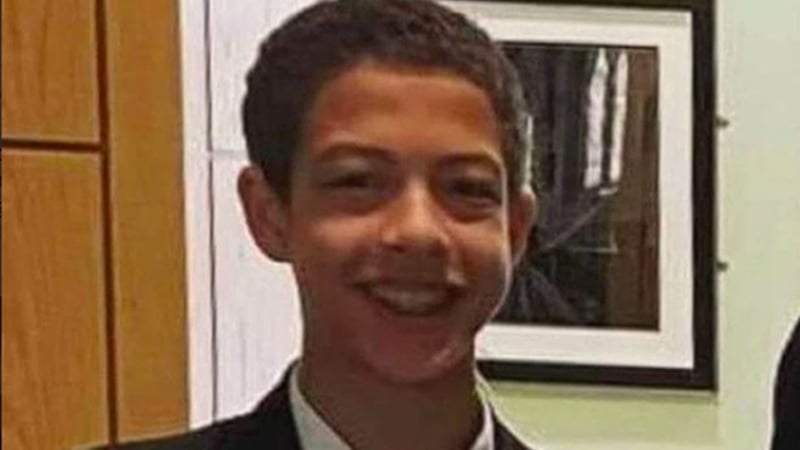
Noah, a pupil at St Malachy's College, was 14 when his naked body was found in a water tunnel in north Belfast on June 27 2020, six days after leaving home on his bike to meet two friends in the Cavehill area of the city.
A post-mortem examination found the likely cause of death was drowning.
The court heard further evidence from civil engineer Brian Pope and Dr Cooper today.
They were among a group of four experts who had their joint responses to a series of questions read to the inquest earlier in the month.
Barrister for the Department for Infrastructure Neasa Murnaghan KC questioned the witnesses about the culvert at Linear Park in north Belfast.
Ms Murnaghan asked about the risk of "hindsight bias" when considering access to the culvert, due to the death of Noah.
Mr Pope said: "There is a risk of hindsight bias and that is what I was acutely aware of, so I looked at the scenarios in different ways."
Ms Murnaghan said: "You weren't aware of any comparable deaths to this type of death anywhere in the UK or the Republic of Ireland?"
"I didn't have specific details of those," Mr Pope said.
The barrister referenced two other deaths in the UK of people who had become pinned against screens at culverts.
The witness said: "They appear to be linked to entrapment but I don't know the specific details of those and whether that is comparable."
Ms Murnaghan said: "Statistically the risk of loss of life was greater from being pinned against a screen than being trapped inside a culvert?"
Mr Pope said: "I don't have detailed statistics to prove that one way or the other."
The barrister then asked Dr Cooper about hindsight bias.
Dr Cooper said he had "thought about this greatly".
He added: "I am quite certain that had I gone to that culvert and seen what I had seen in terms of the public access to it, and also the picture I have seen of an employee walking through the screens, at that point before anything may have happened I think I would have been alert to the public safety issue here.
"It is very persuasive seeing those photographs of an adult walking through the bars.
"That would have caused, without any bias, on its own would have caused me to be concerned about the public safety issue."
The barrister said the witness had made the assumption that because Noah was able to access this culvert that "therefore general members of the public also accessed this area".
Dr Cooper said: "If you said can somebody access the culvert, then the risk is eventuated if it has happened.
"After that point your view would be different because the risk has happened."
Ms Murnaghan said the witness had no evidence that members of the public other than Noah were "habitually accessing this site".
He said: "No, other than just looking at the layout and seeing for myself the location and the access."
The inquest continues.
