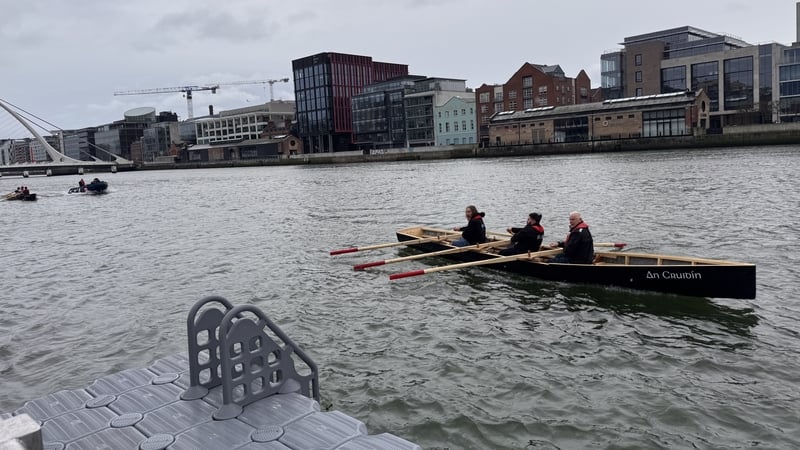
President Catherine Connolly has launched a new initiative that will see traditional currach boats introduced to the River Liffey for public use.
Officially launched at the Docklands Municipal Water Sports Centre, Curachaí na Life is a community rowing project centred on the currach - a traditional Irish boat made from a light wooden frame covered in canvas or tarred cloth.
The programme - which is based at HQ2O Watersports, operated by Swan Leisure - aims to increase participation in water sports on the Liffey, while also highlighting Ireland's maritime and Irish-language heritage.
President Connolly formally marked the occasion by sending the vessels onto the river for the first time - accompanied by traditional music and poetry.
Speaking at the launch, CEO of HQ2O Watersports Clodagh Kilmurray said the initiative aims to open up the river as a space for both community activity and cultural engagement - while providing "síocháin" or peace from the hustle and bustle of the city centre.
"Curachaí are from our past, culture and heritage but now we’re bringing it to an urban setting so people of all generations can participate in it and learn not just about the value of our heritage culture and Gaeilge but the power of water sport."
"When you’re out on the water it’s completely different to business of the city, you don’t hear the likes of bus engines."
"That should be available to everyone in our city," she added.
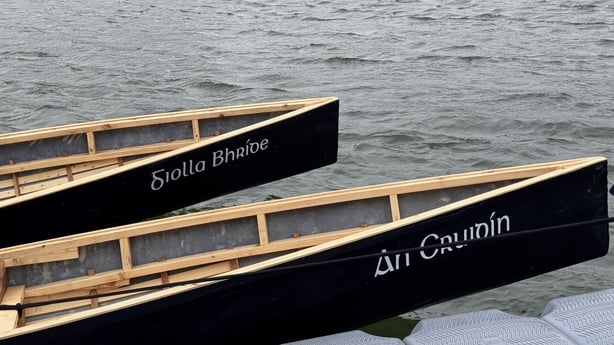
At the centre of the event were four handcrafted currachs, built by currach craftsmen and rowing champions Micheál and Máirtín Ó Maoilchiaráin, who have more than 20 years of experience.
Three were built in their home of Carna in the Conamara Gaeltacht, while a fourth was assembled in Dublin through a series of workshops that allowed the public to take part in the building process through Irish.
The project will continue throughout the year with currach rowing sessions, including activities conducted through Gaeilge.
For Micheál Ó Maoilchiaráin, the programme represents the building of a stronger connection between traditions of the west of Ireland and the urban setting of Dublin.
"When you think about the currach you think about the west coast, and when you think about currach builders they would have built these vessels using the Irish language traditionally."
"I think it’s a special connection – to bring that craft to this side of the country while keeping the connection to our native language while we do that," he added.