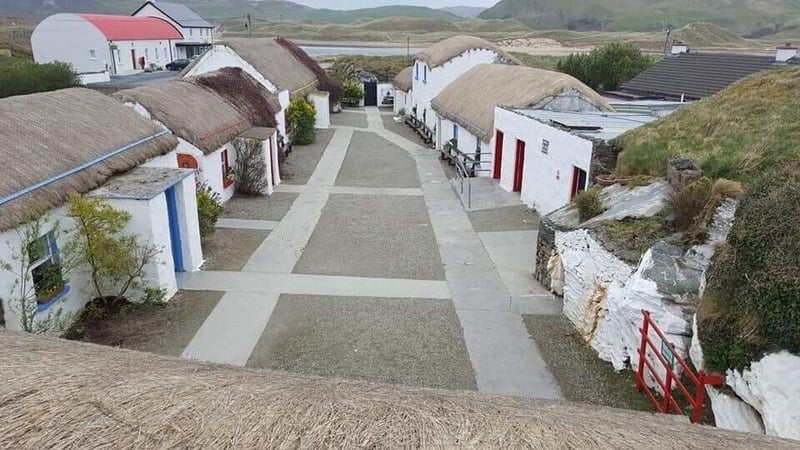

The Doagh Famine Village on the Inishowen Peninsula reopens today, nearly a year after a fire destroyed two-thirds of the iconic northwest heritage attraction.
The museum, which tells the story of families from the famine to the present day, has been restored with the help of community support and donations of historical items.
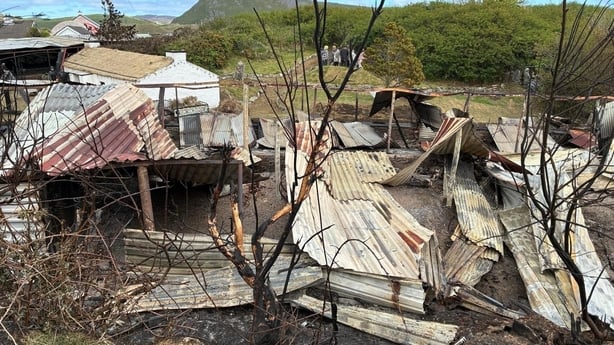
On 3 May 2025, several fire units, joined by neighbours, worked to extinguish a blaze that severely damaged replicas of an Orange Hall, a Republican safe house, and buildings chronicling the lives of the Travelling community and famine-era families. Foul play was not involved in the fire.
Museum owner Pat Doherty said his family has worked tirelessly to restore the museum, supported by the local community.
"It has been seven days a week for our family since last summer, working to bring the village back.
"Many local tradesmen, neighbours and friends stepped forward to help clear the site so we could restore what was lost."
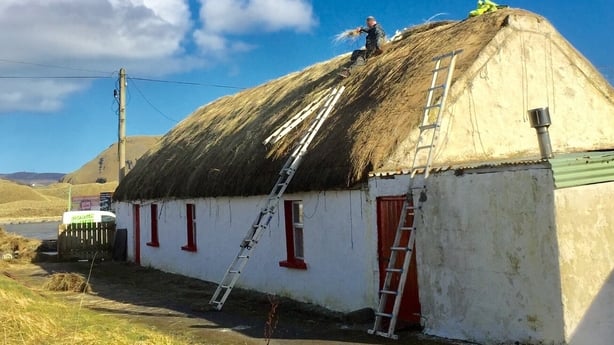
Mr Doherty said he is not sure if he could have reached this point without the help received from the community.
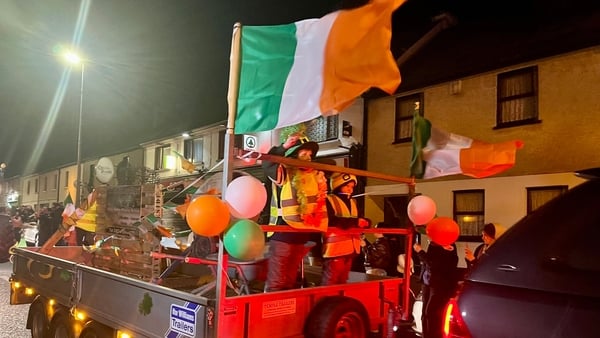
He said reopening during St Patrick's Day celebrations is especially meaningful.
"It has been 29 years since I first started this project. Over that time Donegal, and especially Inishowen, has changed greatly for the better, helped by peace and progress.
"After everything that happened with the fire, it means a lot to have the chance to open again. It is a proud moment for our family," Mr Doherty said.
Following the fire, many families contributed historical items from their homes and farms, some of which had been kept for generations.
"In fact, the generosity was so great that we simply could not accept everything because we did not have enough space to display it all," said Mr Doherty.
He said items have come from across Ireland and overseas.
"What stands out most are the stories behind each object, connecting families to Ireland's history," Mr Doherty said.
The renovated famine village features traditional cottages, eviction scenes and a new storytelling theatre - where visitors can hear about Irish wakes and poitín-making or sample locally foraged foods.
Exhibits were recreated in collaboration with the communities they represent, including members of the Orange and Republican traditions, and the Travelling community.
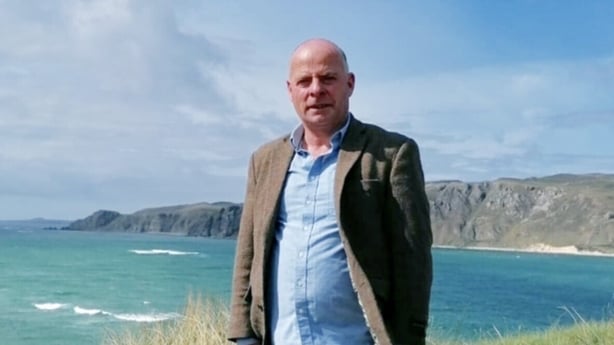
Mr Doherty says each area tells part of the wider story of life in Ireland.
"Visitors often ask why an Orange Hall, a Republican safe house, and the Travelling community are represented here.
"I think the answer is simple. They are all part of our shared history. Ireland's story is not one-sided. It is made up of different traditions, identities and experiences," he said.
He said they want visitors to look beyond the conflict and violence of the past and try to understand people's lives, what shaped their thinking and pressures they faced.
"We aren't trying to judge others. We are here to present, preserve and to encourage understanding.
"If visitors leave with a deeper respect for each other's stories, then we have done something worthwhile," he said.
The research and design was supported by Sean Molloy and Tommy English from Dooagh, Oileán Acla, Dr Martina O'Donnell Doherty, Donegal County Council, the County Library Service, and Fáilte Ireland.
The set design in the famine village has been carried out by Zoe Harkin and Brogan Wakeley of MorePies Productions.
Mr Doherty recalled the personal challenges surrounding the fire.
"Two weeks before the fire, I was in Letterkenny University Hospital with symptoms doctors feared could have been a stroke.
"Thankfully I recovered, but the fire felt like a huge blow. At first, I considered ending the project, but the community's support renewed our determination."
Looking ahead, Mr Doherty said the focus is on sustainability.
"Doagh is one of the last self-sustaining heritage museums in Ireland. Its success supports the wider community by bringing visitors and filling bed nights across Inishowen, just as it has for many years before," he concluded.