
A new pilot programme in the north west is training trusted community members to recognise signs of abuse and safely connect people to specialist support services.
The programme, titled Safe to Call, is being delivered by the Domestic Violence and Advocacy Service [DVAS] and represents a first-of-its-kind approach across Sligo and Leitrim.
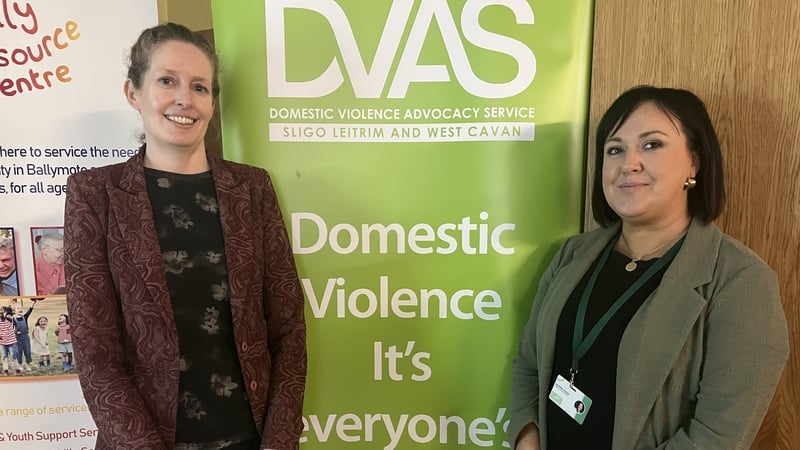
Dr Caroline Forde from DVAS says the 'Safe to Call' training will develop participants understanding of domestic violence, coercive control and build confidence in identifying warning signs and responding safely and appropriately to disclosures.
Programme Trainer Michelle Alonso said there is a misconception that domestic abuse can be easily identified.
"People believe it’s overtly obvious, but it’s not. It's subtle, it's manipulation and it's mind games," she said.
"We’re not asking people attending the training to deal with domestic abuse. We’re asking them to understand it, be empathetic, listen and to signpost the services, like ourselves, who can adequately provide that support to women."
We need your consent to load this rte-player contentWe use rte-player to manage extra content that can set cookies on your device and collect data about your activity. Please review their details and accept them to load the content.Manage Preferences
The community-based initiative is designed to support victims and survivors while also increasing awareness of specialist services available locally.
The launch took place in the Ballymote Family Resource Centre.
Project Co-ordinator at the centre Yvonne Molloy told RTÉ News they hope training trusted people to make interventions will save years of trauma for victims.
"Supporting families in Ballymote is one of our main jobs, families that are in crisis. We keep seeing the rising numbers of cases of domestic violence and coercive control.
"We are hoping that the information and skills that we will give [to training participants] will give them the skills to make an intervention and that this intervention can mean a life saved and saving years of trauma."
The Sligo Leitrim Children and Young People Services Committee, the Domestic Violence Advocacy Service, the Mohill Family Support Family Centre and the Ballymote Family Resource Centre are involved in the pilot programme.
Plans are afoot to roll out the initiative to other professions in the north west.
Deirdre Kennedy from Sligo Leader Partnership who attended the training said learning how to approach situations when they arise, was a significant help.
"So much of it is hidden," she said.
Common threads in characteristics of abuse, says survivor
Christine, not her real name, a survivor of domestic abuse told RTÉ News while everyone's story is unique, there are common threads in the characteristics of abuse.
She said many survivors cloak themselves in silence, burdened by shame, and that finding the courage to shatter that silent quiet is a "huge," life-altering step.
She said walking through the doors of a support organisation can change everything - offering the chance to be heard and believed, and to begin recovering and rebuilding a life.
"My story started when my children were small. I really woke up to what was happening to me when I saw the damage being done to my children," she said.
"It doesn't happen immediately. It happens over time to the point where you start disbelieving in it.
"The chipping away of confidence, constant gaslighting, blaming, threatening, being accused of being crazy, financial abuse, emotional, psychological and coercive control."
She said when her life was threatened, she knew she had to seek help.
"I was led into DVAS through Women’s Aid. I started to understand this was not my fault, because a lot of women think it's their fault," she said.
She added: "My story started in the 1980s. My divorce was in the 1990s and I'm still dealing with this.
"When women of my age see younger women, we say, it's great that you're accessing this support now, because at least you have a chance to build a new life.
"I have found my own voice. I have found tremendous support within the [DVAS] organisation. I have created bonds with the other women.
"We only share what we are ready to share, if we want to share it. There’s no pressure.
"My story, is held in a safe, secure, trusting place. That is huge. That's absolutely huge".