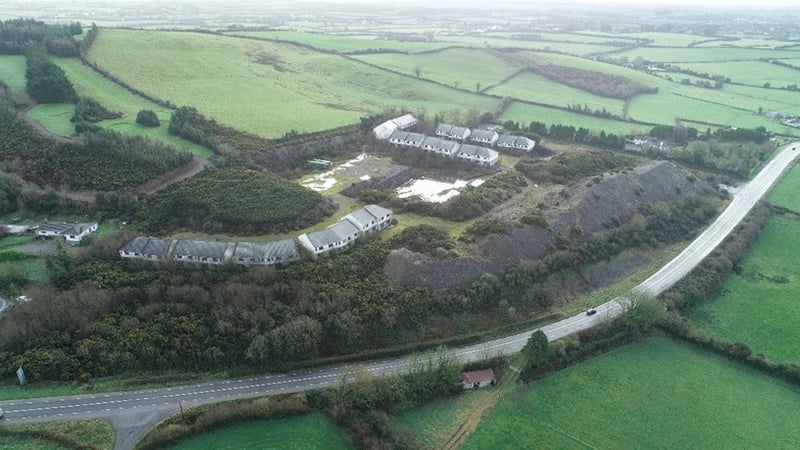

Tipperary County Council is pushing forward with plans to demolish 52 incomplete houses that works stopped on almost 20 years ago.
Last week, the council issued a tender for the demolition of the houses at Ballypadeen, near Cashel, known locally as the old Cashel Kings Motel site.
The houses were initially planned to be used as tourist accommodation, and were part of a wider project that involved a hotel at the site.
The hotel was never built, while works on the houses stopped in 2007 due to a dispute between the developer and then-South Tipperary County Council.
Legal cases ensued, before last July the council agreed a settlement with the developer.
As part of that agreement Tipperary County Council agreed to fund demolition works, and will take over the site for these works before handing it back over when it is complete.
There has been mixed reaction to the plan.
Some have welcomed the news, saying there has been issues with anti-social behaviour and illegal dumping around the site.
Others who are against it include TD Mattie McGrath who is set to hold a meeting at the site today. The Independent TD claims that the houses are still in good condition, and could be made inhabitable.
He believes there is potential to use them at a time when there are 3,600 people waiting for houses in the county, and is asking the public to make submissions on the proposal before the council's 3 February deadline.
Councillors are then expected to vote on the proposal at a later date.
Tipperary County Council Director of Service Brian Beck told RTÉ News that some of the houses are now derelict, and added that they had been intended for use as tourism accommodation and not as permanent residences.
He said that the site is also "unzoned, unserviced, and located outside the settlement boundary of Cashel", and that using it for permanent accommodation would be "considered contrary to the national, regional, and local planning policy".
He added that even if the site was deemed suitable for permanent housing, the cost of updating the 52 units to modern requirements would "be prohibitive and likely necessitate demolition" as they have been vacant and incomplete for so long.