The Marine Institute is seeking the help of "citizen scientists" to track the movements of oystercatcher birds in Dundalk Bay.
Dundalk Bay is protected under EU law and is both a special area of conservation and a special protection area, and is also home to Ireland's only significant commercial cockle fishery.
The oystercatcher, a black and white wading bird, comes to Ireland for the winter from colder climates like Scandinavia and the Faroe Islands.
It is drawn here because of the availability of cockles and other food in the bay.
The project is looking at how the birds use the bay, what they eat when they are here, and how the cockle fishery in Dundalk can be sustainably maintained while also protecting the habitat.
As part of the research, scientists from the Marine Institute first had to fit tags on the oystercatcher birds last November.
Twenty-five birds were fitted with GPS trackers and a further 25 were given white leg flags with a unique three-letter code.
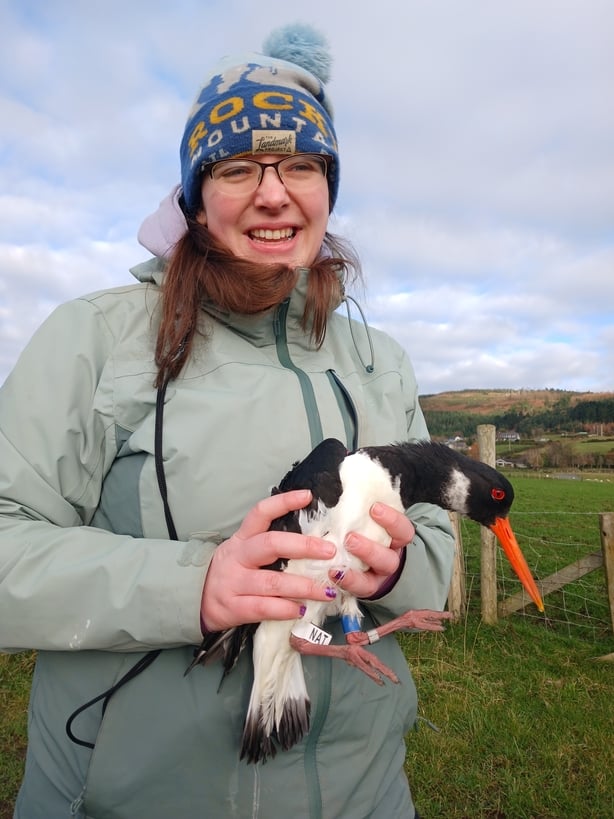
Data from the GPS trackers is sent back every hour, and scientist Natasha Murphy has been analysing the birds' movements.
She said: "We're interested in how these birds overlap with the cockle distribution in the bay. We have a lot of information from them already
"Some in the south tend to move a lot, those in the north, around Bellurgan and Lordship, they're not moving as much. We can see where they're foraging in the mid-shore area. It means they're overlapping where the cockles are."
One bird went all the way to Cornwall while two others have started their journey north already and are currently in Scotland.
Marine Institute scientist Oliver Tully has been surveying cockles in Dundalk Bay for 20 years.
The annual catch from the fishery is between 500 and 600 tonnes, and supports up to 30 fishermen from the local area around the bay, including Annagassan, Dundalk and Clogherhead.
He said the work they are doing is to ensure the sustainable exploitation and development of the fishery, to maintain a steady income for the fishermen, but also to make sure it is "managed appropriately" so it does not have a significant impact on the ecosystem of the bay.
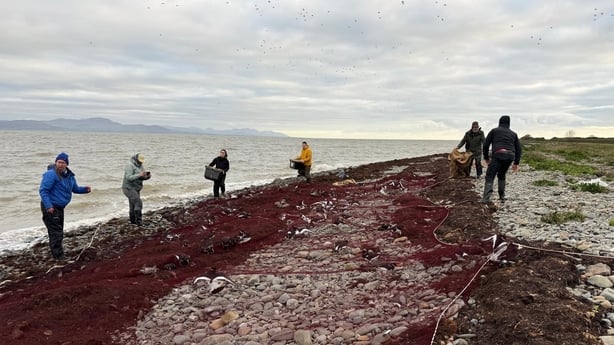
He said: "We're particularly interested in the habitat quality and maintaining the habitat quality for birds in particular.
"That habitat quality is related to the food source, the condition of the food source over winter and the level of disturbance that might happen here, not only from the fishery but from other disturbance activities that people generate in the area.
"Maintaining good habitat quality for oystercatchers and other birds is paramount and so that interaction between the fishery and birds is really important to asses as well."
By tracking the location, over time, they will be able to build a picture of how the birds are using the habitat, he said.
"So for instance, are they always feeding on cockles and is that cockle habitat really important to them? Or are they also relying on other habitats?
"So the degree to which they overlap and depend on cockles as a food source is important for us, because then we can assess whether and to what degree the fishery might have an effect on the food source as well," he said.
Ever year for the last 20 years, scientists have been creating maps of where cockles are located on the bay.

"When the fishery opens, we map where the fishery is. And now we can map where the birds are, so it's map on map on map," Dr Tully added.
While the GPS data goes directly back to the scientists, Natasha Murphy said they need the public's help to track the movements of the other 25 oystercatchers.
"This is the citizen science element of the project. On their legs, there is a white flag marked with three letters. That can be seen with binoculars or zooming in on your phone.
"If you see one of these, please report it to me at the Marine Institute," she said.
The GPS trackers will last a few years, but the study will be longer for the birds fitted with leg flags, and will also look at their survival as the Oystercatcher has a long life span that can reach up to 40 years.
She said anyone can get involved by the project and has urged people to keep their eyes peeled for the black and white birds, and if they spot a white tag on their leg, to report the time, date and location.
If you are interested in tracking the movements of Oystercatcher birds in Dundalk Bay, Natasha Murphy can be contacted at natasha.murphy@marine.ie