
The Department of Justice has confirmed that locum pathologists will provide post-mortem examinations requested by coroners in the south east of the country from the new year.
It is understood that these locum pathologists, who will be contracted to provide the service in the short to medium term, are not already providing such services in Ireland and will primarily be from the UK.
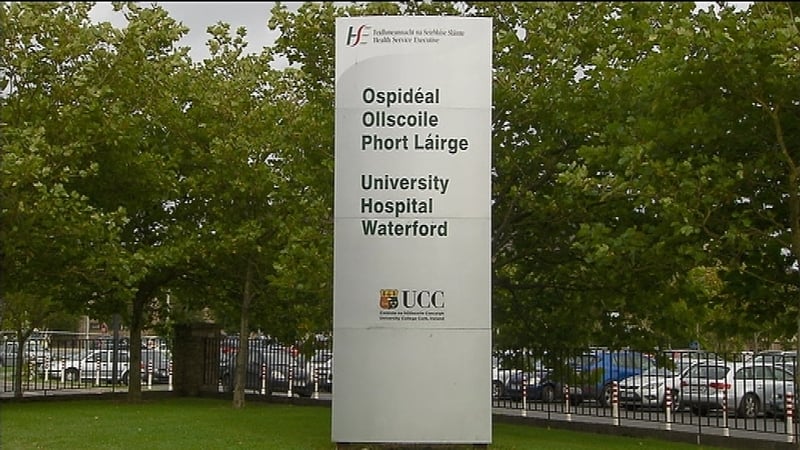
Around 700 post-mortem examinations, requested by coroners in the south east, are carried out at the morgue at University Hospital Waterford each year.
Such cases include deaths which may be suspicious, accidental, or unexpected, as well as maternal deaths.
Consultant pathologists at the hospital previously announced that they will withdraw from conducting coroner-requested autopsies at the morgue in the hospital from 1 January.
The reasons for this were said to be "diverse and complex".
University Hospital Waterford 'significantly understaffed'
The Chief Executive of University Hospital Waterford, Ben O'Sullivan has said the hospital is "significantly understaffed" in terms of consultant pathologists, who carry out the post-mortems as independent contractors for the Department of Justice on top of "already onerous workloads".
The move, first reported by the Irish Examiner, was feared to result in lengthy funeral delays, which the Coroners Society of Ireland said would cause distress and anguish for bereaved families.
The current service covers counties Carlow, Kilkenny, Waterford, Wexford and south Tipperary, with a combined population of 625,000.
The Department of Justice, which is responsible for coroner services, has now confirmed that an interim solution has been put in place.
A spokesperson for the department said: "Following a recent meeting in University Hospital Waterford (UHW) attended by representatives of these parties, pathologists employed at that location indicated that they would not be available to carry out post-mortems post December 2025.
"On foot of this, the department engaged with several firms proposing to supply locums to provide the autopsy service in UHW. A solution has now been put in place which involves locum pathologists providing the autopsy service in UHW from January.
"This approach is an unfortunate necessity to minimise any impact on bereaved family members who are engaging with the Coroner Service. However, a long-term sustainable solution is nevertheless required, whereby locum pathologists are not relied upon to provide the autopsy service, and instead this service to the community is provided from within the pathology profession in Ireland generally."
Securing additional pathologists 'challenging' for several reasons
The spokesperson also described securing the services of additional pathologists as "challenging" for several reasons.
They said: "Policy and operational responsibilities for the provision of post-mortem examination services to support the work of the Coroner Service is supported by several departments and agencies.
"The Department of Justice, Home Affairs and Migration is responsible for the legislation underpinning the work of coroners, while the provision of the post-mortem examination service is largely provided through the health service and its personnel.
"It is important to clarify that pathologists, other than forensic pathologists in the Office of the State Pathologist, are not contracted to either the Department, or to coroners.
"The Minister is aware that securing the provision of the post-mortem service for the coronial death investigation function is challenging and has been engaging with the Minister for Health to address the reasons behind these challenges.
"There are issues arising with respect to the performance of port-mortems within the pathology profession generally, including relating to training and recruitment, as well as competing demands on pathologists in areas of diagnostic and research work. The Minister acknowledges those concerns," the spokesperson added.
The Coroners Society of Ireland has welcomed the move and said it looks forward to working with the locum pathologists in the southeast of the country on an interim basis.