


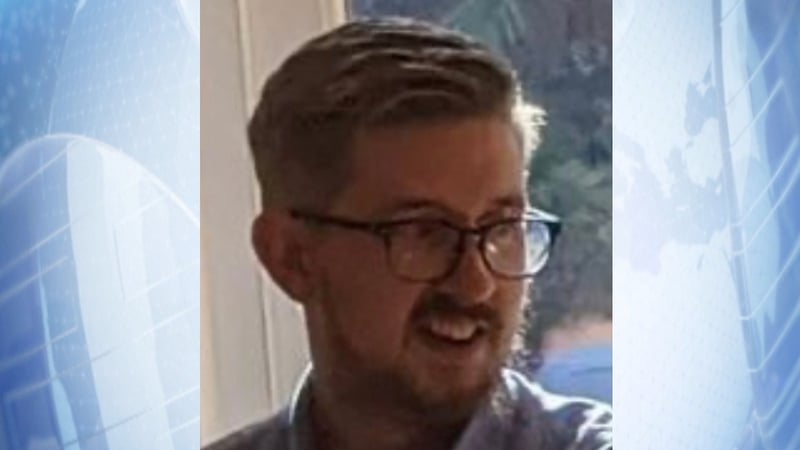
The family of a 34-year-old "doting" father who died after he spent nine hours on a chair at Cork University Hospital (CUH) before he was seen by a doctor and had a CT scan delayed because a machine was broken, have warned that lessons must be learned to prevent further deaths.
Cork chemical engineer Pat Murphy died of an aortic dissection on 3 September 2021 at CUH having been misdiagnosed with a possible kidney stone and renal colic.
He went to the hospital by taxi with chest pain late in the evening on 1 September 2021 and a CT scan was ordered.
His arrival at hospital was delayed because his ambulance failed to arrive.
Triaged as a Category 3 patient, the PHD graduate of Lancaster University should have been seen by a doctor within an hour.
An inquest at Cork Coroner's Court heard that he spent nine hours in complete agony on a chair in the A&E department.
At times he was in so much pain that he tried to lie on the floor to ease it.
His CT scan was postponed by eleven hours because one of the two CT scanners onsite was broken.
The inquest heard that potentially lifesaving hours were lost because of the failure to reach the appropriate diagnosis.
Mr Murphy underwent emergency surgery but unfortunately efforts to save his life failed.
Mr Murphy and his wife, Keerti Krishnan Murphy, have one son who was 17-months-old when his father died.
He is also survived by his parents Willie and Noreen and his siblings Sinead, Yvonne, Suzanne and Tracy.
Ms Krishnan Murphy said that she has learned from the Aortic Dissection Charitable Trust that with "proper intervention and well documented symptoms many lives could be saved".
Assistant State Pathologist Dr Margaret Bolster carried out a post-mortem examination on Mr Murphy, and told the inquest that he died from a dissected aortic aneurysm with the sack around his heart filling with blood.
Dr Bolster said that Mr Murphy suffered severe brain damage due to lack of oxygen to the brain, and that the damage to the aorta was quite extensive.
Dr Bolster said that there is a "very high mortality rate" with aortic dissection, describing it as a life-threatening condition.
"It is a rare and life-threatening condition. Prompt and proper diagnosis and treatment is vital".
She said that that the mortality rate increases by one to two percent per hour, which requires prompt and proper diagnosis and treatment.
Dr Bolster added that aortic dissection is rare in a person under the age of forty.
Dr Frank Leader, Head of Education and Training at CUH Emergency Department, was asked why it took nine hours for Mr Murphy to be seen by a doctor given that he was triaged as a Category 3 patient and ideally would have been seen within an hour.
Dr Leader said that it was "extraordinarily difficult" to meet that timeframe.
"Category 1 is seen instantly. Our Category 2 patients we certainly are very assiduous in as close to the ten minute time frame as possible.
"Category 3 patients will unfortunately have to wait much longer than (the guideline) one hour. We just do not have the resources to see (these) patients within an hour. Internationally, it is an issue.
"We currently have the busiest emergency department in the country".
Dr Leader stated that the emergency department at CUH currently handles in the region of 90,000 cases a year.
"There are days when we see more than 300 patients. It is extremely challenging and that would have been the case in 2021."
Dr Leader indicated that three years ago CUH had three doctors on duty at night in the A&E Department, two registrars and one junior doctor with a consultant on call.
At times staffing pressures were such that there might be one registrar and two junior doctors/senior house officers (SHOs).
However, Dr Leader said the numbers have now increased to five doctors, registrars and three junior doctors with a larger number of consultants also available.
"The resources have increased. Our senior cohort has doubled since 2021. We also have more junior doctors and SHOs.
"There has been a significant increase in staff, (but) it (the A&E) was and remains under pressure."
Dr Leader said that this case was discussed at length at their monthly clinical risk meeting.
He said that lessons were digested and disseminated to the department at large.
Other improvements implemented at CUH include special orientation training for doctors on aortic dissection, the hiring of more senior doctors and increased case discussions, an expanded email reference platform and the allocating of consultants to specific areas.
Dr Leader said that it was "very clear" that a wrong diagnosis was reached and that the "best care" would have been to organise an urgent CT scan of the aorta.
Doireann O’Mahony, Junior Counsel, for the family said that Mr Murphy was being viewed in the hospital as a person who was possibly suffering from kidney stones and renal colic.
"Every step taken was as a result of misdiagnosis. Every one was singing from the same hymn sheet, and it was the wrong hymn sheet".
Dr John O’Mahony, Senior Counsel, made legal submissions to the jury on behalf of the family.
He said that their verdict was "sacrosanct" and said that it was vital that they get it right.
Dr O’Mahony said that the case should have been "urgent from the get go".
"This was a mistaken path and outcome. As a consequence of which in the early hours of the 3rd the management said we are on the wrong path here. That road was of course aortic dissection which we all heard a lot of.
"Unfortunately, there was a lot of time lost. It is a tailor made case of medical misadventure. There is no other verdict which comes near medical misadventure".
Doireann O’Mahony spoke to the jury about possible recommendations which could be made in the case.
"The sad reality is that nothing is going to bring Pat back. Their glimmer of hope is that recommendations will be made which will shield other families from the devastating pain they have gone through".
Her first recommendation was that the hospital management audit radiological infrastructure to identify areas for improvement and investment.
Her second recommendation was that CUH introduce a dedicated aortic dissection policy.
The third recommendation she suggested involved learning.
"If anything is going to come from Pat’s death it is going to be learning. We would suggest you might come up with a proposal that learning happen at CUH re this time critical medical emergency which caught in time is salvageable".
She called for more training on aortic dissection at CUH so that Mr Murphy’s death would not be in vain.
Barrister for CUH Caoimhe Daly, BL, said that a verdict of medical misadventure was not in keeping with the facts of the case.
"What took hold on Mr Murphy when he as watching that match is ultimately what killed him".
She said that the most appropriate verdict was a narrative verdict.
'Out of the blue tragedy'
A narrative verdict was recorded in the case via a 7-1 majority verdict.
The jury recommended that electronic records be introduced urgently at CUH.
This recommendation had been suggested by Coroner Philip Comyn.
He extended his heartfelt condolences to the Murphy family following their "out of the blue" tragedy and said that certain learnings would be made.
Condolences were also offered by Sgt Fergus Twomey, Caoimhe Daly and Dr John O’Mahony.
Ms Krishnan Murphy said that the family of three had gone into Cork city centre for an appointment on 1 September 2021.
When it concluded they wandered over to Cork City Hall, with her husband telling their 17-month-old son his grandfather Willie had worked there.
Ms Krishnan Murphy said that she captured the precious moment on her camera not knowing that they were to be among the last they had as a family.
"Pat held (their son) beaming with pride. I vividly remember my son’s little fingers wrapped around Pat’s forefinger, cautiously looking at ongoing buses, cars and trucks that zoomed past us — the reassured hold on his father.
"I have a library in my mind and on my phone, of the two of them linked like this in the 17 months they had together. To think this was the last physical link, was unthinkable."
Ms Krishnan Murphy said she and her husband had intended to go on their first date night since they became parents on the evening he became ill.
When a child in their son’s créche tested positive for Covid-19, the couple cancelled their outing and ordered a takeaway before settling down to watch the Ireland V Portugal World Cup qualifier.
During the match, her husband became very ill with chest pain.
She said that following her husband’s death their little boy "pointed quizzically to a photograph of his Dada asking about his whereabouts."
Ms Krishnan Murphy stated that their 17-month-old boy "with barely a word or two" did not have the language to express his grief.
She now hears the "echoes of Pat’s belly laugh" in their son.
"So much of him is in my son, it fills me with joy, sadness and fear all at once."
She added that her husband was "the light in the room", a person with a wicked sense of humour who could draw an eclectic group of people together.
Mr Murphy’s sister Yvonne described him as "the blessing" to their family.
"His joyful presence created an energy that none of us can replicate, and his absence has left a void in our hearts that can never be filled. The grief we carry is overwhelming.
"Pat had a gift for listening, always offering invaluable advice and his time when we needed it most".
The Murphy family have indicated that vital lessons need to be learned following their loved one’s death to prevent future unnecessary deaths of this type.
Management at CUH have apologised to the Murphy family for failings in care.
