


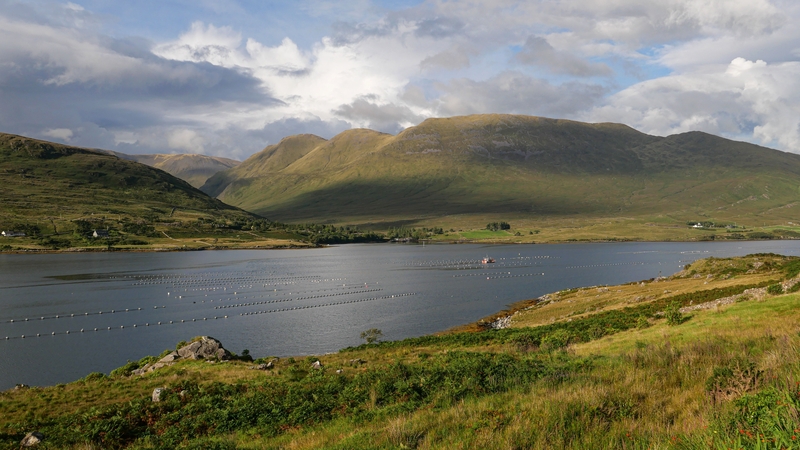
Wild salmon stocks could be threatened following the escape of a large number of farmed salmon from Killary Harbour, Inland Fisheries Ireland has warned.
IFI Head of Research and Development Dr Cathal Gallagher said wild salmon are uniquely tied and adapted to their individual catchments.
Speaking on RTÉ's Morning Ireland, he said: "So a genetic strain of fish that belongs to an individual river .... have been there since the Ice Age, and those fish are adapted to that particular catchment."
Salmon populations are already under pressure, Dr Gallagher said, and the IFI is concerned that escaped fish will interbreed with native stock and the fish will lose the ability to be able to adapt to their environments.
This will put further pressure on the populations, he explained.
We need your consent to load this rte-player contentWe use rte-player to manage extra content that can set cookies on your device and collect data about your activity. Please review their details and accept them to load the content.Manage Preferences
He said the IFI does not know how many fish escaped, but believes it was a large number, and he said it can be difficult to tell the difference between the farmed and wild fish.
Dr Gallagher said farmed fish are probably brighter and do not have fins that are as well developed and that experienced anglers would have an understanding of the difference between the two.
He said that is how the IFI has been getting reports of farmed salmon appearing in other catchments.
Dr Gallagher said efforts are being made to minimise the impact, although he acknowledged that it is difficult to manage the situation once stocks have escaped.
He urged anyone who come across a farmed salmon to capture them and report the fish to a dedicated phone number on 0818 34 74 24
"We do have a 24-hour hotline where people can report and particularly anglers if they come across it, we'd encourage them to take the fish, if it's allowed and to tag it and to report it to us."
