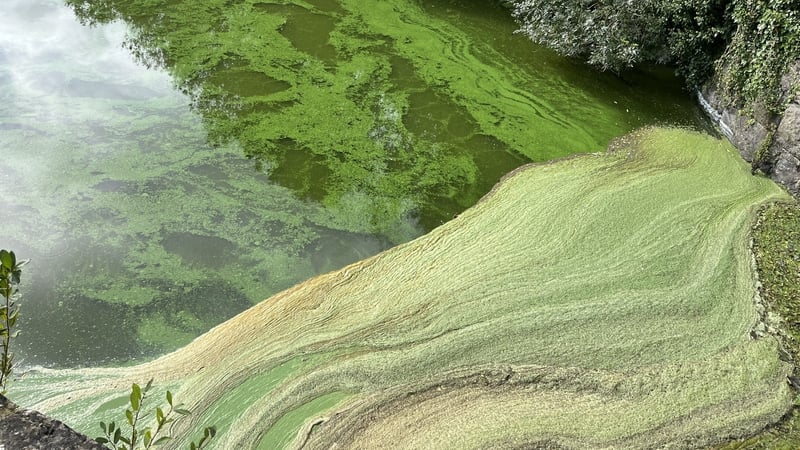
A £450,000 initiative to explore solutions to tackle the blue-green algae crisis at Lough Neagh has been launched.
Environment minister Andrew Muir said he hoped solutions could also be applied in other areas affected by the noxious blooms.
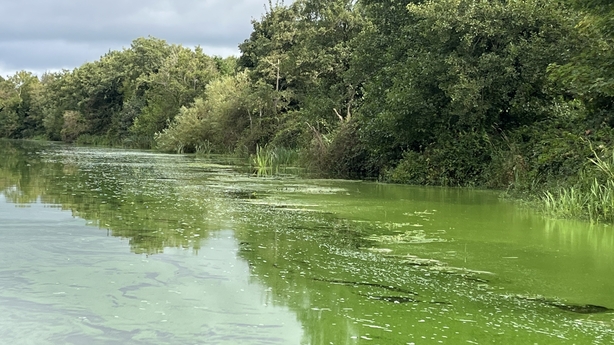
Noxious blooms of blue-green algae covered large parts of the lough last summer and also affected other waterways and beaches in the region.
The algae has returned this year.
Lough Neagh, the biggest freshwater lake by surface area in the British Isles, supplies 40% of Northern Ireland's drinking water and sustains a major eel-fishing industry.
The Stormont Executive approved its Lough Neagh Action Plan last month.
Mr Muir said: "We all have a responsibility to work collectively to deliver sustainable solutions to address the issues facing Lough Neagh and to return it to its rightful state as an ecological jewel at the heart of Northern Ireland.
"I understand that this SBRI initiative will not fully address the blue-green algae problems, however it will contribute, along with the other actions contained in the Lough Neagh report, to help deliver my vision to have a healthy, resilient environment with high water quality status and environment standards thereby contributing to the health and wellbeing of our citizens."
The scheme is being partly funded by Stormont's Department for the Economy.
Northern Ireland's Economy Minister Conor Murphy said: "There is scope for physical, chemical or biological, or a combination of solutions, but whatever solution is developed it must not contribute to further environmental degradation. It must also comply with legislation and environmental designations."
Nitrogen and phosphorus from agricultural fertiliser running off fields is believed to be a major contributory factor in the blue-green algae blooms.
The spread of the invasive zebra mussel species is also understood to have played a role in the blooms, as they have made the water clearer, allowing more sunlight to penetrate, stimulating more algal photosynthesis.
Climate change is another factor cited, with the highest water temperature at Lough Neagh recorded last June.