
Northern Ireland's police ombudsman has identified "multiple failings" in the PSNI handling of an incident in Belfast in which a man who had taken cocaine died after being restrained face down by officers.
Gerard McMahon, 36, died in hospital in September 2016 - 14 hours after being handcuffed and restrained.
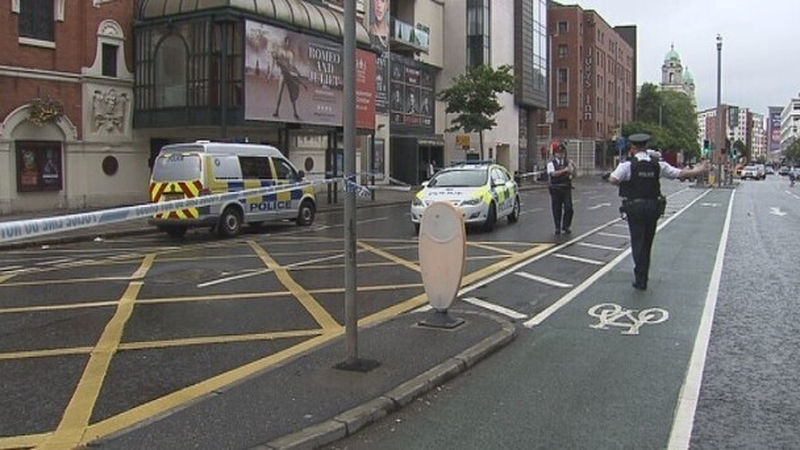
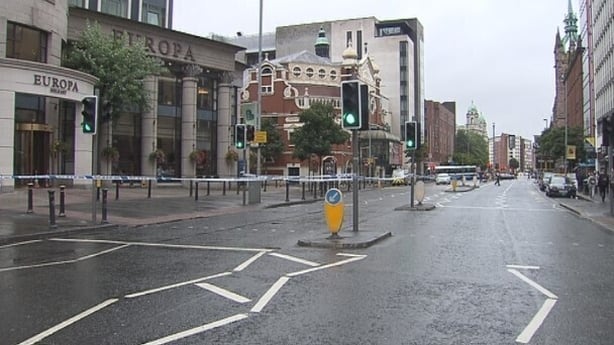
Police arrived following reports of a disturbance between Mr McMahon and taxi drivers near the Grand Opera House on Great Victoria Street in the early hours of the morning.
They found him semi-dressed and disorientated.
Three officers engaged with Mr McMahon who was handcuffed to the front and eventually restrained face down after a struggle, which included the use of CS gas.
He had been held down for about five minutes when police realised he had become unresponsive.
There was a delay in calling an ambulance.
Police Ombudsman Marie Anderson said there had been a lack of planning and communication about how Mr McMahon should be restrained.
"When Mr McMahon first showed signs of resistance, the handcuffs should have been moved from the front of his body to the rear.
"This would have allowed the officers to exercise a greater deal of control and may have avoided the need to restrain him in a face down position."
She had recommended that three officers be disciplined. The police only proceeded against two of them and not in all the areas she had highlighted.
Both were disciplined for a delay in summoning an ambulance. Mr McMahon later suffered a heart attack.
One of the officers was sanctioned for the manner in which CS spray was used during restraint.
'Unjustified and irresponsible'
The ombudsman also identified failings by officers in the call management centre, who failed to request CCTV coverage of Mr McMahon, who had been reported to them as an at risk individual.
She said the use of CS spray in the case had been "unjustified and irresponsible" and had impacted fellow officers as well as Mr McMahon.
Four months after Mr McMahon's death the PSNI implemented changes in police procedures.
These included improved training to help police officers better identify and respond to Acute Behavioural Disorder - a life-threatening condition often associated with drug use, which Mr McMahon had experienced prior to and while being arrested.