


A coroner has suggested that an expert be commissioned to examine how Ireland as a country dealt with the Covid pandemic, in particular in hospital settings.
Patrick O'Connor, coroner for Mayo, made the comments after hearing evidence from 25 witnesses at the inquest of a 17-year-old Leaving student who died from Covid-19.
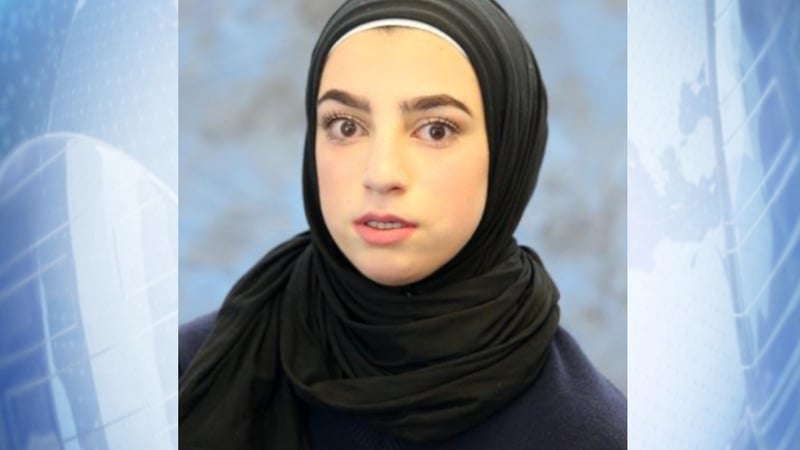
Sally Maaz, of Ballyhaunis in Co Mayo, who had an underlying congenital heart condition, was admitted to a Covid-19 ward 10 days before she died in April 2020.
Her parents are questioning the circumstances around her death.
The inquest into her death held in Swinford Courthouse heard two days of evidence from up to 25 witnesses including Abudul Maaz, father of Sally, and hospital staff from Mayo University Hospital who were involved in her care.
Following the completion of the evidence, Mr O'Connor adjourned the inquest until 11 April to allow legal representatives for both the Maaz family and Mayo University Hospital to make submissions on the appropriate verdict and any recommendations he should make.
Mr O'Connor said that when coming to a verdict he had to be mindful not only of the Maaz family but for the 6,500 people who died from Covid-19 in Ireland during the pandemic. He said that he would like to see how Ireland handled the pandemic explored further.
"At some stage in the future and I am suggesting it would be appropriate, that some expert will be established to look at the whole question of the Covid pandemic as how it arose in Ireland and how it was dealt with in Ireland and the manner in which it was dealt with in hospital settings in particular," he said.
Evidence in the inquest was disrupted for the second consecutive day by members of the public who criticised the handling of the inquest.
Mother and daughter Martina and Jemima Burke and another family member had to be forcibly removed from the courthouse by gardaí after they refused to stop disrupting the proceedings.
They accused Mr O'Connor of running a "sham" inquest by not allowing them to address the inquest, and after a number of repeated requests to remain silent they were removed by a number of gardaí.
Following their removal, Superintendent Joe McKenna apologised to the Maaz family for the disturbance but felt gardaí had little choice but to forcibly remove them. Supt McKenna noted that the Maaz family had no connection whatsoever with the Burkes who he said were "coming from another agenda with no connection with this inquest".
Mr O'Connor described the behaviour of the Burkes as outrageous and regrettable.
The evidence in the second day of the inquest mainly focused on the procedure dealing with Covid-19 in Mayo University Hospital at the time of Ms Maaz's death.
When Ms Maaz was initially admitted on 14 April, she was placed in Ward C, a designated Covid ward for positive patients and those suspected of having Covid. Her first swab for Covid-19 was negative and she was placed in Ward B, a non-Covid ward on 15 April. However, she spent a day in Ward B as her consultant suspected that she had Covid-19 and was moved back to Ward C and she subsequently tested positive for Covid-19 on 19 April.
Evidence was given by Grainne Guiry Lynsky, the Quality Patient Safety Manager in Mayo University Hospital, who explained that in April 2020, the hospital was divided into Covid and non-Covid wards in line with national guidelines at the time.
She said that patients were assessed before they came into the hospital and put on pathways depending if they have or are suspected to have Covid. She said Covid patients were initially placed into single rooms and as the numbers escalate they were placed in four bed bays and then onto designated wards.
Grainne McHale, a member of the infection control team in Mayo University Hospital, admitted that moving patients between Covid and non-Covid wards was not ideal but at the time they lacked beds as the number of Covid patients grew. She said that none of the patients who were close contacts of Ms Maaz tested positive for Covid-19 and she felt that was due to the diligence of staff and the hospital guidelines.
The inquest heard that an outbreak of Covid-19 broke out on Ward B on 13 April and at the time the national guidelines did not recommend the wearing of face masks when dealing with patients in non-Covid wards.
Nurse McHale said the staff in the hospital started to wear face masks after the outbreak on Ward B before the national guidelines were changed.
A report from Paul Oslizlok, consultant paediatric cardiologist at Our Lady's Children's Hospital in Crumlin, stated that he was Ms Maaz's consultant following her birth and performed a number of procedures on her.
He said he was delighted to see her grow into a bright and intelligent young lady but acknowledged that her health was failing for six months prior to her death.
He said that she would have been considered for a heart transplant but given the complexity of her condition, it was very uncertain if she would be considered suitable as a heart transplant recipient.
Mr O'Connor asked for both legal teams to have their submissions completed by 16 March and said if there are no issues arising from the submissions he will give his verdict on 11 April in Swinford Courthouse.
