


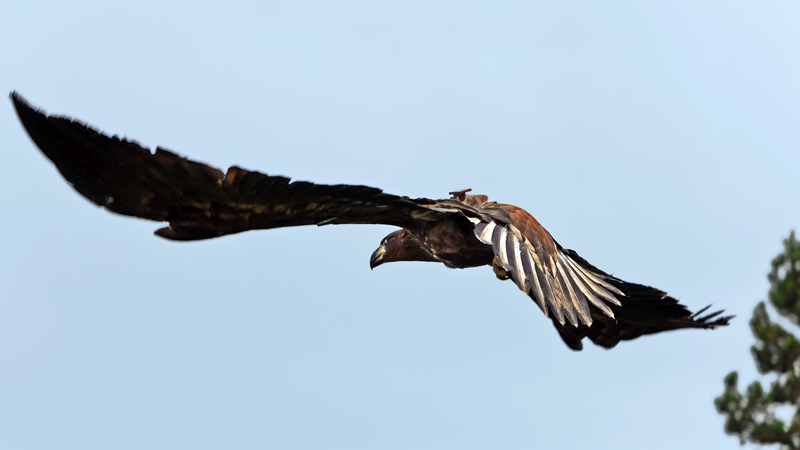
Avian flu has been detected in a rare white tailed sea eagle, the Department of Agriculture has confirmed.
The highly pathogenic avian influenza H5N1 was discovered in the bird near Tarbert, Co Kerry.
The white tailed sea eagle was submitted to the veterinary laboratory in Limerick as part of the Department's wild bird Avian Influenza (AI) surveillance programme.
This is the same highly pathogenic strain already been detected last week in a peregrine falcon in Co Galway.
Wild birds in Donegal and Offaly have also been confirmed positive for H5N1 today, including both mute swans and whooper swans and wild geese.
The Minister for Agriculture, Charlie McConalogue said it was "very unfortunate that this case has been detected in such a rare bird, but I would like to commend the work of my Department’s wild bird AI Surveillance programme.
"It is important that we remain vigilant, and I would also urge that flock owners should also be watchful. We should do everything that we can to ensure that potentially-infected wild birds do not have contact with domestic flocks."
Minister of State for Heritage, Malcolm Noonan said confirmation of avian flue was "very concerning".
The Health Protection Surveillance Centre has confirmed that although the H5N1 subtype can cause serious disease in poultry and other birds, no human infections with this virus have been reported worldwide.
Therefore it considers the risk to humans to be very low. Properly cooked poultry and poultry products, including eggs, are safe to eat.
Flock owners should remain vigilant for any signs of disease in their flocks and report any disease suspicion to their nearest Department Veterinary Office.
