



Residents of one of Dublin's oldest flat complexes fear they are being left in unsafe and deteriorating conditions after long-promised regeneration plans were delayed.
Plans for the Oliver Bonds complex were delayed last week after the Department of Housing said it could not support a Dublin City Council proposal on value-for-money grounds, saying it would reduce the number of homes on the site.
The decision means further delays to regeneration in a complex where residents have for years reported severe damp, mould, and rodent infestations — conditions some say have forced them out of their own bedrooms.
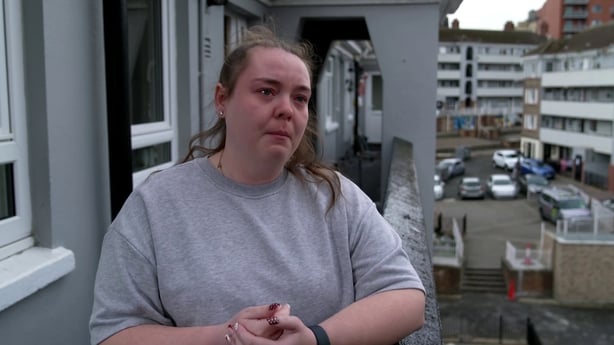
Prime Time visited the complex on Wednesday and Thursday this week. One resident, Chloe Hanlon, told presenter Miriam O’Callaghan how she had been unable to sleep in her own bedroom for three years due to the levels of mould on the ceiling and walls.
"It’s absolutely dire conditions. The mould is growing up the wall. When we notified Dublin City Council three years ago, it was a fraction of what it is now. It keeps growing, growing and growing," Chloe said.
The 27-year-old shares a two-bedroom flat with her parents and brother. They pay Dublin City Council €1,250 a month in rent.
"When I did sleep in the bedroom, I suffered reoccurring tonsilitis. It got to a point where I said, 'I can’t afford to go to the doctor anymore, to pay for a prescription,’ so I resorted to the sofa."
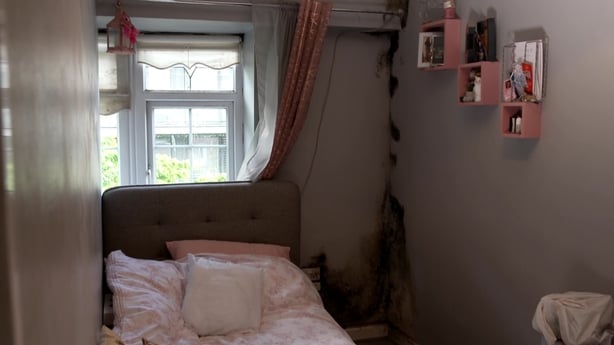
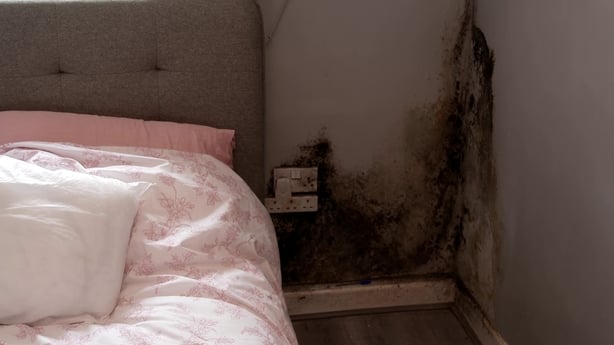
Black mould could be seen covering large sections of the bedroom walls and ceiling, stretching from the skirting boards to the corners of the room and surrounding electrical sockets, close to the bed where Ms Hanlon previously slept. She now sleep on a couch in another room.
In some areas, the mould extended from floor to ceiling, while smaller patches spread along the ceiling above the bed.
Ms Hanlon, who works full time as a civil servant, is the third generation of her family to live in the Oliver Bond flats. She says she still feels a strong connection to the community despite the conditions residents are facing.
"I would love someone from the Dáil, Dublin City Council, I’d love the Minister to come out and see what we’re forced to live in."
She says the living conditions have placed significant strain on family life.
"I get up in the morning, I have a fight with me Ma because I’ve had no sleep, and it’s just reoccurring every single day to the point where I don’t even want to come home to this house."
The 1930s-era complex, which consists of 391 flats across 16 blocks in Dublin’s south inner city, has long been affected by serious social and structural issues.
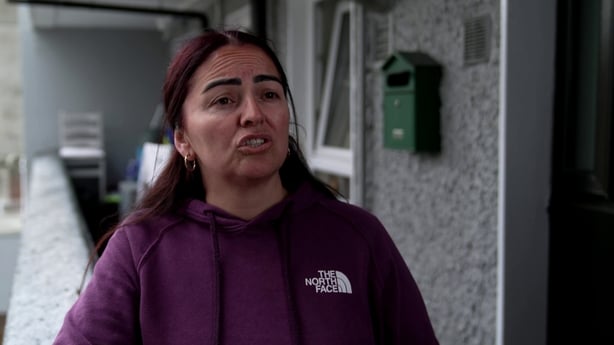
Chairperson of Oliver Bond residents' group, Gayle Cullen Doyle, told Prime Time that five generations of her family have lived in Oliver Bond.
"The place is full of rats," Ms Cullen Doyle said. "One resident bought a brand new car. When they brought it back for a service, the dealer rang to say, ‘We can't touch that car, it's rat infested.’"
An Oireachtas committee heard this week that the proposed regeneration could have cost up to €700,000 per flat under Dublin City Council’s plans.
Speaking on Prime Time having seen the footage from the complex, Minister for Housing James Browne said the Government remained committed to regenerating Oliver Bond and said funding remained available for the project, despite the decision to halt the proposal in its current form.
"The kind of accommodation people are living in there right now is totally unacceptable," Minister Browne said.
"The Regeneration Fund is still there, that money is available. I believe we can get a very quick resolution to this and get shovels in the ground, get that regeneration commencing as quickly as possible," he added.
Minister Browne said the key issue for the Department was that Dublin City Council’s proposal would have resulted in the loss of up to 40% of the existing number of homes within parts of the complex. It proposed expanding the size of units, while reducing the total number.
"What we can do is build additional homes for people as part of the Oliver Bond community so it grows, so there’s more homes available," he said.
He said he believed the dispute with Dublin City Council could be resolved "in a matter of weeks" and that regeneration work could ultimately be delivered faster than originally planned.

But residents told Prime Time that, despite strong community ties and local initiatives around the complex, the deteriorating condition of many homes remained the overriding issue.
Ms Cullen Doyle pointed to community projects taking place around the complex, including local gardening and after-school initiatives.
"We can do all the positive stuff we want," she said, "but it’s the homes that they’re going back to that’s the problem."
