Families, campaigners and clinicians are calling for more public money to be provided to pay for access to drugs which could help people with rare diseases.
Such diseases affect around 300,000 people in Ireland, spanning roughly 6,000 different conditions and a wide range of severity.
Campaigners say decisions on whether public money should be paid to pharmaceutical companies to provide access to drugs – known as reimbursement decisions - can take years, even as progressive and life-limiting conditions continue to worsen in the meantime.
Decisions on reimbursement are made through a complex assessment process examining factors including clinical effectiveness, evidence and cost-effectiveness.
The key body in the process is the National Centre for Pharmacoeconomics (NCPE).
Archie's Story

Archie Ennis was seven years old when his parents noticed he was beginning to struggle walking up the stairs. He was diagnosed two years ago with Duchenne Muscular Dystrophy, which predominantly affects young boys.
There are around 100 cases currently in Ireland.
Archie's mother, Úna Ennis, said they were told at diagnosis that it was a serious muscular wasting disease that had started in his legs but would soon move on to his arms, and eventually his heart and lungs.
She told RTÉ's Prime Time that they heard that he would likely need a wheelchair by the age of 10 and later a machine to help him breathe.
The Ennis family are campaigning for Archie to be given access to Givinostat, which has been approved for use in Europe by the European Medicines Agency, but not approved for reimbursement in Ireland.
"The NCPE recommended that it not be made available, basically because of cost-effectiveness," Úna said.
"It's now at the hands of the HSE and the pharmaceutical company."
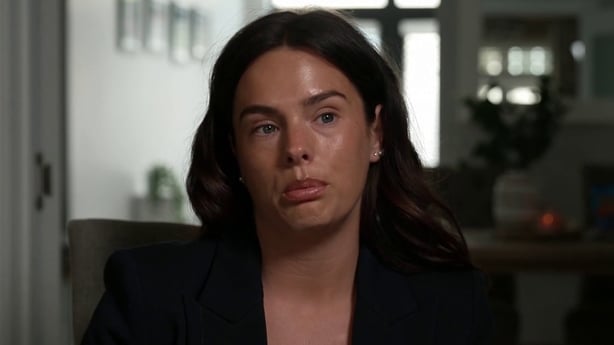
"Every day that our little boys do not have this medication, their muscles are dying. Time is muscle for our little boys, and we need this medication as soon as possible," she added.
"Just give them a chance, you know, give us and our families some hope."
Emily's Story

Emily Felix, from Co Kilkenny, was 12 years old when she was diagnosed Friedreich's Ataxia. She's now 28. Her condition has been steadily worsening for years.
"Friedreich's Ataxia is systemic, so it's not just one part of your body that's affected," Ms Felix said.
"As well as the mobility loss, the speech decline, you also have aggressive scoliosis, you can have severe diabetes, it affects your vision, your hearing," she said.
"My circulation is really bad; I suffer a lot with nerve pain every single night. It affects everything you can think of, and it will keep getting worse. Friedreich's is relentless, and that's the nature of a progressive disease. It's not going to slow down for anyone."
Ms Felix has been using a wheelchair for 10 years and her speech is now deteriorating to the point that she has recorded her voice into an app to ensure she can still communicate if it goes entirely.
"Basic commands like, 'I'm hungry', or 'I'm thirsty'. I really didn't want to do it and I kept putting it off, but I have to be realistic and at the moment I can see the changes in my voice, I can see how hard it is to speak."
A recently developed drug has given some hope to Ms Felix and her family. Skyclarys is the first and only approved treatment for Friedreich’s Ataxia. Clinical trials suggest the drug could significantly slow progression of symptoms.
Last December, the NCPE recommended that Skyclarys not be reimbursed, a decision that Ms Felix describes as a "slap in the face."
"It was like being told your future is not worth investing in and that my life is not a life worth saving," Ms Felix said of the decision not to reimburse.
Currently working full-time and studying, she says she will lose more of her independence as time passes, requiring more and more help.
She lists Germany, France, Spain, Italy, Czech Republic, Cyprus as countries that have fully or partially reimbursed Skyclarys.
"I always believed that Ireland was a compassionate place to live, that we did things first in Europe, we made the changes necessary to make this an inclusive, compassionate country.
"But we're just a forgotten minority left in the shadows basically until we die."
The Martin Family
For some patients, accessing the right treatment at the right time is often a matter of life and death.
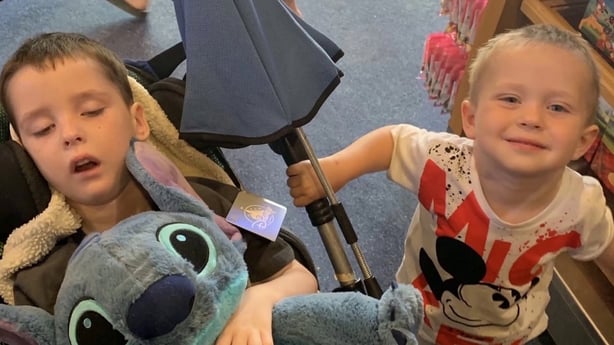
Les Martin is the father of two boys, Cathal and Ciarán, who were both diagnosed with Metachromatic Leukodystrophy, or MLD, at the same time several years ago.
Cathal had been showing symptoms of the condition and doctors recommended that both boys be tested.
Ciarán was just ten months old at the time and Les and his wife Linda were able to get him onto a trial of a new treatment in Italy, before it was approved for use let alone reimbursement. It was a huge success.
Cathal's symptoms had already progressed to the point where he was not eligible for this type of treatment. He died in 2020, aged six. "His illness was really, really cruel", Les told Prime Time.
"MLD is a really horrible disease for a kid. He lost all of his abilities one by one and was fully paralysed and PEG-fed and in constant pain until he died."
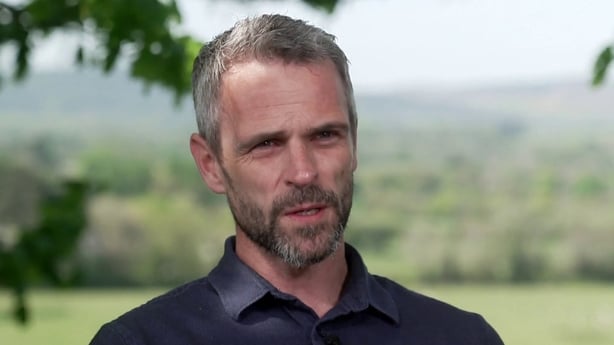
The treatment that is credited with saving Ciarán's life was later approved for reimbursement in Ireland, three years after it was approved for use in Europe by the European Medicines Agency.
The Martins advocated for other MLD patients in Ireland but were frustrated by what they felt was a slow and complex system.
"Every step of the way, there seemed to be obstacles to overcome. There seemed to be closed doors when it came to patient advocates putting forward our knowledge and experience of the disease, which is very frustrating.
"We continue to battle and continue to try and play our part as a family who are an example of night and day, life and death, in terms of treatment and not treatment."
The Martins continue to advocate, arguing that the disease needs to be added for heel prick screening for newborns in Ireland, so that it can be caught and treated early.
NCPE response
Professor Michael Barry, Director of the National Centre for Pharmacoeconomics (NCPE), said reimbursement recommendations are based not just on cost but on the relationship between the clinical benefit of a drug and the price being sought.
"What you're trying to do is ask 'what is the relationship between the clinical impact of a therapy in relation to the price being asked for it?’" Prof Barry said.
He said some rare disease drugs can cost hundreds of thousands of euro per patient each year, creating difficult questions around sustainability for the wider health service.
"We don't approve reimbursement, we recommend, we make recommendations around the value," Prof Barry said.

Asked "would you recommend more if there was more money?" Professor Barry said "not necessarily."
He pointed the finger at pharmaceutical companies for demanding too much money for their products.
"It's the value for money. It's the value," he said. "We're saying that these two drugs are not offering value for money. If you reduce the price, then yes, you improve the value for money."
Professor Barry also said delays in approving treatments for reimbursement were driven largely by pharmaceutical companies.
He used an example of Skyclarys, which is used to treat Friedreich's Ataxia.
"It is 27 months since that drug was approved by the European Medicines Agency. We took five months to assess it. I wish we'd done it faster, but we took five months. The question then is, where are the other 22 months? Again, the company delays. That's the reality."
In an exchange with presenter Fran McNulty, Professor Barry clarified his position, underlining his viewpoint that the issue is pharmaceutical companies delaying and seeking too high a price for treatments.
FM: "Do you think if you paid the company what they wanted, you might get that done a little quicker and ease the pain and suffering of people?"
MB: "Yes, if - great question - if you paid the asking price, you would get what you want."
FM: "Right, so you could eliminate the pain, suffering, and angst that these families have by paying what is wanted?"
MB: "If you did that for all the rare disease drugs that we looked at last year, there were 43 drugs, 48 indications that we looked at last year. 17 of those, or 35%, were drugs for rare disease."
"The five-year budget impact for those 17 drugs was a staggering €350 million," Professor Barry said. "So, you can do that, but you also increase the size of the drug budget, and within years you would increase it by half a billion. So are you, you're talking about sustainability.
"There's a sustainability issue here. If you pay - for example, all the drugs that were looked for last year, the five-year budget impact for all 48 drugs was, was a billion."
The State is projected to spend around €4 billion in 2026 on pharmaceutical drugs and treatments.
Many new medicines for conditions or diseases which are not considered rare can cost over €100,000 per patient, per treatment.
Biogen statement
Separately, Biogen, the company which makes Skyclarys for the treatment of Friedreich's Ataxia told Prime Time it is submitting a revised proposal to the HSE in relation to providing the drug in Ireland.
"In Ireland, Biogen is actively engaged with the Health Service Executive to help make this medicine available to people living with Friedreich’s Ataxia," it said.
"While we cannot comment on confidential negotiations, we can confirm that Biogen will submit a proposal by the end of May and has requested a meeting with the Health Service Executive to discuss this in further detail."
The comments were welcomed by Fianna Fáil TD, Paudie O’Sullivan, who has campaigned extensively on the issue of access to drugs for people with rare diseases.
"This is another step in the process, but families still need to see real movement towards reimbursement and access," Deputy O’Sullivan said.
"I will continue working with families and continuing to press this issue until a final decision is made. Patients and their families have fought too hard and waited too long for this process to lose momentum now," he said.
"They deserve clarity and they deserve access to treatment."