

Aer Lingus and Ryanair have both confirmed cuts to their summer schedules, prompting fresh questions about whether jet fuel prices and global supply disruption could affect holiday travel.
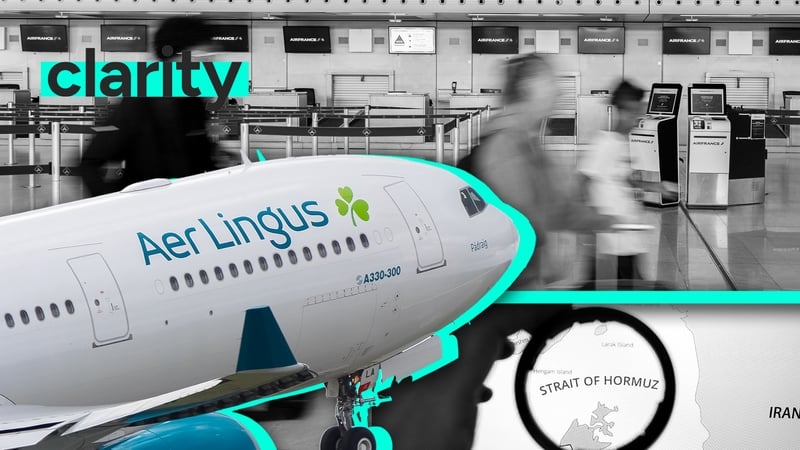
Aer Lingus has said it will cancel or reschedule around 2% of its flights this summer, impacting more than 500 services. It cited "mandatory maintenance on aircraft."
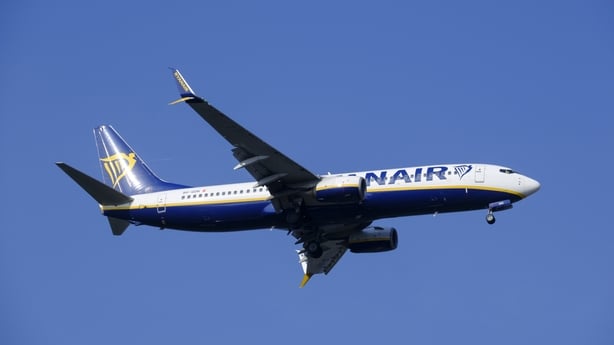
Ryanair, meanwhile, has said it has cut 10% of its planned flights from Dublin Airport over its 2026 summer schedule.
Yet, they are not the only airlines cutting schedules and reducing flights, in a period when major questions are being asked about looming shortages of aviation fuel.
Earlier this week, Lufthansa said it is removing a total of 20,000 short-haul flights from its schedule until October in an effort to offset the higher cost of jet fuel.
So, should you have concern about your future travel plans?
What's behind the Aer Lingus and Ryanair schedule changes?
Aer Lingus has said its schedule changes are related to mandatory aircraft maintenance, not fuel availability.
The Irish Airline Pilots’ Association (IALPA) has also pointed to pilot shortages, saying leave requests "could not be fully accommodated this year".
IALPA president Mark Tighe said the airline is not facing a "fuel cost problem", noting that Aer Lingus hedges its aviation fuel as part of the International Airlines Group.
Fuel hedging allows airlines to lock in prices in advance and protect themselves against sudden volatility in global markets.
Ryanair, which has also reduced planned capacity at Dublin Airport this summer, has said its decision is not linked to jet fuel prices or the conflict in the Middle East.
It blamed the "continuing failure of government to scrap the Dublin passenger cap," a topic the airlines’ leadership has been highlighting for years.
The low‑cost carrier that it continues to monitor the situation in the Middle East, and hopes the Strait of Hormuz "will reopen soon".
For his part, the Minister for Transport Darragh O’Brien has said Ireland’s aviation fuel supplies are "robust", adding that the State has a 70‑day reserve and that Ireland sources its jet fuel primarily from the United States.
Marina Efthymiou, Professor of Aviation Management at DCU Business School, told RTÉ that it is also her assessment that airlines such as Aer Lingus and Ryanair are "not as exposed" as some other carriers to fuel supply issues because of fuel hedging.
"If we’re talking about later in the year, maybe the last quarter of 2026, when the hedging periods start to fall away, then there may be a different story," she said.

Why jet fuel prices have surged
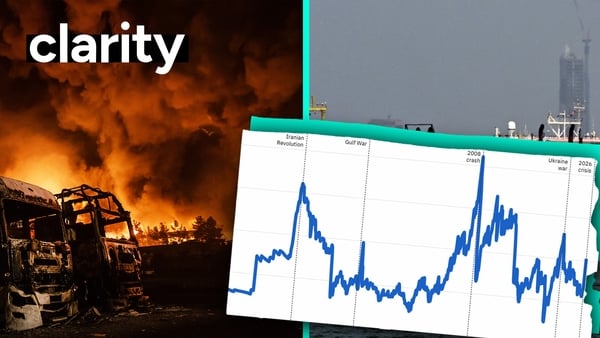
Jet fuel prices are extremely high right now at a record-breaking price of $195 per barrel due to a "perfect storm" driven by the US-Iran war which has led to the blockage of the Strait of Hormuz.
The Strait is a key shipping route for significant share of jet fuel coming into Ireland which is used by airlines throughout the country.
Prof Efthymiou said the price increase has been sharp and historically significant.
"Fuel is around 25 to 30 percent of the total operating expenses of an airline," she said. However, she said price pressure does not automatically translate into cancelled flights — particularly for carriers that have protected themselves through hedging.
While the head of the International Energy Agency (IEA) has warned that parts of Europe have "maybe six weeks of jet fuel left" the situation is more complex according to Prof Efthymiou.
"Europe has strategic reserves," she said.
"There are some issues with supply of fuel, but then I think it depends a little bit on where you are flying." She also said cancellations linked to fuel availability would not affect all routes equally.
"They cancel only flights that have low load factors —meaning mostly empty planes," she said. "Instead of having five flights per day to specific destinations, now they will have fewer flights."
Prof Efthymiou said airlines are far more likely to reduce frequency or cut weaker routes than cancel core services altogether.
"If somebody is flying from Dublin to core cities like Paris or Barcelona, high load‑factor, profitable routes, those are not going to be cancelled," she said.
What if my flight is cancelled?
If an airline cancels a flight, passenger entitlements in Ireland and across the EU are governed by EU Regulation 261/2004, commonly known as EU261
Under EU261, if a flight is cancelled, passengers are generally entitled to either a full refund or rerouting to their final destination at the earliest opportunity.
However, the timing of a cancellation matters.
If an airline cancels a flight 14 days or more before departure, passengers are entitled to a refund or rerouting — but not financial compensation.
While that satisfies the legal requirement, Prof Efthymiou said a two‑week cancellation window can still cause significant disruption, particularly during peak holiday periods.
"Two weeks’ notice for summer holidays is a big disruption," she said.
"So somebody has every right to freak out if the alternative rerouting is not convenient for them."
If a cancellation happens less than 14 days before departure, additional compensation may be owed under EU261 — unless the airline can demonstrate the cancellation was caused by extraordinary circumstances outside its control.
In all cases, airlines must clearly inform passengers of their options, and travellers do not have to accept vouchers instead of a cash refund unless they choose to.
So, should people be worried?
Despite the uncertainty, Prof Efthymiou said she has not changed her own summer travel plans.
"For this summer, yes, I have booked my flights," she said. "I’m recommending to friends and family to book their flights for summer now if they haven’t already."
However, her advice changes in relation to plans for later in the year.
"For September and October, I’m telling them to wait," she said.
She described booking flights for later in the year as "a gamble", depending on how global fuel markets evolve.
She said airlines are currently pricing tickets on the assumption that fuel prices remain elevated, meaning passengers who book far in advance risk paying more than they would if prices ease later in the year — while those who delay booking could face higher fares if costs rise further.
"The aviation industry is very vulnerable to external shocks," Prof Efthymiou said, "but it’s also very resilient."
For now, travellers are more likely to see higher prices and fewer scheduling options than cancelled holidays — particularly on popular routes — with greater uncertainty later in the year if fuel markets remain unstable.