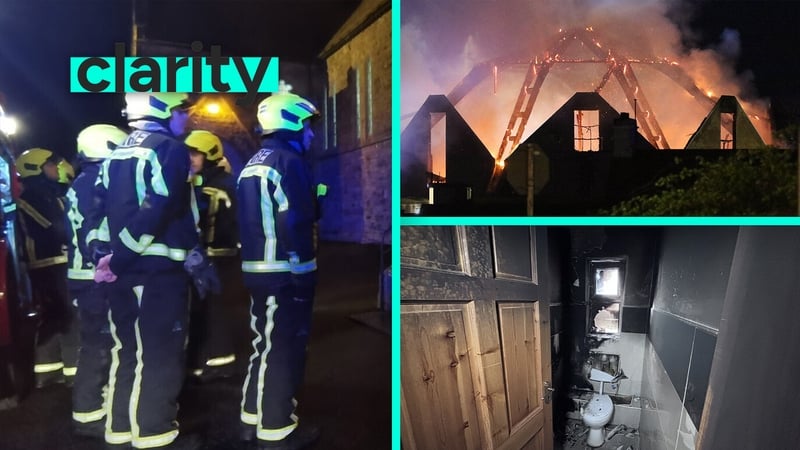


Last Easter, there was a fire at a church in Donegal.
Before the cause had been established, claims began circulating online that it was part of a wider attack on Christianity, amplified by a since-deleted anti-immigration account on X, Radio Europe.
"On Easter Monday, a group of Afghans set fire to a historic church in Ireland. Christianity is under attack in Europe," the post from Radio Europe read.
Gardaí investigating the incident found no foul play was suspected, but the narrative about the incident continued to circulate online.
The cycle - an incident followed by online amplification, falsely linking it to wider narratives about migration - has been repeated regularly, in Ireland and internationally.
And yet across Europe, EU-funded initiatives such as PARTES have also highlighted concerns about threats of vandalism, arson and planned attacks to places of worship, including mosques and synagogues and churches.
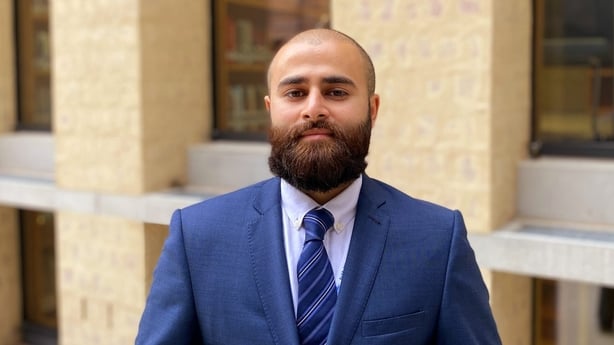
Kaashif Awan, Co-Director of Enhancing Faith Institutions, said such spaces are increasingly seen as vulnerable targets, not only physically, but also in how incidents involving them are interpreted online.
"Places of worship face a mix of risks. These incidents often target communities at moments of heightened tension and can have a deep emotional impact because they strike at the heart of people's identity and belonging," Mr Awan said.
RTÉ's Clarity examined incidents and reports in Ireland related to places of worship in recent years, to try to understand what is known about them, and whether online reaction reflected known facts.
In several cases, the incidents appear to have used to push agendas online, despite there being no known facts to support the claims made.
What we found
The incidents included a fire at a church in Dublin, suspected arson attacks at two churches in Westmeath, and at a mosque in Limerick. Clarity also examined an alleged planned attack on another mosque in Galway.
In some cases, gardaí concluded no foul play was involved. In others, investigations are ongoing. Taken together, the incidents point to a series of unrelated events rather than any single, clear pattern.
We need your consent to load this flourish contentWe use flourish to manage extra content that can set cookies on your device and collect data about your activity. Please review their details and accept them to load the content.Manage Preferences
Teach Pobail Mhuire, Doirí Beaga, Co Donegal - April 2025
At around 4am on Easter Monday 2025, a fire broke out at Teach Pobail Mhuire in Doirí Beaga, Co Donegal.
Within hours, and without any evidence, claims began circulating online that the church had been deliberately set alight by migrants.
The posts were widely shared, framing the incident as part of a broader attack on Christianity in Europe.
Comments under Radio Europe's original post about the fire included "Radical Afghans set fire to a historic church in Ireland deliberately - these are reasons why Islamic people and Christians cannot live together in society."
Less than a week later, gardaí confirmed that no foul play was suspected, a position they say has not changed since.
READ: Fanning flames: How a Donegal fire was used to stoke hate online
Church of the Sacred Heart, Arbour Hill, Co Dublin - April 2025
On Good Friday 2025, Dublin Fire Brigade attended the scene of a fire at the Church of the Sacred Heart in Arbour Hill, Co Dublin. Firefighters extinguished the blaze and prevented it from spreading further.
Phibsborough firefighters were called to a fire in a church this #BankHolidayWeekend.
— Dublin Fire Brigade (@DubFireBrigade) April 21, 2025
Breathing apparatus teams located and extinguished the fire and prevented any further spread.
A positive pressure ventilation fan was used to ventilate the building. pic.twitter.com/lVZvC8Yn9O
While the incident attracted less attention than the fire in Donegal, the fact that both occurred over the same Easter weekend prompted commentary online - with posts claiming the events were part of a wider pattern, despite no known connection between them.
One post on X from the wife of a leader of a far right Irish registered political party claimed that "Our beautiful white Christian country is under attack," and that the fire was "a deliberate act of terrorism."
RTÉ's Clarity understands that the Arbour Hill incident was later linked to an electrical fault in the building’s sound system.
St James's Church, Kilbeggan and St Michael’s Church, Castletown Geoghegan - Co Westmeath, March 2026
While foul play was ruled out in the Donegal and Dublin church fires, gardaí are investigating two suspected arson attacks on churches in Co Westmeath, which took place within hours of each other on 6 March, underlining the varied nature of the incidents.
The first fire was reported at St James's Church in Kilbeggan in the early hours of the morning, with a second incident occurring a short time later at St Michael’s Church in Castletown Geoghegan, around 10km away.
Parish Priest Fr Barry Condron said materials were placed at the entrances and set alight. Gardaí have said both incidents remain under active investigation.
READ: Investigation into fires at two Westmeath churches continues
The similarity of the incidents also prompted discussion online, including commentary from accounts that framed the incidents as part of a wider European issue.
English Defence League founder Tommy Robinson, who has previously posted inflammatory claims related to events in Ireland, was among those who posted about the fires.
"Two churches 'caught fire’ in Ireland simultaneously. Can you see what's happening yet?" he wrote on X.
There is no known evidence linking the two, or linking them to any wider campaign.
Maryan Mosque, Monivea Road, Co Galway - November 2025
Elsewhere, gardaí have also dealt with incidents involving mosques, including an alleged planned attack in Galway.
Four men who were arrested in early November 2025 appeared before Portlaoise District Court in recent days, charged in connection with an alleged plot to attack the Maryam Mosque on Monivea Road in Galway city.
READ: Four men appear in court over plot to attack Galway mosque
The court heard that the men were accused of attempting to engage in terrorist activity, including a plan to set fire to the mosque.
Bail applications for three of the accused were refused while a fourth did not apply for bail.
The case remains before the courts.
Islamic Cultural Centre, Dooradoyle, Co Limerick - February 2026
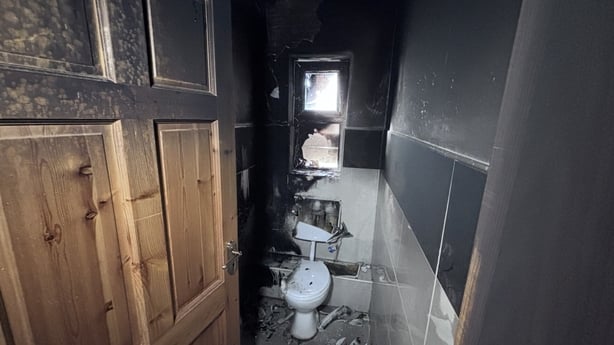
In an unrelated incident several months later, emergency services attended the scene of a fire at the Islamic Cultural Centre in Dooradoyle, Co Limerick in the early hours of 12 February. Three units of Limerick Fire Service brought the blaze under control.
Gardaí said they received a report of criminal damage by fire at the premises and investigations are ongoing.
It is understood that a man approached the building and threw an incendiary device through a window. A member of the community raised the alarm, and no injuries were reported.
The incident also prompted reaction online, including some posts appearing to welcome the attack.
"Muslim mosque in Limerick set on fire. That great news," wrote one X user.
Others questioned whether the incident actually happened, despite confirmation of an ongoing Garda investigation.
There is no evidence to suggest that the incidents involving the mosques in Galway and Limerick are linked to each other or to any other cases examined by RTÉ.
A familiar dynamic
In many of the incidents examined by RTÉ's Clarity, explanations for what had happened began circulating online before any official cause had been established.
However, interpreting such incidents as part of a broader pattern is not always supported by the evidence.
Dr Gladys Ganiel, Professor in the Sociology of Religion at Queen’s University Belfast, said the incidents at churches in Ireland "have been localised."
She added that it would be a mistake to "rush to the conclusion" that they are "straightforwardly anti-Catholic or anti-religious," noting that in some cases, including the fires in Westmeath, there is no clear consensus on motive.

But even where incidents do not form a clear pattern, they can still take on a wider meaning online.
Professor Linda Woodhead, a leading researcher on religious and cultural change at King’s College London, says events linked to identity, community and belief can - rightly - often become seen as part of something larger.
"People view them [religious buildings] as community assets. An attack on the church is at some level, understood as an attack on a community of people," Prof Woodhead said.

She said that can also influence how such incidents are interpreted, even when no foul play is later suspected.
"People can submerge their personal grievances into a wider cause. They might feel very angry or victimised. They can say, ‘well, this is part of a wider pattern in which our community is being suppressed by another group.’"
Prof Woodhead added that, in some contexts, religious identity can be used as a more socially acceptable way of expressing exclusion or hostility towards certain groups.
"Racism can hide under religion, because it does give you this clear focus that you can attack, whether it's holy book or it's wearing a veil or it's a church or mosque," Prof Woodhead added.
That dynamic, she says, helps explain why incidents involving places of worship can take on a meaning that goes beyond the facts of what happened.
While the incidents examined in Ireland are unrelated, Kaashif Awan says that whether incidents are intentional or accidental, online responses to them "tend to reflect wider social pressures, online hostility, and the spread of extremist narratives that dehumanise faith communities."