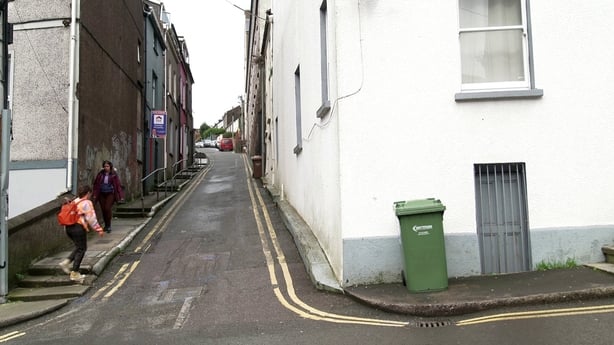
On a steep residential hill in Cork's north inner city, some locals have a phrase for what keeps happening: "this is where trucks go to die".
Despite warning signs and years of complaints from residents and councillors, Heavy Goods Vehicles (HGVs) continue to be funnelled down Richmond Hill, only to become stuck at the bottom.
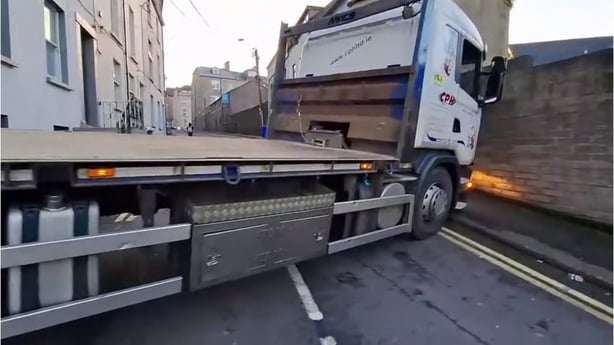
In December 2025, a low-loader truck travelling down the hill was unable to make the turn at the end of the street, becoming stuck at the bottom and causing disruption during the morning rush hour.
It was the latest in a series of similar incidents, which residents and councillors have blamed on drivers following directions from navigation apps such as Google Maps or Apple Maps.
In recent months, residents began writing to Google, asking the company to introduce a feature that would alert HGV drivers that the route is unsuitable for large vehicles.
This intervention followed motions from councillors, calls for new signage, and appeals to drivers to ignore what their phones tell them, but all failed to improve the situation.
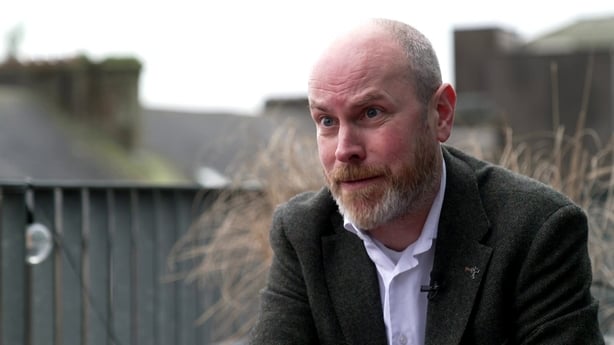
Green Party councillor and software engineer Oliver Moran, who is originally from the area, has been raising the issue for years.
He recalls incidents going back at least 15 years but says the problem has worsened significantly in the past 18 months.
"We are the roads authority for the city. But now there's a new layer on top - technology companies that are out of reach, telling people, 'I know the way you want to go, come with me'," Cllr Moran said.
He said the difficulty lies in trying to influence companies operating far beyond the reach of local government.
"You're dealing with companies that are in a different jurisdiction whose business isn't dealing with you. Just trying to get them to engage is a losing battle," he added.
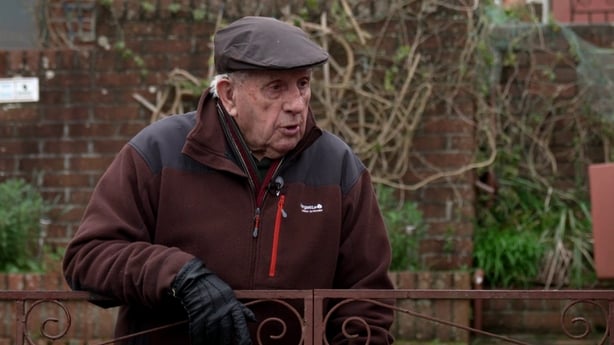
The incidents have become so frequent that Joseph Fahy and his son Gerard, who live on the hill, now rush outside when they see a HGV approaching the top, to try to warn drivers to turn back before they get stuck at the bottom.
"We've had more trucks stuck here in the last couple of years," Joseph said. "Some of them had to be dismantled to get them out."
"The railing at the bottom of the hill is broken, even the limestone curves have been scraped by parts of the trucks. It’s gone beyond a joke, the sat nav is pointing them that way."
Elected representatives say they are increasingly frustrated with being unable to do a key part of their job, and that tech companies ignore their efforts to improve a basic function in the city.
A response from Cork City Council to a motion brought by Labour Party councillor John Daniel Maher about the issue in January highlights the limits of what local authorities can do.
Cllr Maher's motion asked that the council "contact Google Maps and ask them to change route advice for bigger vehicles and provide signage on Richmond Hill advising that roads are not suitable for certain vehicles".
In response, council officials said Google and Apple Maps make clear their navigation apps do not offer HGV-specific routing and are therefore unsuitable for large vehicles.
The officials added that without national legislation requiring HGV drivers to use certified navigation systems like TomTom or Garmin - or compelling mainstream apps to introduce approved HGV modes - local authorities have limited options to prevent unsuitable routing through residential streets.
Navigation apps have transformed how people move through towns and cities, helping drivers and pedestrians find their way in unfamiliar surroundings.
They've also helped businesses sustain and grow, directing customers to shops, restaurants and services that might otherwise remain unseen.
More generally, digital platforms have also expanded access to information, reshaping how people engage in everyday civic and economic life.
But the exchange between council officials and Cllr Maher reflects a broader tension between local democratic responsibility and the global platforms that shape how people move through shared spaces across Ireland and Europe.
While local authorities are expected to manage traffic and other public infrastructure, the digital systems that increasingly direct how those spaces are used sit largely outside their control.
In Cork city, the result is lorries wedged into streets never designed to carry them. In the Conamara Gaeltacht, the problem looks very different - but feels familiar.
Housing markets reshaped
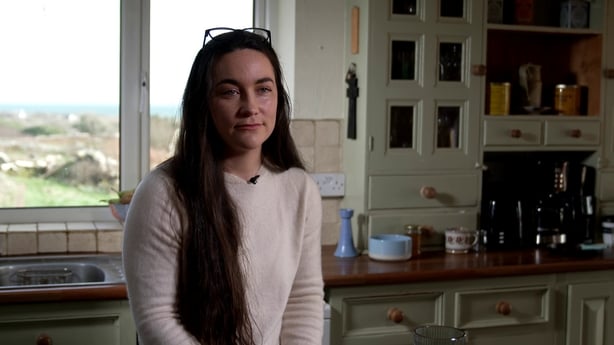
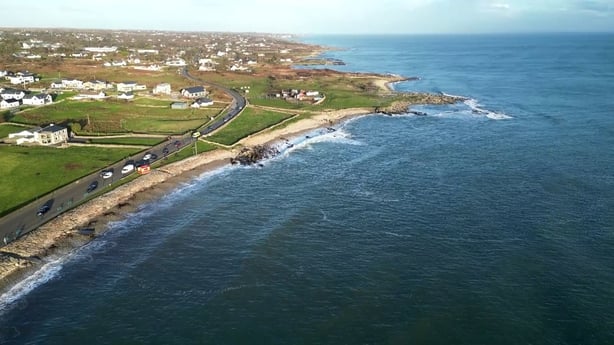
Residents of Gaeltacht areas, including Adhna Ní Bhraonáin, say it has become increasingly difficult to find anywhere to live as locals are being priced out of a housing market shaped in part by short-term holiday lets listed on global platforms such as Airbnb or Expedia.
Ms Ní Bhraonáin returned home to Indreabhán, Co Galway in 2022 after several years living in Australia and New Zealand.
"When I came home, I was absolutely shocked at how unwelcome I felt in my own country," Ms Ní Bhraonáin said.
With no space for her at her parents' house, she said she ended up staying in her father's van parked outside the family home while she looked for somewhere to live.
"There was nowhere to rent in Conamara. And Galway City, forget about it. So, I didn't have a choice. I was honestly heartbroken."
She says one of her frustrations is the way in which houses being sold in Gaeltacht areas are marketed, and how it is being reshaped by companies with no involvement or connection to the area.
"I was looking at property to buy, and I felt sick looking at the website because it was saying, 'A perfect ideal holiday home nestled in the peaceful Gaeltacht.' Marketed as this lovely romantic idea you could rent out as short term lets.
"We're getting completely priced out of the market. The bids are going up to €500,000 or more on small houses that local people can't keep up with if you're working here."
Data compiled by the non-profit Inside Airbnb, and provided to RTÉ by Conradh na Gaeilge, shows that the number of entire homes listed in Gaeltacht Language Planning Areas (GLPAs) increased by 88% between 2019 and 2025 - rising from just over 1,043 listings to 1,962 - compared to a 47.9% rise nationally over the same period.
The data also suggests that short-term letting in Gaeltacht areas is not confined to individual homeowners renting spare rooms. The ten largest hosts account for more than 270 entire-home listings between them - almost 14% of the total.
The largest is Sykes Holiday Cottages, a British holiday letting company, which lists 53 properties in Gaeltacht areas.
The growth has occurred during a period in which successive governments introduced new rules on short-term letting and promised tighter registration and enforcement systems.
However, recently Government plans to require planning permission for short-term lets in towns with populations above 10,000 were revised upwards to 20,000. As a result, no towns within GLPAs will be subject to the new requirements.
In some GLPAs - including Cois Fharraige, covering Ms Ní Bhraonáin’s home village Indreabhán and An Spidéal - entire-home Airbnb listings more than doubled between 2019 and 2025, rising from 50 to 103, and now outnumber long-term rentals.
While she accepts the importance short-term lets have for the tourism industry in Conamara and other Gaeltacht areas, Ms Ní Bhraonáin worries about the long-term impact the housing situation has for the future of the language and culture.
"Tourism is massive in Ireland, and it does bring a lot of money into the country. We have nothing against tourism, but there needs to be some regulation to balance it out because it's gone way too far the other way now," she said.
"The Government needs to take action to protect the language. If the Gaeltacht isn't alive and thriving, the language is dead. I want to settle here and have children and raise them. But I can't, I'm still living with my parents."
Political scrutiny
As far back as 2018, Oireachtas committees were examining the impact of short-term letting platforms on the housing market, due to concerns properties which would be rented long term were not being advertised for such use.
Airbnb maintained that only a limited number of listings would otherwise have entered the long-term rental sector.
When new controls were proposed in 2022, correspondence later released under Freedom of Information showed the company expressing "serious concern" about the lack of consultation and urging Government to prioritise a national registration system instead.
It highlights the competing priorities policymakers must consider when attempting to regulate global platforms operating across borders.
Independent analysis has added further nuance. A report by the Economic and Social Research Institute (ESRI), published last year, found that while short-term letting may have detrimental effects in localised areas, it does not appear to be the primary driver of the overall decline in rental availability nationally.
The debate highlights the complexity of regulating global digital platforms at a national level.
That tension is not confined to Ireland. Across Europe, elected authorities attempting to regulate short-term letting have found themselves in legal and political conflict with large platform operators.
In Barcelona, the city council has moved to phase out tourist apartment rentals by 2028, however that decision is now facing a legal complaint from the association representing Airbnb and Expedia, which argues the proposal is unjustified and breaches EU law.
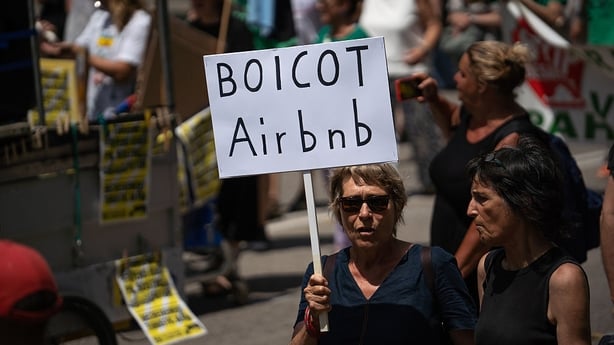
Similar legal and regulatory disputes between local councils and large technology companies have unfolded in cities including Berlin and Amsterdam, where local restrictions on short-term letting have prompted challenges from platform operators and industry groups.
Elected policymakers say they are left feeling powerless in the face of lobbying, legal challenge and industry might, and as a result they fear confidence in local democracy is decaying.
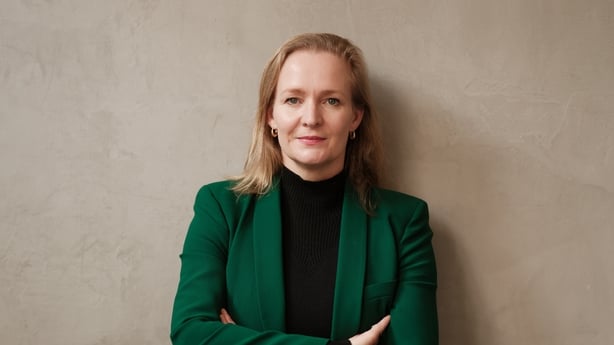
Marietje Schaake, a former Dutch MEP argues that tensions like these are becoming more common as democratic institutions struggle to adapt to the influence of large technology platforms.
"We increasingly see that decisions made at the other end of the world have deep impact in local communities," she said.
"Companies that are putting an innovation onto the market often make the first move because it changes the reality."
To put that another way, she says platforms introduce systems that reshape behaviour, leaving governments to respond after the fact - a shift she says that has created an imbalance of power.
Ms Schaake refers to what has happened as 'The Tech Coup'.
'New sovereigns'
"These companies have become the new sovereigns. The collective power that they have often exceeds that of nations. Look at the market cap, the value of the big tech companies exceeds the gross national product of Ireland. And that money can buy lobbying influence.
"The ultimate goals of companies and democratic governments are different, and we should recognise that. The primary responsibility of democratic governments is to make sure that the public interest is protected and that people's needs, public spaces are functioning the way they should."
Ms Schaake believes Europe's struggles with technology platforms are partly the result of earlier optimism about the digital economy.
"Twenty years ago these companies were much smaller than they are today," she said. "Especially in a time after the crisis, which was difficult for everyone, it's normal to look at opportunities."
She argues governments and societies focused too heavily on the benefits of technology while overlooking potential risks.
"Silicon Valley companies, democratic governments in Europe, and citizens tended to look at the opportunities of tech much more than the threats and the potential risks," she said.
"And that has been naïve."
For local representatives like Cllr Moran, that earlier naivety now raises a more fundamental question.
"I think it is a question of who is in control," he said. "Is it a road authority like Cork City Council, or is it another type of authority autonomous to everybody else?"
But he says the reality on the ground is often much simpler.
"We all want to take shortcuts in life. If your phone is offering you that opportunity, then you're probably going to take that over the sign that's telling you not to do it."
A report on this subject from Jack McCarron and producer/director Aaron Heffernan is broadcast on the 10 March edition of Prime Time at 9.35pm on RTÉ One and the RTÉ Player.