

A strike on a girls' school in the southern Iranian city of Minab has become one of the most disputed episodes of the war in the Middle East, with some online blaming the Iranian regime and other reporting directing the spotlight at the US and Israel.
Here are the currently known facts.
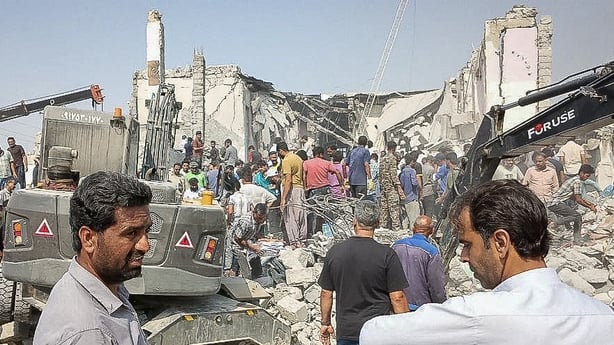
More than 160 people, many believed to be children, were killed when the Shajareh Tayyebeh school in the southern Hormozgan province was hit during the opening phase of US and Israeli attacks on the country on Saturday.
Rescue workers were seen digging through the rubble of collapsed classrooms as parents gathered outside searching for their missing children.
Videos circulating online showed desks and textbooks scattered among the debris. Graphic images and video of the aftermath was also available online.
Iranian officials described the attack as a war crime and called for action by the United Nations (UN).
California Governor Gavin Newsom also said the US needed to "reconcile why our bombs were used, or Israeli bombs were used, to kill children - young girls - at a school".

Yet almost immediately after the attack, alternative explanations for the incident began circulating online which tried to place the blame elsewhere.
Some social media users who regularly post content critical of the Iranian government claimed the Islamic Revolutionary Guard Corps (IRGC) had taken responsibility for the attack.
One widely shared post on X, from an account that says it supports the restoration of the Iranian monarchy, falsely claimed that "the regime in Iran has now confessed that the IRGC mistakenly bombed an Iranian school yesterday".
That post was viewed more than 6 million times.
Another post on X, which had been viewed 2.5 million times as of 2 March, claimed that "Iran admits it was an IRGC missile that killed 148 schoolgirls", adding that the Iranian government had "officially confirmed" the strike was a mistake.
No Iranian statement admitting responsibility for the strike has been identified and numerous fact-checking agencies have since debunked the claims.
Some social media users also incorrectly claimed the incident was wholly staged, alleging that footage of the aftermath had actually been taken from a school bombing in Afghanistan in 2021.
Adding to the circulating misinformation, when X users asked Grok to verify claims about the attack, the AI chatbot repeated false versions of events, further muddying the waters.
The known details
Deliberately targeting schools, hospitals or other civilian infrastructure is a war crime, and indiscriminate attacks also violate international law according to the International Committee of the Red Cross/Cresent (ICRC).
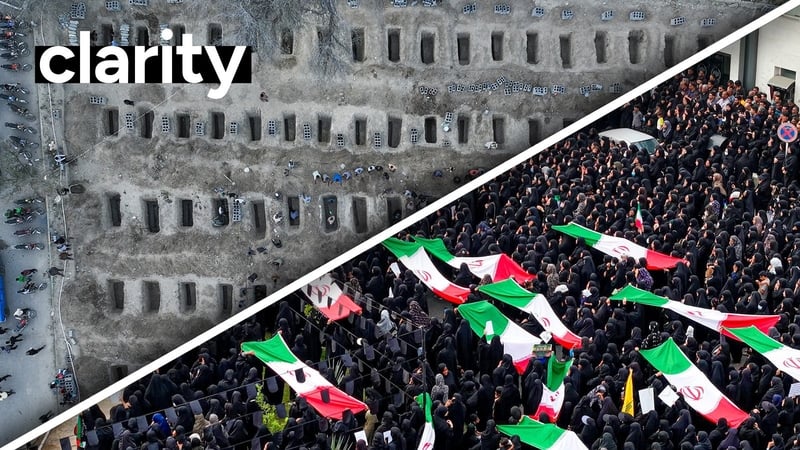
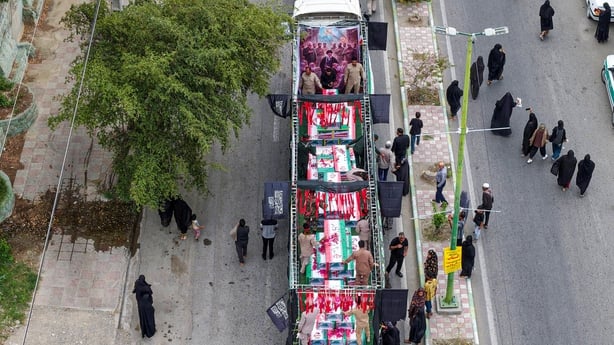
Images released by Iranian state media on Tuesday showed coffins draped in the national flag, some with photographs of children placed on top.
The UN Committee on the Rights of the Child said on Wednesday it was "deeply disturbed" by news of the deaths of children.
In a statement, it said it was "alarmed by reports of strikes on civilian infrastructure, including schools and hospitals," adding that "children must be protected from war."
The UN Human Rights Office has called for an investigation into the deadly attack.
"The onus is on the forces that carried out the attack to investigate it," UN human rights office spokesman Ravina Shamdasani said.
The question being asked is who specifically was behind the strikes, and how a school would be hit by what should be precision missiles.
The first day of the war
The missile struck during the school morning session on Saturday. In Iran, the school week runs from Saturday to Thursday, meaning classes were under way.
US and Israeli strikes began hitting locations around Iran at around 10am that morning.
Initial reports from Iranian officials said the strike on the school was the result of "enemy missile strikes".
Videos and images from the aftermath verified by The New York Times showed that at least half of the two-storey school was destroyed in the explosion.
The same newspaper noted that the building had been located within the walls of a Revolutionary Guard compound more than a decade ago, but new walls have since been constructed dividing the school from the buildings in the compound.
Images from 2013 show the building was linked to other areas of the compound by a network of roads.
Further satellite images show significant layout changes were made to the area around 2016, which resulted in the school building being separated by new walls.
Imagery from 2025 shows a clear wall separating the school from the other buildings nearby.
We need your consent to load this flourish contentWe use flourish to manage extra content that can set cookies on your device and collect data about your activity. Please review their details and accept them to load the content.Manage Preferences
The ICRC (International Committee of the Red Cross/Cresent) has highlighted that even if civilian sites such as schools are used for military purposes, armed forces must avoid or minimise harm under international law.
Responses to questions
It is known that two countries - Israel and the US - were carrying out strikes on Iranian locations at the time the school was hit.
In response to questions on CBS News, an Israeli military spokesman said that the IDF had not "found any connection to our operations."
Several US officials have been asked about the strike. Their answers have varied.
White House Press Secretary Karoline Leavitt responded to questions about the incident by initially noting that Iran "uses propaganda quite effectively."
"I would caution you from pointing a finger at the United States of America when it comes to targeting civilians," she said.
US Secretary of State Marco Rubio told reporters on Wednesday, "the United States would not deliberately target a school," but directed further questions about the incident to the Department of Defense.
When asked, US Defense Secretary Pete Hegseth said "all I can say is that we’re investigating that."
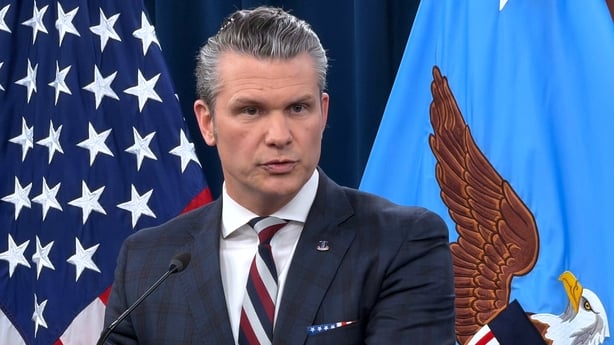
The United States was able to provide many specific details about military strikes undertaken in the first phase of the war over recent days.
The investigation referred to by Mr Hegseth remains awaited.
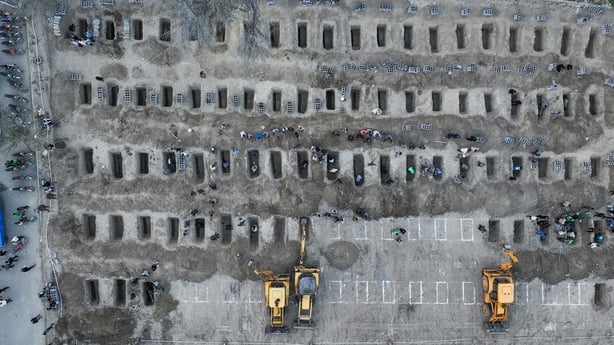
In the meantime, the Iranian State media has released footage of dozens of graves being dug for the victims of the strike which hit the school in Minab.