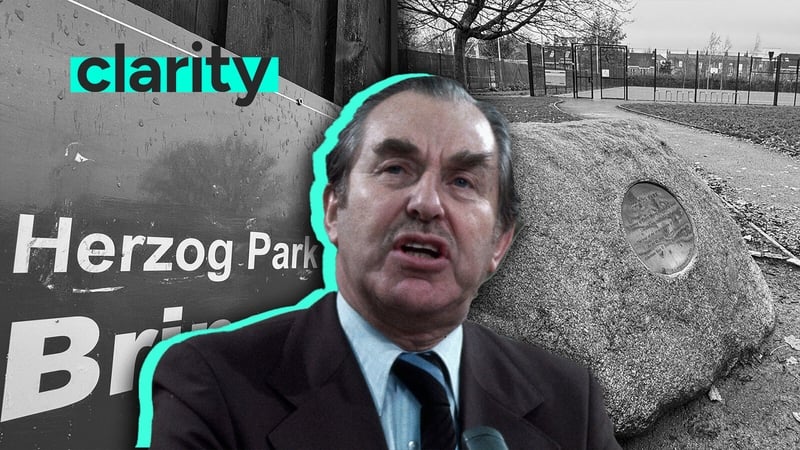
A proposal from Dublin City Council's Commemorations and Naming Committee to remove Chaim Herzog’s name from Herzog Park in Dublin’s Rathgar had been scheduled for a vote at Monday night’s full council meeting.
After days of acrimony, Lord Mayor Ray McAdam said that the motion would be withdrawn.
The plan to rename Herzog Park had drawn criticism and coverage from across Ireland, Israel and internationally.
The Tánaiste and Taoiseach both intervened, describing the proposed renaming as "divisive and wrong".
The motion was also been strongly criticised by Jewish community representatives and Israeli officials, including Israeli president Isaac Herzog, Chaim’s Herzog’s son, who said the renaming would be a "shameful and disgraceful move".
Council Chief Executive Richard Shakespeare advised that the issue could not be put to a vote on procedural grounds, saying the "correct statutory procedure" for a name change had not been followed.
The park, named in 1995, sits beside the country’s only two Jewish schools and in the neighbourhood historically associated with Ireland’s small Jewish community.
The proposal is now paused, but questions continue to be asked about Chaim Herzog’s legacy and whether the renaming should proceed at a later date. Several councillors have publicly said they still support the plan to change the name.
Who was Chaim Herzog?
Chaim Herzog was born in Belfast in 1918 but moved to Dublin soon after, when his father became the first Chief Rabbi of Ireland. He was raised in Portobello, which was then a hub of Jewish life in the city.
His father was Yitzhak HaLevi Herzog, a fluent Irish speaker who became known as "the Sinn Féin rabbi" as he openly supported Irish independence. In 1936, Yitzhak HaLevi Herzog left Ireland for Mandatory Palestine – then a British administrative territory - to take up the role of Ashkenazi Chief Rabbi.
He was following his son who, one year prior - having attended secondary school in Dublin’s Wesley College - had been sent by his parents at the age of 17 to attend a Talmudic academy in Jerusalem.
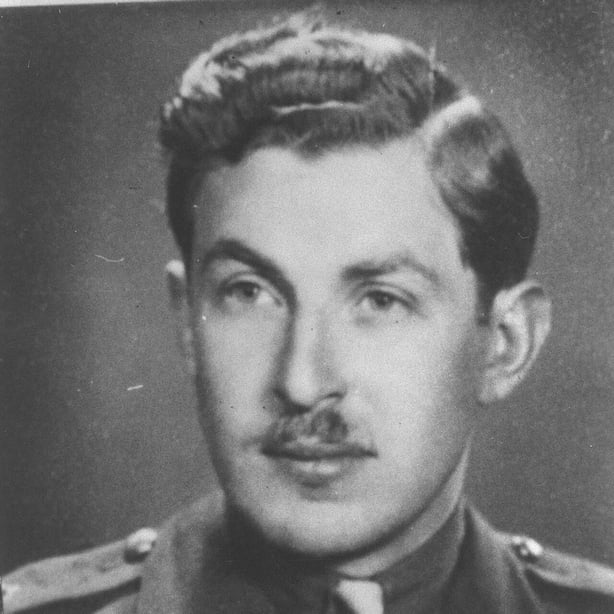
Once there, the teenage Chaim Herzog joined the Haganah, a Zionist paramilitary organisation. It was originally founded in 1920 in the wake of the signing of the Balfour Declaration, which saw the British government declare a "national home for the Jewish people" in Palestine.
That declaration resulted in the mass migration of European Jews to the area. Huge tension between the Arab population, British, and Jews emerged in the following decades.
The Haganah sought to defend the presence of Jews in the region. It expanded significantly during Chaim Herzog’s initial period involved, which included the 1936–39 Arab Revolt.
That revolt targeted British and Jewish presence, demanded Palestinian independence, and sought an end to British support for Zionism. It was eventually suppressed by the British security forces.
During the revolt, the Haganah defended Jewish communities and settlements, and practiced a policy called 'Havlagah’ (‘restraint’), which saw them defend communities but discourage retaliatory violence.
It was considered more moderate than other Jewish paramilitary groups during that period.
In the years after the revolt, and as World War Two began, Herzog moved to the UK to study law. He was called to the bar in 1942 and then enlisted in the British Army, initially training as a tank commander before transferring into military intelligence.
In 1944, he was posted to Normandy as an intelligence officer. In April 1945, he entered the Bergen-Belsen concentration camp shortly after it had been liberated by British forces.
In his role as an intelligence officer, his job was to help identify, interrogate and gather evidence against Nazi personnel. Herzog would speak for the rest of his life about the scenes he encountered there.
During a visit to Germany in 2022, his son, Isaac Herzog, now the President of Israel, described his father’s account of entering the camp and climbing onto a wooden crate, shouting in Yiddish: "Jews! There are still living Jews! There are still Jews in the world!"
After the Second World War, Chaim Herzog returned to British Mandate Palestine and served in military intelligence during the years leading up to and following Israel’s establishment, remaining in the IDF until 1962.
His service included the 1948 Arab–Israeli War, which preceded the establishment of the State of Israel, and saw more than 700,000 Palestinians being expelled or fleeing their homes and hundreds of towns and villages destroyed, an event Palestinians refer to as the Nakba.
During the early years of the Israeli state, Herzog worked in numerous diplomatic, intelligence, and military roles, including with the Israeli embassy in Washington DC. He also became a father – his son Issac is current president of Israel, another son, Michael, is a former Israeli Ambassador to the United States.
After the Six-Day War in June 1967, when Israeli forces occupied the West Bank as well as the Golan Heights and East Jerusalem, Chaim Herzog was appointed the first Military Governor of the West Bank.
According to his biographer, he ordered the bulldozing of an Arab quarter of east Jerusalem to allow greater space for Jewish worshippers at the Wailing Wall.
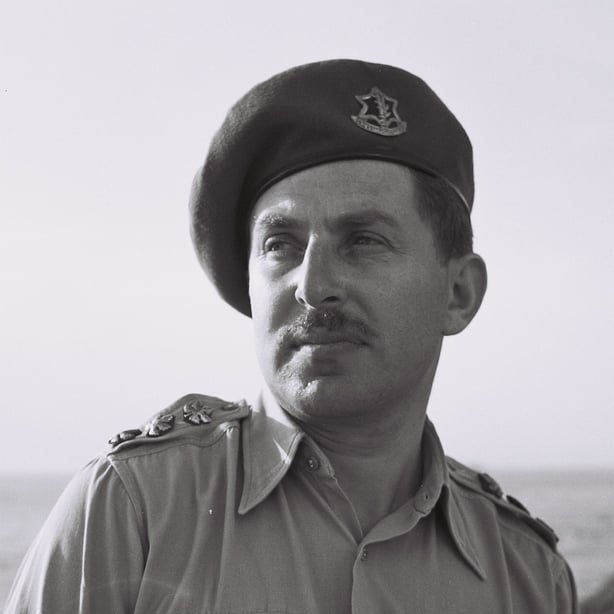
Herzog’s most internationally known moment came during his tenure as Israel’s Ambassador to the United Nations between 1975 and 1978.
On 10 November 1975, the UN General Assembly passed Resolution 3379, which stated that "Zionism is a form of racism and racial discrimination."
In a speech to UN delegates, Herzog said: "Zionism is nothing more and nothing less than the Jewish people’s sense of origin and destination in the land linked eternally with its name."
He declared that it was the United Nations itself, not Israel, that stood on trial. At the end of his address, he tore up the resolution at the podium.
In a recent opinion piece in the Jerusalem Post describing Zionism as the "national liberation movement of the Jewish people", Isaac Herzog referenced his father’s 1975 speech. "He felt he was speaking not only as Israel’s ambassador, but on behalf of past and future generations of a persecuted and maligned people," Isaac said.
"The resolution, as he saw it, was not just another UN political maneuver. It was a direct assault on the Jewish people’s identity, history, and fundamental right to self-determination."
The resolution was revoked in 1991.
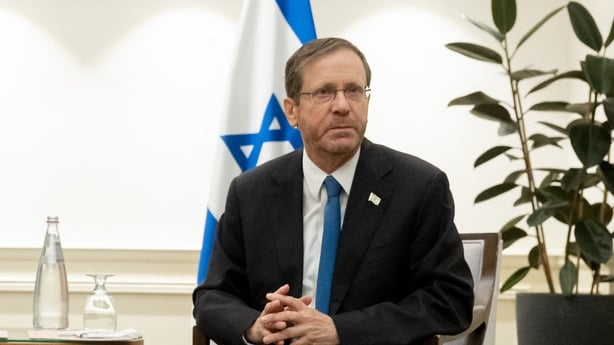
Chaim Herzog then entered domestic Israeli politics, winning a seat in the Knesset for the Labor Party. Two years later, he was elected Israel’s sixth president, serving from 1983 to 1993.
In 1995, Orwell Quarry Park - as it was then known - was renamed in his honour. Chaim Herzog died in 1997.
Calls to change the name of the park began in April 2024, with a petition to rename the park after Hind Rajab, a five-year-old Palestinian girl killed by Israeli forces in Gaza, along with six of her family members and two paramedics who were attempting her rescue.
The original petition posted by advocates to change the name of the park say it should not be named after "the Herzog family."
It says Chaim and Issac Herzog have been "complicit in the oppression, displacement, murder and genocide inflicted on the Palestinian people since before the 1948 Nakba to the present genocide in Gaza."
Efforts to proceed with renaming have been described as an attempt to erase Irish-Jewish history by current Chief Rabbi Yoni Wieder, as well as former Fine Gael Minister, Alan Shatter, who is himself Jewish and represented the area as TD.