
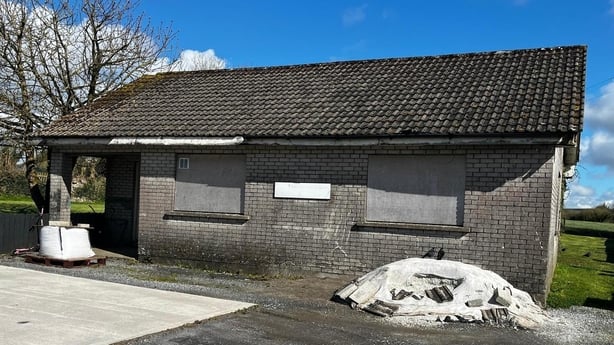
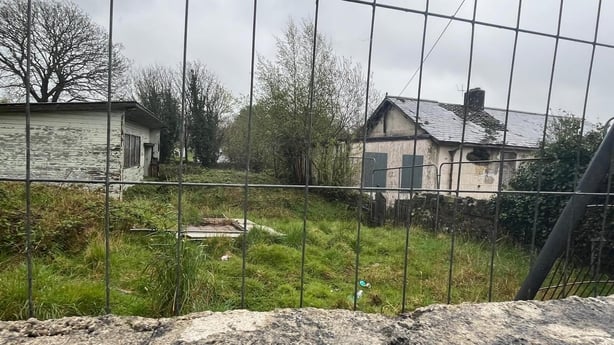
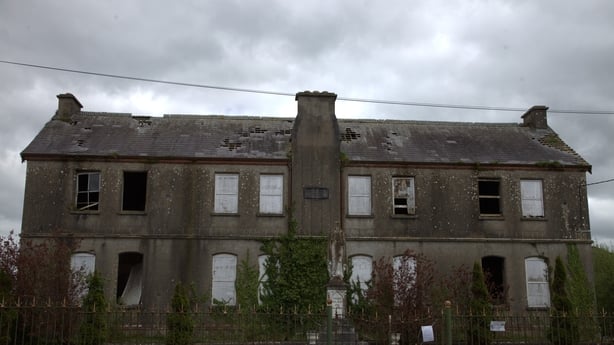
A grey, boarded-up bungalow sits in Newtown, Doonane, a small rural village in southeast Laois.
For years, residents have complained about the condition of the property, which is next to a community crèche.
In 2024, the building was added to the local authority's derelict sites register, a mechanism designed to pressure owners to tackle dereliction through annual levies.
But, in this case, the council ultimately chose not to apply the levy.
Had it done so, the State would effectively have been fining itself.
The building, a former health centre, is owned by the HSE.
It is one of approximately 2,500 sites on the 31 local authority derelict sites registers.
Most are privately owned.
But an RTÉ Investigates analysis has found that State bodies appear repeatedly on the registers, with 15 entries linked to four public organisations examined here. In some cases, this has cost the State hundreds of thousands of euro in derelict sites levies.
In other words, while one arm of the State is tasked with addressing dereliction, others are contributing to the problem.
What the registers reveal
While public concern around dereliction has grown in recent years, the framework designed to address it has existed for decades. Central to that system is the Derelict Sites Act, 1990, which gives local authorities powers to identify and act on neglected properties.
One of the key enforcement tools is the derelict sites register, a list maintained by each local authority of properties deemed to be detracting from their surroundings.
The registers are not exhaustive and do not capture the full extent of dereliction nationwide, but they do provide an insight into who owns at least some of Ireland's derelict properties.
RTÉ Investigates reviewed all 31 derelict sites registers, examining entries linked to State bodies, including the HSE, CIÉ, the Office of Public Works and the Department of Education, as well as housing charities such as the Peter McVerry Trust and entities connected to the Catholic Church.
How we obtained the registers
While the derelict sites registers are intended to be publicly accessible, in practice they are not always easy to obtain.
Many councils publish only abridged versions of their registers online, with owner details removed because of data protection concerns. Others publish nothing at all, while a smaller number publish complete versions that include owners.
Around three years ago, RTÉ Investigates began submitting information requests to local authorities to obtain complete copies of these registers, so that we could undertake an in-depth analysis.
Last December, the Information Commissioner issued a series of decisions directing councils to release full copies of their registers.
Over the following months, we analysed all derelict sites registers in the country.
Here is what we found.
HSE
The former health centre in Co Laois, where a derelict building lies beside a community crèche, has become a source of frustration locally.
"The roof is not safe, it has been boarded up, and it's full of rats," local Independent councillor Aisling Moran said. "It's a derelict building, sitting there in the middle of a housing crisis."
In addition to that site, the HSE also owns registered derelict sites in Dublin and Wexford.
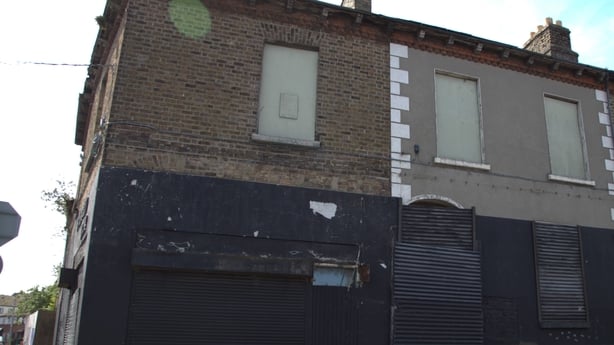
In Dublin, three former shop premises on James's Street in Dublin 8, along with an adjoining vacant plot, were added to Dublin City Council's derelict sites register in 2019.
One of the buildings has suffered a partial collapse of its upper floor, and a council inspector noted at the time that the overall condition of the site was "neglected and unsightly".
The HSE was not the owner of the site when it was first placed on the register, acquiring it in 2023 for development. However, there appears to have been little progress since.
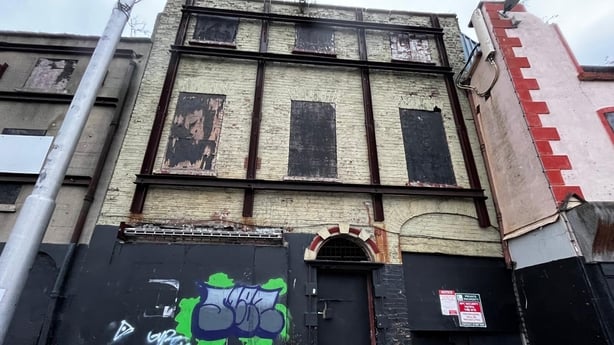
Correspondence shows ongoing concern about the site. In a letter to the HSE in 2025, a council official said the buildings had been the subject of numerous complaints and referred to a "distinct lack of progress" in addressing their condition or advancing redevelopment.
The HSE recently told RTÉ Investigates that it had paid over €377,000 in levies for the James's Street buildings for the period 2023-2025. It also said that the site was acquired due to its proximity to St James's Hospital and that "proposals to develop the site in the future are currently being examined."
A similar pattern of long-term deterioration is visible elsewhere.
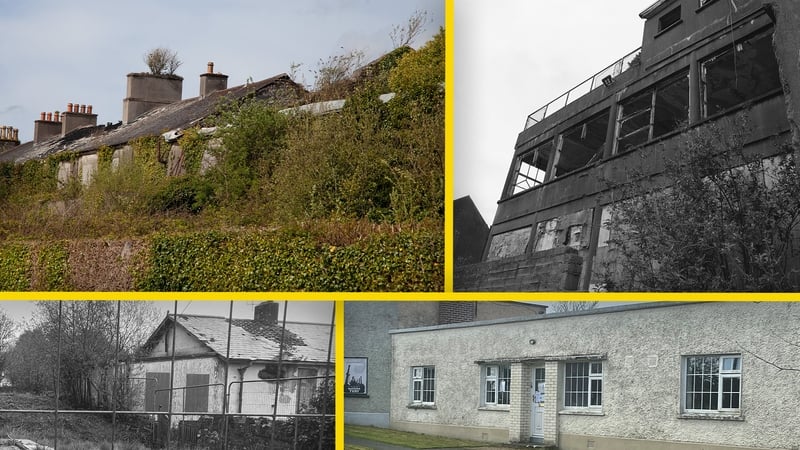
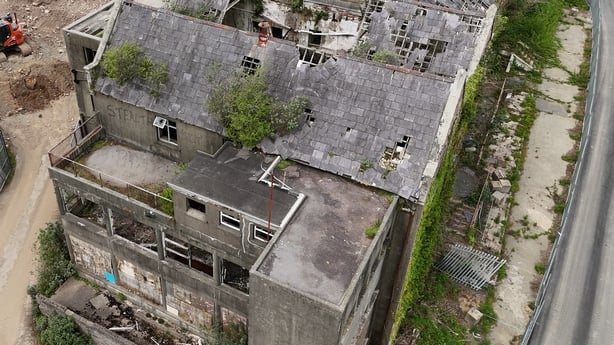
In Wexford, the former County Hospital, a protected structure located on the campus of Wexford General Hospital, was added to the derelict sites register in 2024, following years of complaints from local representatives.
While partially visible from the roadside, the full extent of the decay is only apparent up close.
When RTÉ Investigates visited the site, large sections of the roof had collapsed, windows were broken, and vegetation had grown across parts of the building.
Labour councillor Catherine 'Biddy' Walsh said she had seen the condition of the building worsen over decades.
"I've been a neighbour of the building for the last 30-plus years," Cllr Walsh said. "And I've seen it going from bad to worse to complete decay."
She says that some locals think it should be developed into a museum; others want it to become a nursing home, while some want to see it being used for social housing.
"If the HSE are not going to do something about it, they should give it back to the State. Give it back to the State and then have the conversation about what should happen to it."
The HSE said the site would be required for the future development of the hospital campus and confirmed that no levy has been applied.
CIÉ
RTÉ Investigates identified eight separate entries on derelict sites registers linked to CIÉ across Dublin, Kildare, Kilkenny, Limerick and Westmeath.
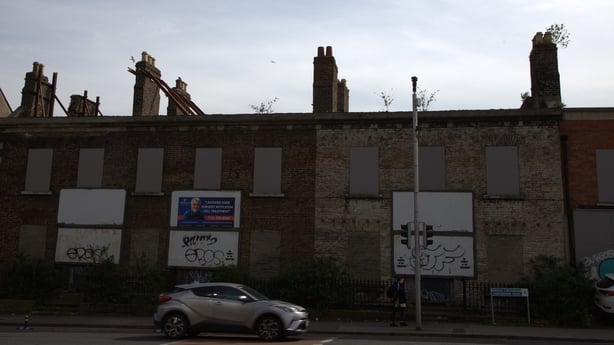
One of the longest-running cases is a row of properties at 10–13 Conyngham Road, near the Phoenix Park in Dublin, which was added to the register as a single site in 2019. While listed as one entry, it comprises four adjoining buildings.
Concerns about the condition of the properties date back decades.
In October 1992, Dublin Corporation, as Dublin City Council was then known, wrote to CIÉ noting complaints and requesting that three of the buildings be maintained in a "satisfactory manner".
The buildings are protected structures, and the council warned it could consider action under the Derelict Sites Act if concerns were not addressed.
CIÉ responded at the time that it intended to demolish the properties to provide bus parking, subject to acquiring an adjoining site. That plan did not materialise.
Over the following years, correspondence shows repeated complaints, warnings and discussions about the buildings’ condition.
In 1997, CIÉ said planning permission for a bus garage had been refused and indicated the properties might be disposed of in the long term. Complaints continued, and in 2002 Dublin City Council described the buildings as having remained "an eyesore for several years" while noting it had been "most tolerant" in the matter.
At various points in the 2000s and 2010s, CIÉ indicated it intended to sell the properties - a factor that appears to have delayed their inclusion on the derelict sites register. However, those plans were not progressed.
Eventually, after repeated complaints, inspections, warnings and threats spanning almost three decades, the properties were finally registered as derelict in 2019.
The pattern seen in Dublin is echoed elsewhere.
In Kildare, three houses beside Hazelhatch and Celbridge train station were entered on the register in 2023. A council memo from a site meeting in 2020 recorded that CIÉ would examine options to either demolish or refurbish the properties. Six years on, neither option has been implemented, and the houses remain derelict.
Further entries linked to CIÉ appear in other parts of the country. These include a row of houses owned by CIÉ subsidiary Iarnród Éireann in Mullingar added to the register in 2013, an old train station building in Kilkenny listed in 2023, and two sites in Limerick added in 2021 and 2022.
The Kilkenny site comprises the remnants of the former railway station complex at MacDonagh Junction, which has been out of use for years since the operational station was relocated in the mid-2000s. The old train station building is a protected structure.
A council inspection in 2022 found the structure and surrounding area to be in a "neglected and unsightly condition", with the roof described as "ruinous", and large sections missing or broken.
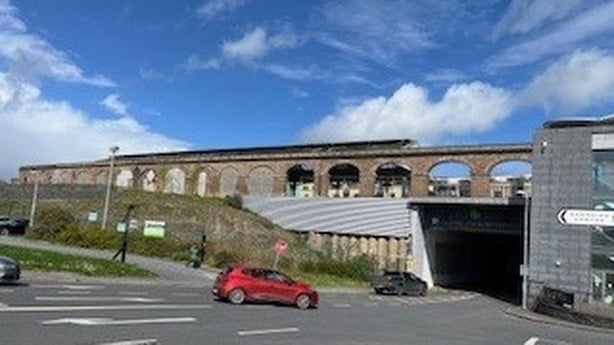
In Limerick, CIÉ has two sites on the derelict sites register: a site at Spittaland, near a railway line on the outskirts of the city centre, added in 2021, and a building known as the CIÉ Social Club, added the following year.
When asked about the inclusion of these properties on derelict sites registers, CIÉ said it acknowledged their status in each case and pointed to future development or operational plans across the sites.
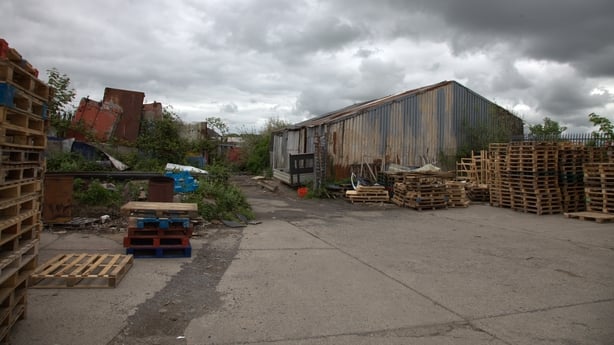
It said the Conyngham Road properties in Dublin form part of its wider Heuston Gateway masterplan, while the houses in Kildare are in an area linked to the Dart+ South West Project. It also cited "ongoing discussions" in relation to the Kilkenny site and said the CIÉ Social Club in Limerick is "earmarked for future operational use". The Spittaland site, it said, is subject to an issue of disputed occupation.
Despite those plans, a number of the properties remain on derelict sites registers, in some cases years after being identified - with CIÉ confirming it has paid more than €200,000 in levies in recent years.
The Office of Public Works (OPW)
As the custodian of much of the State’s property portfolio, the Office of Public Works (OPW) is responsible for more than 2,500 buildings. It is currently listed as the owner of a registered derelict property in Monaghan, while a second OPW property, in Roscommon, was added to the register in March 2025 but was recently removed.
In Smithborough, Co Monaghan, a former garda station has been vacant since 2012.
Following an inspection in October 2025, a council official described the property as having "been left neglected for a considerable time period", citing damage to the roof, guttering and external structure, along with vegetation growth. The site was added to the register the following month.
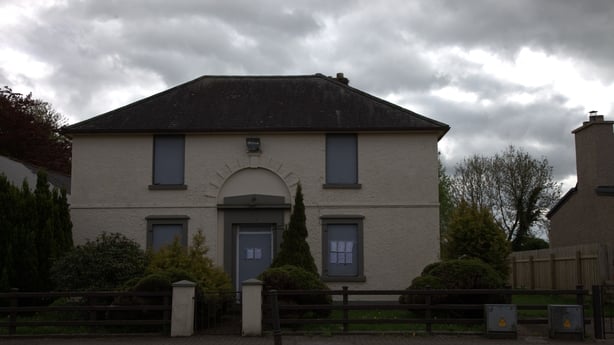
The OPW is also listed as the owner of a house adjoining a former school in Cloontuskert, Co Roscommon. In 2024, following an inspection, a council official wrote that the property "is not being maintained and it is detracting from the area."
The property was subsequently added to the Roscommon register, but the council recently confirmed to RTÉ Investigates that it was delisted last week.
The OPW said it had carried out improvement works on the Roscommon property and was complying with council requirements. It also confirmed that both sites are surplus to requirements, and that while they have been offered to other public bodies, there has been limited interest in taking them on.
Monaghan County Council has expressed an interest in acquiring the Smithborough garda station, the OPW said.
No levies have been paid on either property, the OPW added.
The Department of Education
The Department of Education is listed as the owner of two adjoining derelict sites in Dublin’s north inner-city - properties tied to a school development project that has remained largely stalled for more than a decade.
The sites, at Seville Place and Emerald Street, were transferred to the department in 2013 and are linked to long-standing plans to build a new school.
Planning permission for the demolition of the existing buildings and the construction of a new school was granted more than ten years ago. However, little progress was made, and that permission has since been extended twice, each time for five years.
As the condition of the sites deteriorated, the Seville Place and Emerald Street properties were added to Dublin City Council's derelict sites register in 2023.
According to a 2025 planning document, the department now expects the project to be completed by the end of 2029.
The department told RTÉ Investigates it paid just under €90,000 in levies on the two Dublin sites between 2024 and 2026.
Cllr Christy Burke (Ind) said that he knows the site well.
"It's one thing when it belongs to property owners," he said. "But it's another thing when it's State-owned property in the middle of the inner city, which is crying out for crèche and after-school facilities."
He said the payment of levies on the site amounted to a recycling of public money, with no visible progress on development.
"It's taxpayers' money, and it's going into a building that's lying there for decades, and no action appears to have been taken," he added.
Housing charities
The issue is not confined to State bodies. Entries on derelict sites registers also include organisations operating within publicly funded housing and homelessness systems.
RTÉ Investigates identified four properties linked to housing charities, including the Peter McVerry Trust (PMcVT) and COPE Galway.
The Peter McVerry Trust currently has three registered derelict properties, two in Limerick and one in Tuam, Co Galway, acquired in recent years with the intention of delivering housing.
In Limerick, a house in Johnsgate Village purchased in 2021 was added to the register in August 2025 after council inspection photographs showed boarded-up windows and accumulated waste. A second city centre property, Gerald Griffin House, was placed on the register in April 2024, around two years after it was acquired.
In Tuam, Co Galway, the Peter McVerry Trust acquired a residential property on Vicar Street with financing from Galway County Council in 2023. The plan was to convert the building into two one-bedroom apartments for social housing, but the project never progressed.
Internal council records show that concerns arose about the condition of the property's chimney in early 2025, including reports that parts of it fell during a storm earlier that January.
Correspondence showed ongoing engagement between the council and the charity in the months that followed. In one internal council email, it was reported that the charity had arranged for the removal of loose plaster from the chimney.
However, in May 2025, a council engineer recommended that the building be added to the register in "the absence of adequate proof from the owner regarding the safety of the chimney structure/plasterwork."
The housing body said the properties were acquired with the intention of supporting those affected by homelessness and confirmed it is in the process of transferring them to local authorities or another Approved Housing Body. It also said a €10,500 levy imposed in early 2026 on one Limerick property has not yet been discharged and will be addressed as part of that process.
Meanwhile, COPE Galway, a homeless charity operating in Galway, owns a registered derelict house in Ballybane, Galway City.
A council inspector noted in August 2025 that the house was unoccupied, boarded up, and "in poor decorative condition". The council added the property to its register last October.
The charity said the property had previously been used for emergency accommodation but required significant refurbishment after sustaining damage and unauthorised access. It said works to bring the property back into use are expected to begin shortly.
The council has not imposed a levy on this house, COPE Galway said.
Religious organisations
The pattern is also reflected in properties owned by religious bodies, where a combination of aging buildings, legal complications and delayed redevelopment can leave sites on derelict registers for extended periods.
RTÉ Investigates identified a number of properties linked to Catholic Church organisations, including former schools and residential buildings in Cork, Limerick and Roscommon.
In Cork City, a former school on Springfield Road in Mayfield was added to the derelict sites register in 2024 after an inspection described it as "dirty, derelict and unsightly", with significant damage to its roof and structure. The site is owned by the Parish of Upper Mayfield.
A parish spokesperson said the building, which had been damaged by fire on two occasions, is beyond repair and has been sold subject to planning permission, although that process "has taken a long time and is still in progress". No levies have been charged.
A second Cork entry, a row of three terraced houses in Blackrock owned by St Michael’s Parish, was added to the register in 2023. A council inspection cited cracked plasterwork, broken roof tiles and overgrown gardens. The parish said efforts to sell the properties had been delayed by legal issues relating to title, but expected progress in the coming months. Levies have been applied, although the amount has not been disclosed.
Similar issues arise elsewhere. In Limerick, a former secondary school at Sexton Street owned by the Edmund Rice Schools Trust was added to the register in 2022, with council records describing it as an "eyesore" with widespread damage.
The Trust said redevelopment plans are in place but depend on Department of Education funding and did not comment on levy payments.
In Castlerea, Co Roscommon, a former school building known as Hanly Hall was added to the register in 2025.
The Diocese of Elphin said the building, which is more than a century old, requires significant investment and has been subject to legal complications relating to its title. It confirmed that a €9,100 levy had been paid earlier this year.
‘We felt we could change things’
Plans are underway to publish an aggregated, digital national derelict sites register later this year, according to the Department of Housing.
The initiative is intended to bring together data from all 31 local authorities, potentially making it easier for the public to see which properties are listed in their area.
But when asked recently if the new proposed national register will include ownership details, a department spokesperson said: "We’re not in a position to confirm this kind of detail at this stage."
For anti-dereliction campaigners, who have spent years documenting the issue, greater transparency has long been a central demand.
Frank O’Connor and Jude Sherry said that "If a new national register can capture all derelict buildings across the country, then we are delighted it will be ready later in the year."
They said that Ireland should have a "full national registration system for all properties, similar to other European countries", which would include details on how properties are used - such as whether they are holiday homes, short-term lets, vacant or derelict.
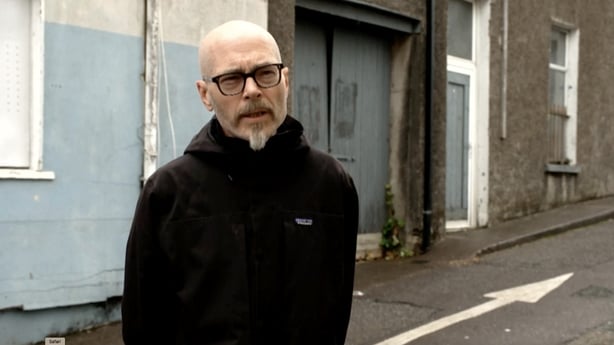
Mr O’Connor and Ms Sherry began documenting derelict buildings across Cork, eventually sharing their work online through a daily series that highlighted nearly 450 properties within two kilometres of the city centre.
"We went for the full year, and we didn’t necessarily realise that we could have actually gone on for another full year," Ms Sherry said.
Their work has since inspired similar efforts elsewhere.
But the response they encountered during their research points to a wider issue.
"As we started walking around the city … we had loads of conversations with people," Mr O’Connor said. "The general message was, ‘that’s the way things are, and you’re not going to change anything in Ireland.’"
He said that dereliction had, in many cases, become normalised. However, they did not accept that it should remain that way.
"In terms of policy," he said, "we knew we could change things. We really felt we could."
That change may now come in the form of a national register. But as this analysis shows, the challenge is not only identifying derelict sites, it is addressing the systems that allow them to remain that way, including within the State itself.
Conn Corrigan’s report, RTÉ Investigates: Left to Rot, will be broadcast on the 2 June edition of Prime Time at 9:35pm on RTÉ One and RTÉ Player.
Produced/directed by Janet Traynor.