


Both Bank of Ireland and AIB said today they have joined Qivalis, the European bank consortium established to issue a fully regulated, euro‑denominated stablecoin.
Bank of Ireland said the move marks a significant step in its digital and innovation strategy.
AIB said it was investing in the consortium because it believes Europe needs trusted, regulated innovation in payments and settlement.
A stablecoin is a form of digital asset used to make payments. Unlike cryptocurrencies, which can rise and fall in price from day to day, stablecoins are designed to maintain a stable value, by backing each digital coin with real assets held in reserve.
Only 0.2% of global stablecoin circulation is euro-denominated.
Bank of Ireland said that joining Qivalis will help develop a euro stablecoin that supports large-scale digital payments and settlement on a blockchain - a shared, secure digital record of transactions - rather than through traditional banking systems.
This means money can move faster and more efficiently, settling quickly, operating 24/7 and relying on fewer intermediaries, while still using the euro, it explained.
AIB said its investment sees the bank collaborate with a group of European peers and strengthens its ability to deliver payments innovation to its clients in a practical way.
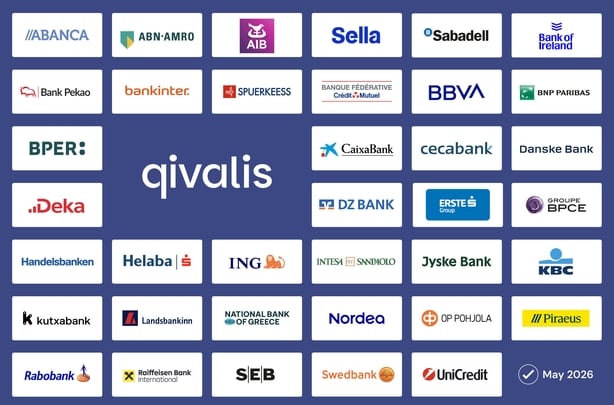
Meanwhile, Qivalis today announced a major expansion of its membership, with 25 new European banks joining the initiative, which extends its presence across 15 countries.
The initiative aims to deliver a stablecoin fully backed on a 1:1 basis with the euro, operating under the planned supervision of the Dutch central bank and in compliance with MiCAR, the EU's regulatory framework for crypto‑assets.
Qivalis said it continues to engage with regulators while advancing its operational readiness and technical development in preparation for an anticipated launch in the second half of 2026.
Billy O'Connell, Chief Strategy Officer at Bank of Ireland, said that through this initiative, Bank of Ireland is advancing innovation to deliver real benefits for customers, strengthen Europe’s financial infrastructure, and support the responsible development of digital money.
"In doing so, we are helping to shape the future of how money moves, while supporting our ambition of offering unrivalled financial choice - now and for generations to come," he added.
Geraldine Casey, Managing Director Retail Banking at AIB, said that Qivalis will provide access to a euro denominated stablecoin that is being developed to operate within the EU regulatory framework.
"This is a practical step for AIB to learn, innovate, test and collaborate with other leading European banks, and to help shape how new forms of digital money can be used safely, responsibly and within the regulated banking system," Ms Casey said.
"Our customers expect simple, secure digital experiences. AIB is a digitally progressive bank, investing around €400m each year in improvements to strengthen resilience, modernise our platforms and enhance customer experience," she said.
"This investment aligns with that focus, the rapid transformation in payments and the growing development of blockchain and digital asset initiatives," she added.
Jan-Oliver Sell, CEO of Qivalis, said today's expansion marks a giant leap toward an open and compliant on-chain ecosystem for the euro and shows that the majority of European institutions have already prioritised euro-native on-chain settlement in their digital asset journey.
"The euro is Europe's currency, and on-chain financial infrastructure should carry it - built by European institutions and governed by European rules," he added.
As well as AIB and Bank of Ireland, the other new member banks are ABANCA, ABN AMRO, Banco Sabadell, Bank Pekao, Bankinter, Banque et Caisse d’Épargne de l’État (Spuerkeess), Banque Fédérative du Crédit Mutuel, BPER Banca, Cecabank, Erste Group, Groupe BPCE, Handelsbanken, Helaba, Intesa Sanpaolo, Jyske Bank, Kutxabank, Landsbankinn, National Bank of Greece, Nordea, OP Pohjola, Piraeus, Rabobank and Swedbank.
They join existing consortium members Banca Sella, BBVA, BNP Paribas, CaixaBank, Danske Bank, DekaBank, DZ BANK, ING, KBC, Raiffeisen Bank International, SEB and UniCredit.
