


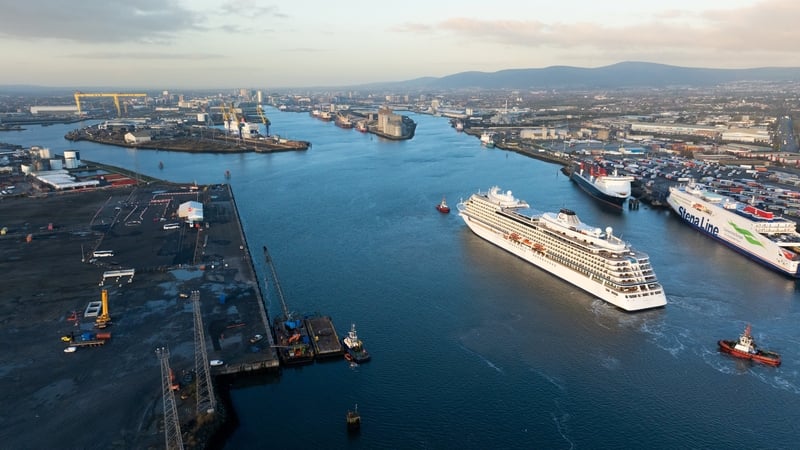
Belfast Harbour - the second busiest port on the island of Ireland after Dublin Port - has announced a £1.3 billion expansion plan over the next 25 years.
Belfast Harbour said the investment aims to ensure that the port remains resilient, efficient and competitive, capable of supporting economic growth across Northern Ireland and the wider island for decades to come.
It also aims to compete with eastern ports in Ireland that are facing capacity constraints.
Belfast Harbour has a footprint of about 2,000 acres of land and 1,000 acres of water and with its long‑term development potential, it is uniquely positioned to respond to increased demand.
Independent analysis by Ulster University and Grant Thornton found that the investment set out in the new plan will underpin an increase in the economic output enabled by Belfast Harbour to about £12 billion in Gross Value Added (GVA) annually from trade handled and support almost 5,500 construction jobs.
External forecasts prepared by port master‑planning experts Haskoning indicate that trade volumes through Belfast Harbour could increase from around 24 million tonnes today to over 30 million tonnes by 2050 under steady growth, and to between 40 million and 50 million tonnes under higher‑growth scenarios.
Planned projects include completion of the £90m D3 deepwater cruise terminal - Belfast's first land reclamation project in 25 years to create a new freight terminal at West Bank Road.
It also includes redevelopment of the island's longest deep water quay - Stormont Wharf; a berth extension to its container terminal for next generation vessels; the first shore power for docked vessels; construction of a new logistics park and a clean energy hub and creation of a new maritime skills academy to support jobs in the sector.
Dr Theresa Donaldson, Chair of Belfast Harbour Commissioners, said that Belfast Harbour has served the regional economy for nearly two centuries as a Trust Port - adapting, investing and growing as trade has evolved and the city around us has changed.
"The port is not simply a feature of Northern Ireland’s economy - it is a cornerstone of it," she said.
Joe O'Neill, the chief executive of Belfast Harbour, said the harbour is a working port first and foremost.
"Much of what people and businesses across Northern Ireland depend on passes through here every day, from food and fuel to construction materials and consumer goods. Ensuring that trade continues to flow efficiently is our core purpose," he said.
"As capacity tightens at key ports on the Irish east coast, we are putting the scale of our estate to work providing the planned capacity the island needs, supporting customers today and preparing Belfast Harbour to be the principal maritime gateway on the Dublin-Belfast Economic Corridor," he added.
