
When people talk about how well Disney is doing as a business, they tend to focus on things like movie releases.
Has their new cartoon or blockbuster done well at the box office, or did it cost more to make than it got back in cinemas? Or maybe they look at how many subscribers its Disney Plus service is getting - and whether it's closing the gap on Netflix.
Those parts are important - and, generally, very lucrative.
But when we focus on them, we're actually putting the Disney business model backwards.
Dig A Little Deeper
The business of Disney is essentially broken down into three segments - Entertainment, Sport and Experiences.
Entertainment relates to the movies and TV shows, Disney Plus and most of the company’s TV channels.
Sports largely relates to ESPN, as well as some other sports networks in the US.
And then there's Experiences, which covers all of the company's resorts, theme parks and travel-related operations (it also includes its retail and 'consumer products' - so merchandising too).
In Disney's last financial year, which ran up to the end of September 2025, you can see that the company as a whole had revenues of just over $94.4 billion. So it's clearly a big business.
Within that, Sports had revenues of $17.7bn, Entertainment took in $42.5bn, and Experiences had $36.1bn.
So, even from that metric, you get a sense of just how big Experiences are for Disney, though it does still give the impression that Entertainment is the crown jewel.
But if you look at the profits, you see the real story.
Last year Disney had a total operating profit of $17.5 billion.
Of that, Sports made up $2.9bn, Entertainment made just under $4.7bn. While Experiences accounted for almost $10bn.
That means that, last year, the Experiences part of the business had double the profits of the next biggest division. In fact it made up more than half (57%) of Disney's total profits.
As mentioned, consumer products (merch) are part of this… but this sub-section represented around $2.18bn of that profit last year. So, even when it's taken away, it still leaves the holiday-related stuff by far the most profitable part of Disney’s business.
And with that in mind, the Disney model is clear.
The movies, TV shows and streaming platform are all important, but really their main function is to hook consumers into the Disney ecosystem, so they ultimately want to take a Disney holiday.
A Whole New World
And there are many more ways to do that than you might realise.
Irish consumers are more than likely familiar with the Disney resort in Paris, France (the resort formerly known as EuroDisney – though it's been a Disneyland for more than 20 years)
People probably also know of the Disney World Resort in Florida.
Then there's the Disneyland Resort in California, which was Walt Disney’s first theme park venture.
But aside from that, there are three further resorts in Asia - one in Hong Kong, one in Shanghai and one in Tokyo.
Meanwhile a Disneyland Abu Dhabi is currently in the planning stages.
But Disney doesn't just do resorts and theme parks. It also operates a cruise line, with six ships crossing the oceans at any one time.
It has a resort and spa in Hawaii, it has a vacation club that operates as a timeshare across a number of locations, including its theme-parks, its Hawaii property and a resort in Vero Beach in Florida.
It also operates an 'adventures' programme and a National Geographic Expeditions offer, both of which are essentially package holidays outside of the properties it owns.
And it's currently building 'storyliving by Disney', which are new residential towns designed by its "Imagineers" (the people who design the theme parks) and staffed by its "cast members".
There are currently two developments planned as part of that, one in California and the other in North Carolina.
Surfacing pressure
But while this sprawling division has been very profitable for Disney, problems are growing.
Because it's generating that staggering profit by getting a lot of people to spend a lot of money with it every year. And there is now a growing groundswell of people, amongst the brand’s fans and reportedly within senior ranks of the company itself, who feel that average families are being priced out of Disney’s experiences.
That's reflected in some pretty aggressive price increases.
For example, a one day pass to Paris in 2019 was around €74, with a child's price around €68.
Today, you're probably looking at upwards of €100 for an adult, and €96 for a child.
Though they also now use dynamic pricing, so chances are it'll be more than that at the moment; a day pass in the summer is generally above €130 for an adult, and €127 for a child.
And that's just to get inside the park. On top of that, there have been other changes that mean people have to spend more, and often times get less in return.
For example, the Fast Pass was a free system at Disneyland that let you register for a time to go on one of the popular rides. That meant you could go off to other sights and come back at your allotted, skipping the long queue in the process. Ideal for families with small kids who didn't want to be standing around in line for hours.
But after Covid Disney ditched Fast Pass and replaced it with a system where you had to pay per passenger, per ride in order to skip the queue. That's an expense that clocks up very quickly.
Meanwhile, there were other changes to pricing like the cost of food at the resorts or increases in the cost of using the car park.
And despite their hotels getting much more expensive to stay in, they also took away the free breakfast that was offered as part of the standard booking.
Every Little Piece
In Disney’s defence, it’s working out very well for them financially.
While they may cultivate a family-friendly and wholesome image, Disney, at the end of the day, is a business.
And while it may have been raising prices and cutting perks it has still been seeing attendances at its resorts increase, with revenues and profits rising too.
And whether it's an intentional strategy or not, whatever customers the company is losing have been easily replaced with those happy - or at least willing - to spend more while they visit.
That includes people who might see a trip to Disneyland as a once in a lifetime, or a once every few years, kind of trip. They’re generally willing to splurge on it for the sake of their and their kids' experiences.
But Disney is also tapping more into the Disney Adult market. As the name suggests, these are the grown-ups who are committed fans of the brand.
In truth, Disney spotted the value in getting adults interested long ago. Walt Disney himself said "you’re dead if you aim only at kids" and Disneyland itself has offered more grown-up focused facilities and attractions since the 1980s.
But the Disney Adult market has grown rapidly in recent years, no doubt for a number of reasons. People are starting families at an older age, or not having kids at all, young adults have more disposable income - often because they cannot afford to move out of the family home. Meanwhile online communities encouraging fandom of all kinds, while nostalgia has grown to become a potent economic force.
But what all of that means is that you now have more singles and couples who are huge Disney fans, and who are going to the likes of Disneyland as their annual summer holiday, rather than going to, say, a resort in Spain.
And maybe even go more often than that.
And they're generally willing and able to spend a lot more per-person than your average family might.
How far they'll go
The question is, how far can Disney push it?
While their strategy has worked out well for them financially, there is tipping point where you price too many people out.
There's a natural limit to the number of people who will splash out on a 'once in a lifetime' trip, for example. So it probably isn't wise to become too reliant on that market.
Meanwhile, there was a piece in the New Yorker recently about a growing problem of Disney adults getting deeper and deeper into debt in order to fund regular trips to Disneyland, which is equally unsustainable.
That’s not to mention the very real risk of them eroding fans' goodwill, which is hugely important to Disney, far more important than this kind of thing might be to other firms.
Because if people feel like they're being shaken down, they're going to be less inclined to come back, even if they can afford it. And that disconnect could spread to the rest of the Disney brand, and put people off their TV and movie content and merch too.
But there does seem to be some level of recognition of this brewing problem within Disney HQ.
A Wall Street Journal article last year claimed that there were internal discussions in senior levels in Disney that they were starting to lose the middle class consumer.
That's despite Bob Iger taking some steps to undo some price rises after he returned as CEO in 2022.
(In 2023 he said he was 2alarmed" at how much prices had risen under his short-lived successor/predecessor Bob Chapek - the man that he had anointed for the top role.)
When he was asked by investors late last year about the Wall Street Journal article and high prices, Iger said he thinks a lot about cost and value.
He said they hadn't raised the cost of their lowest price tickets since before Covid, and they'd made that available on more days of the year (though this is still very limited, and of course it's at times of the year when going to the resorts is going to be least attractive and least suitable to families.)
But at the same time, Iger didn't indicate that he was about to do anything dramatic around pricing.
He defended their approach and said the parks represent good value for money. He said they're always busy, they get good customer satisfaction scores, and so he feels that the public agrees.
Into the unknown
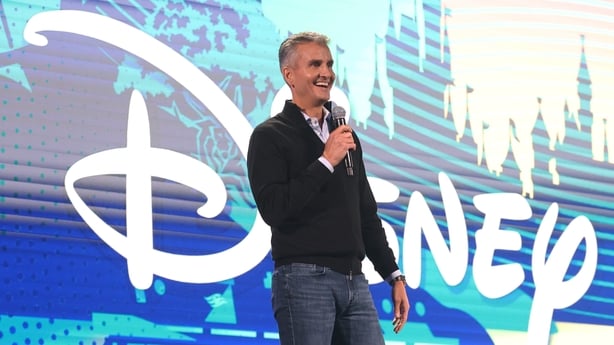
Iger isn't Disney’s CEO any more.
As of 18 March, Disney has been under the management of Josh D'Amaro, who before that point had been the chairman of Disney Experiences… the division that includes all the resorts and theme parks.
And part of why he was chosen for the top role is because of the job he did in successfully navigating the division out of the pandemic, and to the incredibly lucrative position it's in now.
There's been a bit of reorganising since so it's not a totally fair comparison, but the income of the parks and resorts in 2019 was just over $6.7bn.
That means that from a business perspective at least, he's done very well.
One interpretation of that result is that he has shown an understanding of the Disney brand and he's found the alchemy required to get customers to pay more to experience some of that magic, and they'll do so with a smile on their faces.
But at the same time, it's worth bearing in mind that he was head of the division during that period where prices rose sharply and perks like Fast Pass were removed. That's the timeframe that Bob Iger said there were "alarming" price increases, which is something that Bob Chapek got the blame for ultimately.
Chapek's term at the top only lasted for just over two years, though it's worth noting that, before he was named CEO, he was also the head of the company’s parks and resorts division.
Just like D'Amaro, he was seen to have done such a good job that he was the obvious pick to succeed Iger as CEO.