


Long-term British borrowing costs surged to their highest in nearly 30 years, sterling slumped and shares fell today as investors brace for a potential change of leadership that could weaken fiscal discipline.
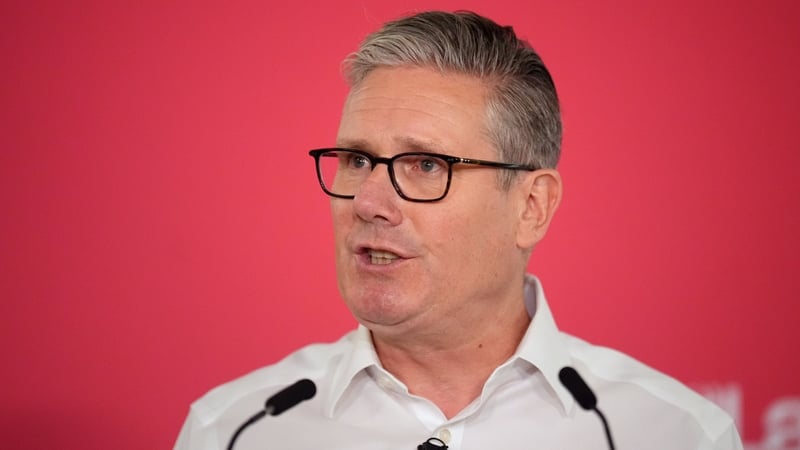
Prime Minister Keir Starmer is under mounting pressure to resign after his governing Labour Party suffered big losses in last week's local elections, but he remained defiant today at a cabinet meeting, telling ministers he would "get on with governing". Almost 80 of his lawmakers have called on him to go.
There has been no official move to trigger a leadership contest, Starmer said, and one of his ministers said no one had challenged the prime minister during the cabinet meeting.
That provided little respite to investors worried that a replacement would be more left-wing than Starmer and push for more spending at a time when UK finances are already stretched.
UK borrowing costs remain the highest among the Group of Seven advanced economies and have risen the most since the Iran waras inflationary concerns prompted a dramatic shift in expectations from Bank of England rate cuts to rate hikes.
Any further rise will add to pressure on the public finances.
30-year yields, sensitive to fiscal risks, touched their highest since 1998 at 5.81% today, rising as much as 14 basis points (bps).
The benchmark 10-year gilt yield rose to 5.13%, the highest since 2008.
"For many the writing is on the wall at this stage, it's just a matter of how quickly (Starmer's) exit happens," said Jordan Rochester, head of fixed income, commodities and currencies strategy at Mizuho.
Yields edged slightly lower on news the cabinet had not challenged Starmer, but were last up around 10 bps on the day.
"You're seeing a bit of a relief bounce on the fact that the cabinet meeting seems to have passed with no one overtly challenging the PM," said Michael Brown, senior strategist at broker Pepperstone.
But the relief won't last, Brown said, adding: "When you look at gilts, when you look at the pound, it's probably going to get a lot worse before it gets better."
British mid-caps also slumped on Tuesday.
The domestically focused mid-cap FTSE 250 dropped 1.5%, clocking its biggest one-day fall in over six weeks.
The internationally exposed blue-chip FTSE 100 meanwhile, ended flat at 10,265.32 points after falling as much as 1.1% earlier in the day.
Bank stocks fell 2%, dragged lower by a 5.6% decline in shares of Metro Bank and a 3.3% drop in Barclays.
Aerospace and defence stocks also slipped 2%, while the rate-sensitive real estate sector fell 3.1%.
Defensive sectors including healthcare, food and beverages and personal care all rose, offsetting losses on the broader index.
The pound dropped to as low as $1.3503 and was last down 0.5% in its biggest daily drop in over a month, against a broadly stronger dollar.
Investors see Starmer and his finance minister Rachel Reeves as most favourable to markets, particularly given Reeves' commitment to fiscal rules limiting borrowing.
We need your consent to load this rte-player contentWe use rte-player to manage extra content that can set cookies on your device and collect data about your activity. Please review their details and accept them to load the content.Manage Preferences
"The bond market is reacting not only to Starmer’s potential departure, but also to who his successor could be, and to the prospect of a drawn-out leadership battle that leads to more fiscal promises that the UK cannot afford," said Kathleen Brooks, research director at broker XTB.
British banks also fell with Barclays, NatWest and Lloyds all falling over 3% each, leading declines among European banking stocks.
Analysts at JPMorgan said they now expected Britain's banking surcharge to rise to 5% from 3% as a leftward shift in policy is more likely.
Britain's broader stock market was down 0.4% this afternoon.
Bond markets were also under pressure across Europe as hopes for a peace deal on Iran faded after US President Donald Trump said a ceasefire was on "life support". This pushed traders to add to their rate hike bets.
Investors will have a chance to scrutinise Starmer's policy plans tomorrow, when King Charles will read out the UK government's legislative agenda for the coming period at the formal State Opening of Parliament.
