


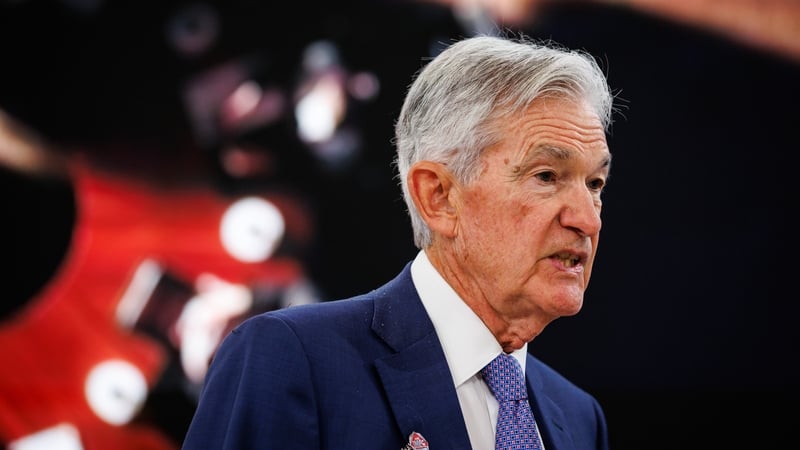
The US Federal Reserve has held interest rates steady, but in its most divided decision since 1992 noted rising concerns about inflation in a policy statement that drew three dissents from officials who no longer feel the US central bank should communicate a bias towards lowering borrowing costs.
A fourth dissent at the meeting came in favour of a quarter-percentage-point rate cut.
"Inflation is elevated, in part reflecting the recent increase in global energy prices," the Fed said in its policy statement, a shift from previous language saying that inflation was just "somewhat" elevated.
"Developments in the Middle East are contributing to a high level of uncertainty about the economic outlook."
The 8-4 vote was the most divisive since 6 October, 1992, and shows the breadth of opinion incoming Fed Chair Kevin Warsh will face in pursuing rate cuts that President Donald Trump says he expects from his chosen successor to Jerome Powell, whose term as central bank chief ends on 15 May.
Though the latest policy statement retained language about how the Fed would assess the "extent and timing of additional adjustments" to rates, a phrase that pointed to future cuts as the next likely move, three policymakers objected.
Cleveland Fed President Beth Hammack, Minneapolis Fed President Neel Kashkari and Dallas Fed President Lorie Logan, while supportive of holding the policy rate steady in the current 3.50%-3.75% range, "did not support inclusion of an easing bias in the statement at this time" and voted against the new statement.
With global oil prices exceeding $120 a barrel today due to the US-backed war against Iran, the Fed has been hard-pressed to determine if the impact is likely to be seen more through depressed growth or higher inflation, keeping the policy rate in the range where it has been since December despite repeated demands by Mr Trump for looser monetary policy.
Alongside elevated inflation, "the unemployment rate has been little changed in recent months" while the economy continues to expand "at a solid pace," the Fed said.
The new statement is likely the last to be issued under Mr Powell's leadership but he said that he intends to stay at the central bank as a governor even after his chairman term ends, adding that he plans to "keep a low profile."
"After my term as chair ends on 15 May, I will continue to serve as a governor for a period of time to be determined," Mr Powell said. "I will leave when I think it's appropriate to do so."
He also congratulated Mr Warsh on progress in his rocky confirmation process.
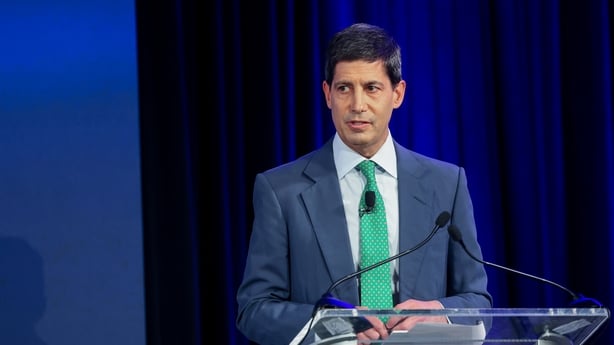
"I want to congratulate Kevin Warsh on his advancement out of the Senate Banking Committee this morning," Mr Powell said.
"This is an important step forward, and I wish him well as that process continues."
Federal Reserve Chair Jerome Powell said he will stay on as a central bank governor for an undetermined period of time when his leadership term ends next month, amid hopes that ongoing political attacks on the institution will start to settle down.
"After my term as chair ends on May 15, I will continue to serve as a governor for a period of time to be determined," Mr Powell told a news conference after his last policy meeting as chair.
"I'm not looking to be ... a high-profile dissident or anything like that," the central bank chief said.
Instead, Mr Powell said he wants to see that the political climate that's led to unprecedented legal attacks on the central bank has "calmed down" and that the Fed can instead be more focused on its core mission.
Earlier, the Republican-controlled Senate Banking Committee voted to advance Mr Warsh's nomination on a party-line 13-11 vote.
The Senate is expected to confirm Mr Warsh next month.
The minutes of the Fed's 17-18 March meeting noted a growing number of policymakers were open to the idea that the central bank's next move might be a rate increase, and the number of hawkish dissents may prompt investors to boost bets that borrowing costs will rise this year.
Since the March meeting, inflation has shown signs of rising, with officials concerned that sustained high global oil prices could evolve from a one-time price shock to a jump in underlying pressure on prices.
Fed Governor Stephen Miran, in what may also be his last meeting, again dissented in favour of a quarter-percentage-point rate cut, as he has done at every meeting since moving to the central bank from his prior job as one of Mr Trump's top economic advisers.
