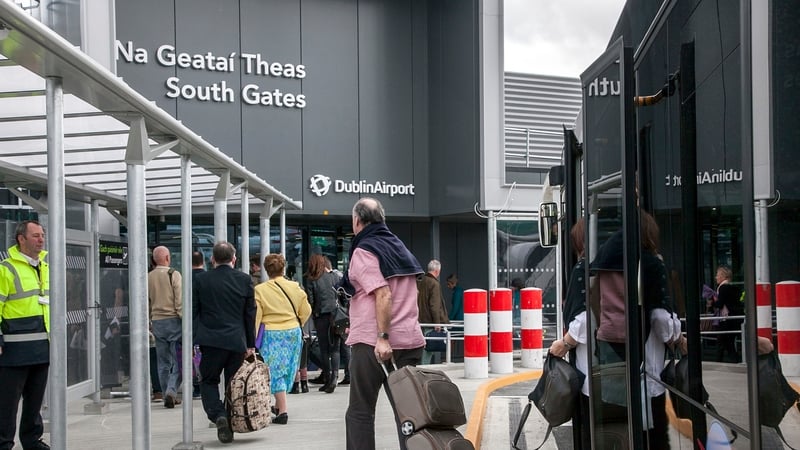

There is growing nervousness within the tourism industry that the war in Iran could impact the sector's performance this year.
Yesterday Lufthansa announced it was cutting 20,000 flights from its schedule due to the rising cost of jet fuel. That included some flights between Cork and Frankfurt.
It follows Aer Lingus cutting some of its flights - including a number to Dublin - and reflects a broader move by airlines in other parts of the world.
In other cases, including Air France-KLM, additional charges have been added to bookings to reflect the higher cost of aviation fuel.
"I think if we'd been having this conversation two months ago, the mood would have been quite different - the industry had been confident of a strong tourism season," said Eoghan O'Mara Walsh, CEO of the Irish Tourism Industry Confederation.
"Obviously now the mood has changed somewhat. We're much more nervous," he said.
We need your consent to load this rte-player contentWe use rte-player to manage extra content that can set cookies on your device and collect data about your activity. Please review their details and accept them to load the content.Manage Preferences
Mr O'Mara Walsh said that, as an island nation, Ireland's tourism sector is heavily dependent on visitors coming by air - and the conflict in Iran would impact that.
Rising jet fuel costs - and fears around supply issues - will mean it is more expensive for people to fly to and from Ireland in the coming months.
There is also a fear that volatility and fears around the global economy could prompt would-be visitors to travel less this year.
Meanwhile one of the more direct impacts is the €450-500m worth of tourism revenue that traditionally comes from the Middle East, which is now in doubt.
"The reduction in air capacity into the country is going to have a hit on tourism," Mr O'Mara Walsh said.
"We're lucky in a way that we're less exposed than other markets - Aer Lingus and Ryanair are the two big players for Ireland and even Aer Lingus' announcement only affects about 2% of capacity," he said.
But it will impact the sector nonetheless, he added.
At the start of the year, ITIC had predicted 5-7% tourism revenue growth this year - though that was predicated on a stable global economy. He said that the onset of war has made that target overly ambitious.
"I think that figure is going to be lower," Mr O'Mara Walsh said. "It's still very difficult because we don't know the situation in the Middle East - we don't know if there's going to be a settlement of the conflict sooner rather than later.
"We're rejigging the numbers as they go along," he stated.
One silver lining - or at least potential cushion for the sector - is that the uncertainty may also lead to Irish consumers staying home rather than travelling abroad, which will give a boost to the domestic tourism market.
Mr O'Mara Walsh also said there was hope that Ireland could be seen by nervous travellers as a safe place to visit.
"We're an island on the western edge of Europe, we're well away from the conflict zone," he said.
"The Middle East and even the likes of Turkey and so on isn't going to be as popular for tourists so maybe Ireland is going to gain a little bit of business," he said.
"But I think those positives aren't going to outweigh the negatives as a result of this conflict that's going on at the moment," he added.