


UniCredit has prompted Berlin to restate its firm opposition to the Italian bank's pursuit of Commerzbank after the suitor laid out a strategy to improve the target's performance independently of any deal.
After building a near 30% stake in Commerzbank since September 2024 despite strong German resistance, the Italian bank in March unveiled a €35 billion all-share offer for Germany's second-biggest bank.
Ahead of launching its bid, UniCredit held an unscheduled analyst call to outline both its suggestions for Commerzbank and the possible outcomes of its offer.
Commerzbank and German Chancellor Friedrich Merz both rejected UniCredit's approach as hostile.
"Yes, we need large banks in Europe, but let me make one thing very clear in light of recent events: this does not mean that every form and type of takeover is welcome in Germany," Merz said.
Commerzbank, which UniCredit described as a sector laggard that risked "becoming increasingly unfit" for the challenges facing the industry, said the Milanese bank's proposals showed it did not understand its business model.
UniCredit suggested cost cuts targeting Commerzbank's international network and "rampant bureaucracy" in its domestic business, saying that would add €600m to the 2028 profit consensus forecast at the German bank.
UniCredit has said the bid's low premium should ensure its Commerzbank stake does not rise much above 30% with the offer.
UniCredit is then free to buy more shares on the market from next year.
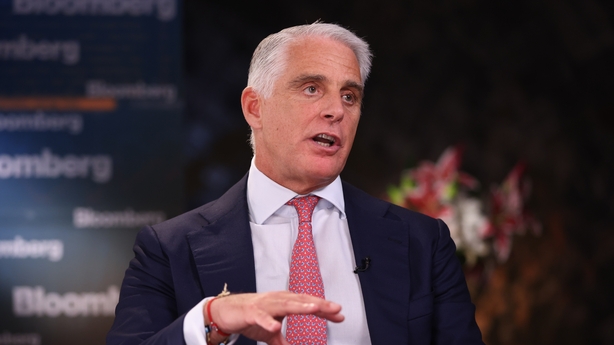
"One scenario is we expect low take up (from Commerzbank shareholders), we're happy. Financially, we win. We sit back," he said.
UniCredit would not seek to gain control of Commerzbank for a further 12-18 months, so it could resume capital distribution plans and rebuild its cash reserves.
"We go back to status quo," UniCredit CEO Andrea Orcel said.
Orcel outlined also an adverse scenario but said UniCredit had ways to prevent it, without elaborating.
Under German corporate rules, UniCredit could be declared in control of Commerzbank with a stake as low as 40% because that can be enough to drive decisions at shareholder meetings.
That would put returns that UniCredit investors reap on the investment in Commerzbank below the cost of their capital - a red line for Orcel, a veteran dealmaker.
Control of Commerzbank would also force UniCredit to buy out minority shareholders in Commerzbank's Polish unit mBank in cash. Orcel said discussions were ongoing with Polish authorities on the topic.
"We have levers to keep out of a situation where we have excessive capital consumption and a cascade offer in cash that are penalising," he said.
The current Commerzbank stake is giving UniCredit shareholders a 20% return on investment. The return would be much lower on a stake of 50% plus one share, Orcel said.
"But we will execute an industrial and strategic move - at the end of the day, this is why we're here," he said.
Regulatory approvals would take until the second quarter of 2027. UniCredit would keep Commerzbank separate for another 18-24 months to first push through necessary changes.
"It would make no sense for us to attempt any merger before that is done, because ... of the very different setup, culture, and everything else of the two banks," he said.
