


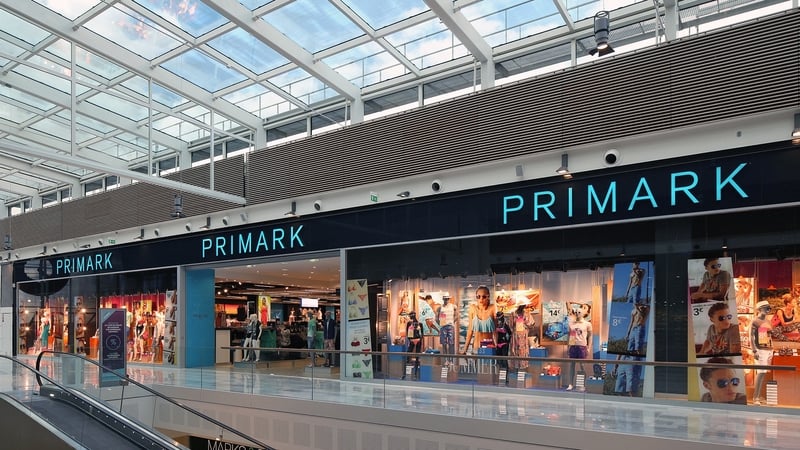
Associated British Foods will spin off Primark from its food businesses, betting that the fashion retailer will be better positioned to grow as a standalone company with its own board and investors.
Primark trades as Penneys here.
The group said financial markets will better understand and value its food businesses - including brands like Ovaltine, Ryvita and Twinings - and Primark if the retail arm has a separate London listing.
Primark trades from 486 stores in 19 markets and has annual revenues of about £9.5 billion. The food businesses, which also include major sugar, ingredients and agriculture divisions, operate across 52 countries with about £9.8 billion of revenue.
While AB Foods believes Primark now has the scale and growth opportunities to go it alone, it has faced intensifying competition from Chinese online giants Shein and Temu, while in January it warned on profit, highlighting weakness in continental Europe.
AB Foods CEO George Weston said the demerger was not a response to trading issues and shareholders - including Wittington Investments, the holding company for the Weston family which owns just under 60% of the group's equity - backed the separation.
"They think we're doing the right thing," Weston told Reuters, adding the review of the group's structure did not consider a sale of Primark.
But illustrating the challenge ahead, AB Foods reported an 18% fall in first-half core profit today.
It also said its full-year profit would be below the previous year's, reflecting concerns over consumer spending due to the Middle East conflict, weak US cooking oils and bakery ingredients markets and a more cautious outlook for sugar.
Shares in AB Foods were down 4% today, extending a decline over the last year to 17% and giving it a market capitalisation of just under £13 billion.
Most analysts' sum-of-the-parts valuations of AB Foods show Primark trades at a significant discount to peers.
Analysts at RBC said that the split should improve the investability of AB Foods in the medium to long term, but warned: "The consumer outlook and outlook for both sides of the business looks quite challenging."
Chris Beckett, consumer staples analyst at Quilter Cheviot, said the demerger is not the value‑unlocking moment some might hope for.
"The separation will leave two FTSE 100 companies, both ultimately family‑owned via charitable trusts, which underlines that this is more about structure than strategy," he said.
On completion of the demerger, expected by the end of 2027, AB Foods shareholders will hold shares in both listed entities.
The group's initial expectations are for dis-synergies of below £45m and one-off transaction costs of about £75m.
For the 24 weeks to February 28, AB Foods reported adjusted operating profit of £691m, on revenue down 2% to £9.47 billion.
It said it expected the cost consequences of the Iran war to be manageable but, echoing other retailers, warned of a risk to Primark's sales if the conflict persists and consumer spending deteriorates.
It said an encouraging start to spring/summer trading in March was followed by softer trading in April.
