


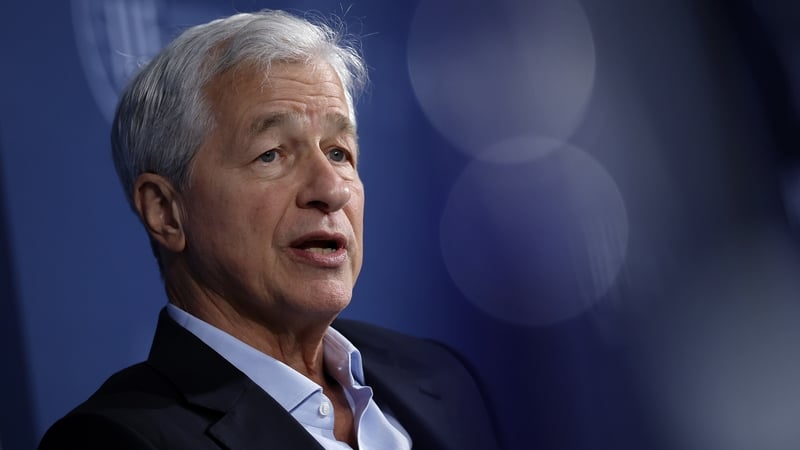
JPMorgan Chase posted a better-than-expected 13% jump in first-quarter profit today as volatile markets lifted trading revenue to a record and dealmaking improved, even as CEO Jamie Dimon warned of mounting global economic risks.
Worries about the impact of artificial intelligence on software companies and the uncertain outcome of the Iran war have rattled global financial markets in the first quarter, triggering repeated bouts of selloffs that kept trading desks busy.
Volatility typically lifts trading businesses at large banks as it spurs clients to rebalance portfolios, trade more actively and hedge risks.
"There is an increasingly complex set of risks - such as geopolitical tensions and wars. While we cannot predict how these risks and uncertainties will ultimately play out, they are significant and they reinforce why we prepare the Firm for a wide range of environments," Dimon said in a statement.
JPMorgan's markets revenue rose 20% to $11.6 billion in the first quarter and was a key driver of the bank's results, just like at Wall Street rival Goldman Sachs, which beat expectations for quarterly results yesterday.
The largest US lender's revenue from fixed income markets rose 21% to $7.1 billion, while equity markets surged 17% to $4.5 billion.
It reported a profit of $5.94 per share for the three months ended March 31. Analysts on average had expected a profit of $5.45 per share, according to estimates compiled by LSEG.
Net revenue climbed 10% to $50.5 billion, comfortably surpassing Wall Street expectations of $49.2 billion.
Shares of the bank reversed course in volatile premarket trading and were last down 0.8%.

US investment banks are expecting a strong year as they eye mega listings of big AI and space companies, as well as a revival in dealmaking on hopes that President Donald Trump's administration would ease regulations.
Though volatile market conditions have led to cautious forecasts on M&A activity, banking executives say companies are showing a healthy appetite for deals.
JPMorgan's investment banking fees rose 28% in the first quarter versus a year earlier, the highest among global banks during the period, according to data from Dealogic. The total value of mergers and acquisitions crossed $1 trillion.
Among its major deals in the quarter, JPMorgan was the bookrunner on tech giant Amazon's $37 billion bond offering and served as lead adviser to AES on its announced $33.4 billion take-private transaction.
It was also among the lead underwriters on SoftBank-owned fintech firm PayPay's $880m US initial public offering in March.
Loan demand has picked up in recent months as a resilient labor market supports wage growth and draws more borrowers into credit markets. While interest rates remain elevated, they have eased from recent highs, helping lift demand for loans.
Net interest income - the difference between what a bank earns as payments on loans and gives out on deposits - rose 9% in the first quarter to $25.5 billion. Excluding markets, it climbed 3%.
Consumer spending has largely held up despite economic pressures, keeping charge-offs stable and giving banks the confidence to keep credit flowing.
Large lenders including JPMorgan Chase and Bank of America offer a window into the US economy, reflecting trends in consumer spending, borrowing and business activity.
"The US economy has remained resilient," Dimon said, adding that while labour markets have softened, conditions do not appear to be worsening and consumers continue to spend.
A still-resilient US economy has supported consumer spending and corporate activity in recent months, but the outlook has become more uncertain as geopolitical tensions rise.
The escalating conflict involving Iran has pushed oil prices higher, raising fears of a fresh bout of inflation that could keep interest rates elevated and weigh on growth if energy costs continue to climb.
Rival Wells Fargo's profit also climbed in the first quarter, aided by higher income from interest payments and increased trading gains from volatile markets.
