


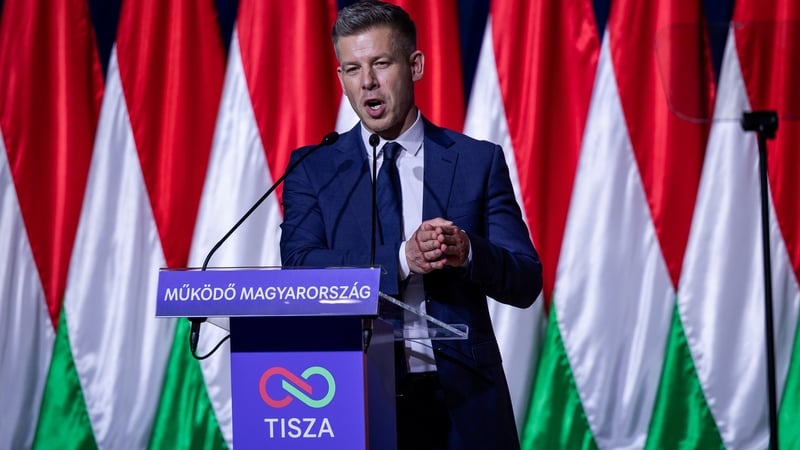
Hungary's forint surged to a more than four-year high against the euro today after upstart centre-right party Tisza won a sweeping mandate in the country's election, ousting long-time Prime Minister Viktor Orban.
Tisza's strong majority in parliament could potentially unlock billions in European Union funding which had been blocked by disputes between Orban, in power for 16 years, and the EU's executive in Brussels over rule of law issues in the country.
The result giving Tisza a two-thirds super majority in parliament was seen as the most EU and market-friendly scenario heading into Sunday's election, and markets reacted overnight as results became clearer.
The forint was trading 2.5% higher than Friday's domestic close by early this morning , at 366.15 to the euro, its strongest since February 2022.
"The scale and clarity of the result will be cheered by investors," Capital Economics said in an election night note.
"Although the result has already been partly priced in, a further rally in local assets is possible amid hopes for a shift away from Orban's interventionist domestic framework and more confrontational foreign policy stance towards a more market-friendly and EU-aligned government," it added.
Tisza's mandate gives it a freer hand to enact reforms. Its leader Peter Magyar has made unlocking EU funds a plank of plans to kick-start Hungary's economy, which has been mired in near-stagnation for the past three years.
Markets had been signalling for weeks that investors expected change.
The share prices of companies linked to Orban fell sharply, while market volatility gauges indicated that big currency moves were likely after the election.
The forint had already reached a multi-year high in the days before the election as polls pointed to a Tisza win, even as global markets were battered by the conflict in the Middle East.
