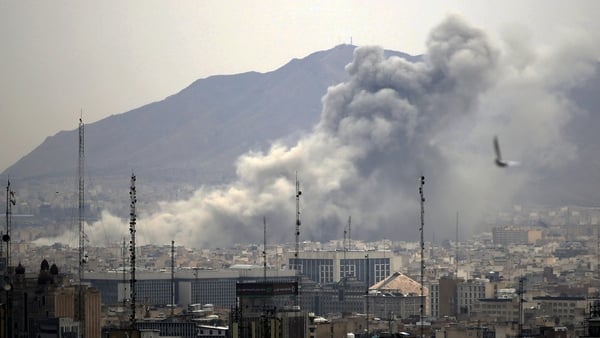

With a sudden drop in the price of oil and stock markets surging, on the surface, the ceasefire looks like good news.
What's less positive is that it's resting on the foundations of a fragile agreement, with hostilities in Lebanon continuing, and markets are cautious that the US-Iran agreement could collapse at any moment.
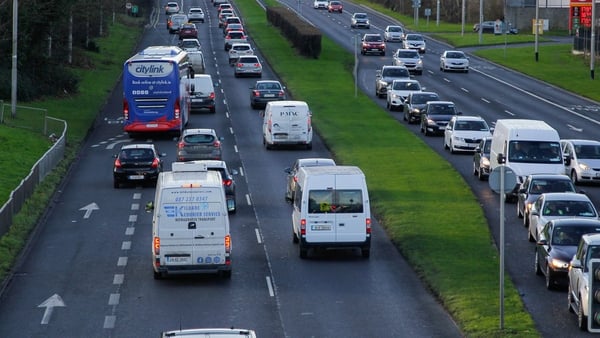
With fuel protests blocking many critical roads around Ireland, the question is what will the ceasefire mean for consumers and businesses here?
Generally, it takes two to three weeks before changes in oil prices materialise at the pumps.
So, the fall in the cost of brent crude would need to hold for a period before it could be felt by motorists, farmers and hauliers.
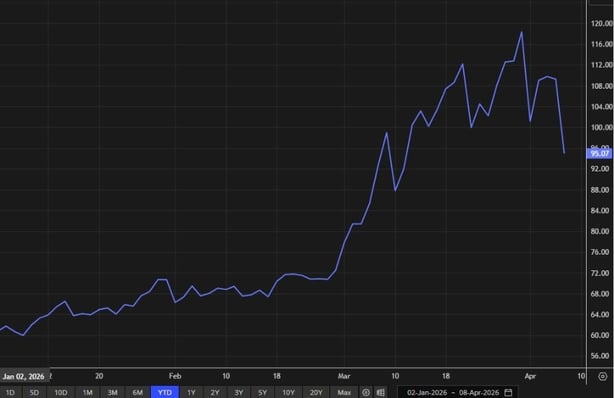
This afternoon, prices are around $94 a barrel, which is a drop of 13% since the market closed at $109 last night.
Oil prices peaked this year at $118 on 31 March.
Bear in mind, it was $60 at the beginning of 2026 and $70 before the war began on 28 February.
Many stations are currently charging around €1.90 for unleaded and €2.10 for diesel. That compares with €1.73 for unleaded and €1.72 for diesel in February.
There is a long way to go before oil prices fall to the levels they were at before the war broke out.
One of the most significant immediate effects for consumers is the enormous increase in home heating oil, which rose from €500 for 500 litres before the conflict to €900 today.
Consumers will be anxiously hoping the fuel will fall following the drop in oil prices.
Another issue for many householders will be what will happen to the price of gas.
European natural gas futures doubled from €30 to €60 per megawatt hour due to the conflict and are now trading at €51.
This is critically important because it also sets a price for the generation of electricity.
Generally, Irish gas and electricity retailers book a price at which to buy supplies 18 months in advance.
But what happens on the wholesale market ultimately filters through to the retail level.
So far, there have not been significant price increases from suppliers in Ireland, but that could change by the autumn unless there is a significant drop in wholesale costs.
That would be a big issue this winter and would result in more pressure on disposable incomes.
And then there is the aftermath of the conflict: reopening the Strait of Hormuz, fixing the damage to energy infrastructure, and restocking supplies.
There is concern that there could be a shortage of aviation fuel that could affect Ireland, which is critically important as an island nation.
CEO of International Air Transport Association and former Aer Lingus boss Willie Walsh said: "Even if the Strait was to reopen and remain open it would still take a period of months to get back to where supply needs to be."
International Energy Agency CEO Fatih Birol said there would be disruption to European air travel from the middle of next month if the Strait is not fully reopened.
EY Ireland Partner Aidan Meagher said: "The conflict has resulted in unprecedented disruption to energy markets, shipping routes and global supply chains, and these effects will take significant time to unwind, even if the ceasefire holds."
All of the higher fuel costs have been feeding through to inflation.
Last week, the Central Statistics Office estimated the rate of inflation would be 3.6% this month.
Yesterday, Department of Finance Chief Economist John McCarthy said that "all roads lead to higher inflation and slower growth".
The ceasefire is a welcome piece of good news during a gloomy period. But there is a very long way to go before prices for consumers and businesses can return to pre-war levels.