


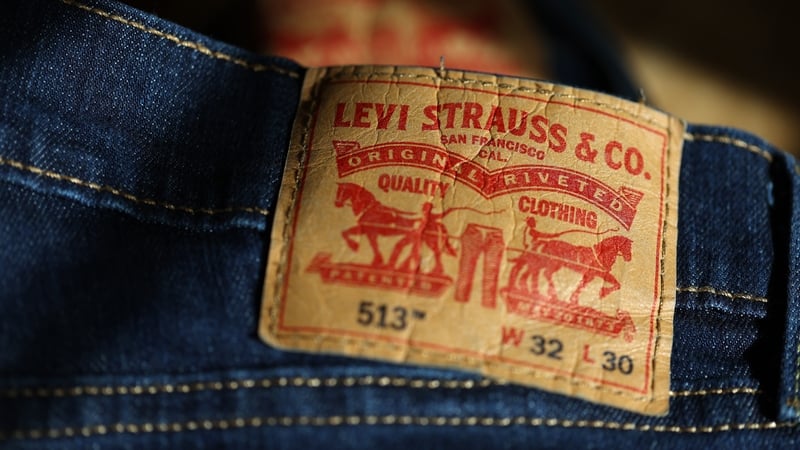
Levi Strauss has raised its annual sales and profit forecasts, banking on resilient demand for its denim across all categories and strength in its direct-to-consumer business to help offset a hit from US tariffs.
Shares of the company surged more than 6% in extended trading on Wall Street, as the jeans maker also beat Wall Street estimates for first-quarter results against a backdrop of economic uncertainty due to higher US import duties and the war in the Middle East.
Levi has been working to blunt the impact of the duties through a mix of price hikes, cost controls, supplier negotiations and a diversified sourcing base that is less reliant on China.
The maker of '501' jeans now expects fiscal 2026 net revenue growth in the range of 5.5% to 6.5%, compared with a 5% to 6% rise projected earlier. Analysts, on average, expected growth of 5.7% for the year, according to data compiled by LSEG.
The company raised its forecast for annual adjusted earnings per share to a range of $1.42 to $1.48 from its prior outlook between $1.40 and $1.46.
In January, the company said it expected a 150-basis-point hit to fiscal 2026 margins, or roughly $100m, which it planned to fully offset.
Levi's forecast does not yet reflect potential benefits from lower tariffs or refunds, which could boost margins further, finance chief Harmit Singh told Reuters.
"Assuming everything plays in our favour and the consumer continues to be resilient, there's probably more upside," he said.
The company's first-quarter net revenue grew 14% to $1.74 billion, beating analysts' estimates of $1.65 billion. Adjusted earnings of 42 cents per share topped estimates of 37 cents.
Levi said Singh will retire after a planned transition, staying on until a successor is appointed and then serve for a time as a special adviser. The company said it has begun a search for his replacement.
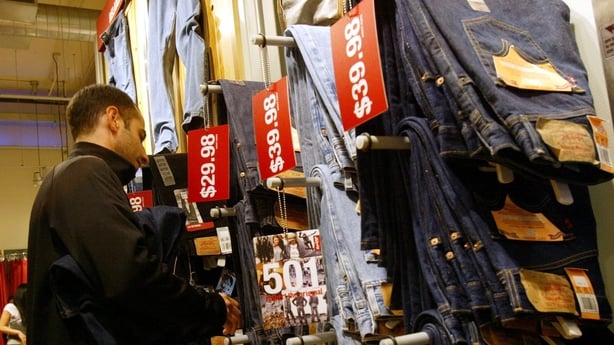
The upbeat outlook adds to signs that demand for core denim categories remains resilient, despite pressure on budgets of low and middle-income households.
Levi's stock has risen about 45% over the past 12 months.
"Levi's better-than-expected results and upbeat commentary stand out in the context of macroeconomic uncertainty and concerns about discretionary spend in the face of higher gas prices, especially considering the customers it depends on," Michael Gunther, analyst at market research firm Consumer Edge, said.
The company saw strength across its consumer segments. First-quarter sales of its premium denim line, Blue Tab, were up 40%, while that of its Signature line - which targets lower-income shoppers in Walmart and Amazon at around $20 - grew 16%, Singh said.
Levi saw a 9% jump in sales in its largest market, the Americas. Europe posted a 24% increase, while Asia sales rose 13%.
Comparable sales in its higher-margin direct-to-consumer channel, which includes Levi's website and stores, rose 7% in the quarter ended March 1.
